

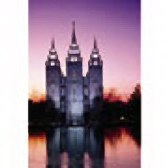
Let us start by dispelling several misconceptions. The first misconception is that the Mormons control everything in Utah. With a population over 1 3/4 million in greater Salt Lake, out of 2.3 million for the whole state, only 50% of the people in the Salt Lake are Mormons; the figure is about 70% for all of Utah. If you want to see and learn about the Church and the Mormon’s arrival in Salt Lake in 1847, go to a live radio and television broadcast of The Mormon Tabernacle Choir from 9:30-10AM every Sunday. It is free, but arrive early for a good seat. Afterwards, tour the Temple Square area under the guidance of learned and eager to please volunteers, who can conduct the tours in 30 languages. There are interactive exhibits, art displays, films, gardens and parks, plus the largest genealogy library in the world, all in the heart of downtown.

Nestled between the Great Salt Lake and the Rocky Mountain range, Salt Lake’s seasons range from spring wild flowers and waterfalls from melting snow, to summer hiking, rock climbing and mountain biking only minutes away. Fall is for foliage & winter means a 45-minute drive to ski at Alta, Snowbird, Brighton or Solitude, all south, or Park City, Deer Valley & The Canyons, all east. Annual snowfall is 300 to 500 inches. Thanksgiving day 2001 saw 100 inches of snowfall in 10 hours. There are 10 major ski resorts and 6 cross-county areas all within one-hour of downtown.
Jet Blue flies from JFK in New York at 7:59PM and in 4 plus hours you are in Salt Lake. For powder skiing fanatics, the flight back to JFK leaves at 11:59PM. You can leave Friday night and be back at work before 8AM on Monday. If price alone is not the determining factor in your hotel choice, try the Great American Hotel, only 15 minutes from the airport in the heart of downtown. A local businessman built it over a 5-year period, to coincide with the opening of the Olympics. A member of The Leading Hotels of the World there are chandeliers from Milan, French cherry-wood furniture, English wool carpets, Italian marble bathrooms with over 700 rooms, 400 of them are suites. Earl Holding supposedly spent $600-$800 million to build the hotel. Since there is no mortgage and the company is private, no figures are available as to the exact cost. .
You will want to visit the post Olympic Salt Lake City that has utilized all of the venues built for the Olympics. The new light rail system travels from the southern suburbs to downtown and the Delta Center, home of the NBA Utah Jazz & WNBA Utah Starzz. It also travels to the University of Utah, two miles from downtown, which served as the Olympic village and is now dorms for students. Called TRAX, it is 16 miles in length and is free in the downtown area. If you ride it to the university you can visit the Utah Museum of Natural History and Red Butte Botanical Gardens as well as the Utah Museum of Fine Arts. The university area also is home to the Old Deseret Village, 40 historic buildings brought to life by cast members in period dress. This is the spot where the Mormon pioneers first entered Salt Lake City.

The Gateway Center downtown served as NBC TV headquarters during the Olympics. It now has more than 90 stores and restaurants as well as condos and apartments used by the TV crews. Also downtown is the Utah State Capitol, an example of the Renaissance Revival style, built in 1915 of Utah granite. A must is the Utah Olympic Park located 35 minutes away in Park City. This was the site of the 2002 Olympic Nordic jumping, bobsleigh, skeleton and luge competition. It is now used as a training area year-round. In Park City think Sundance Film Festival and Robert Redford, who has held his world famous event there for several years.
Many people assume you can’t buy a drink in Utah, because of the religious beliefs of the Church of Jesus Christ of Latter Day Saints, commonly referred to as Mormons. Ask the Olympic partygoers who found it just as easy to purchase a drink as to order a meal. Most restaurants serve beer, wine and mixed drinks, with the purchase of food. In fact, there are 8 Salt Lake restaurants holding awards from the Wine Spectator for their wine lists, and one offers 100 wines by the glass. “Private Clubs” are Utah’s equivalent to bars elsewhere. They are open to everyone, with visitors purchasing two-week memberships that cost about $5 and are good for five other guests. There are 16 state liquor stores in the Salt Lake area, including the Utah State Wine Store downtown with a terrific selection of over 3,000 different wines. More than 1,000 alcohol-serving restaurants, clubs, pubs and stores have made the city the culinary capitol of the Rocky Mountains. There is even a rocking Utah Brewers Festival complete with stands for beer, food and souvenirs as well as two stages for musical performances. Salt Lake is home to one of the US’s best brewpubs, the Red Rock Brewing Company located downtown.
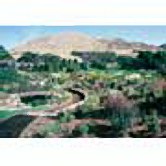

If you drive 17 miles northeast of the city you can reach the Great Salt Lake, the largest lake west of the Mississippi. And yes, you can float in the lake. Driving south about ¾ hour, on the way to Provo, you reach Thanksgiving Point and its 55 acres of botanical gardens, the largest in North America. It is also the site of the North American Museum of Ancient Life, the world’s largest dinosaur museum.
The world was reintroduced to Salt Lake City during the Olympic Winter Games. It is a beautiful, safe and vibrant community offering access to natural recreation, a bustling economy, remarkable history and just a few hours drive from 10 national parks. In many ways it is a brand new city in the midst of an urban renaissance fueled by the Olympics. It has a colorful past, exciting present, and a promising future. And don’t forget the 100 ski lifts in the “Greatest Snow on Earth” region.
 Real Travel Adventures