

What do Chattanooga, Tennessee; Melbourne, Australia; Vancouver, British Columbia; Minneapolis, Minnesota; Curitiba, Brazil and Tilburg, the Netherlands have in common? You might be surprised to learn that they are recognized as the most revitalized and sustainable cities throughout the world. That’s right, Chattanooga, home of the fabled Choo Choo, is one of six examples of what the U.S. News and World Reports dubs as a “Smart City” – a city that exemplifies extraordinary and successful efforts to improve the quality of life for its citizens while protecting its resources.
In 1969, the federal government announced that Chattanooga is “the dirtiest city in America”. Literally awash in urban blight, the community made a valiant decision to not abandon the city. Through sheer tenacity and pride, its leaders and citizens along with private interests and investors have totally transformed Chattanooga into something you really have to see to believe. Portions of downtown were razed to make way for a restored and environmentally enhanced riverfront and anchor attractions such as the world famous Tennessee Aquarium. Factory pollution was controlled with the best available technology. The sewer system was overhauled, one of the bridges over the Tennessee River was refurbished into a pedestrian-only walkway and a mass transit system of all electric, and free, buses cut pollution and allowed unlimited pedestrian traffic. This was just the beginning.
Today, Chattanooga offers both residents and visitors alike a plethora of big city amenities without big city drawbacks. For being an environmentally healthy, sustainable and economically viable place where people want to be, Chattanooga was one of 12 international recipients (and the only U. S. City) the United Nations selected for their Award of Excellence in Improving the Living Environment. Located at the southern terminus of the Appalachians on the sinuous Tennessee River, Chattanooga is pleasantly remote but not far away. Although a new state of the art airport serves the city, your first visit may well be by car. Once there, the clean and friendly city will draw you to its most vibrant areas instinctively. Families will best appreciate Chattanooga’s delights because it is made for children of all ages.
The first thing to notice upon arrival is the creative examples of innovative recycling and restoration permeating the city. Keep this in mind when arranging lodging because for the most fun a family can have at a hotel, the Chattanooga Choo Choo Holiday Inn is the clear choice. Converted from the actual 1909 railroad station and depot and the topic of Glenn Miller’s 1941 hit, the restored structure now enchants young and old enthusiasts with amenities and memorabilia from the golden age of railroading. Book a room in one of the renovated authentic Victorian parlor cars lined up behind the main entrance lobby and former terminal station. Contemporary rooms are available in three separate satellite buildings toward the back. The hotel also offers shops, indoor/outdoor pools, arcades, tennis courts, fitness center, gardens, outdoor concerts and horse and buggy rides. Do not miss the worlds largest HO gauge model railroad layout. The 174′ by 30′ layout boasts 3000′ of track and guarantees to not only delight the kids on a rainy day but also remind their parents of long forgotten childhood passions.
For those arriving on business or looking for a premium contemporary experience, stay at The Chattanoogan, a new four-star hotel and full service conference center. In the heart of Chattanooga’s Southside and within walking distance of downtown’s major attractions, The Chattanoogan offers upscale accommodations with spectacular views of downtown or Lookout Mountain. Try the Ultimate Experience weekend package – the best buy – includes two nights, continental breakfast, one-hour spa service, dinner, cordials, live jazz entertainment, Sunday champagne brunch, unlimited use of all hotel health and recreation facilities, gratuities and taxes. Ask for special interest upgrades if you are partial to spa amenities, shopping or arts and entertainment.
If you relish bed and breakfasts, then stay at the Bluff View Inn, the historic and architectural centerpiece of the city’s art district overlooking the Tennessee River. The Inn, comprised of three turn-of-the-century homes with authentic antique furnishings and elegant décor, whisks you back in time without giving up modern amenities. Each room is named after a noteworthy Chattanoogan and exemplifies the history behind their lives. Reserve the Llewellyn Suite in the English Tudor Maclellan House, the Martin Room in the Colonial Revival Martin Mansion, or the Newell Room in the Victorian styled Thompson House.
For the history buff, the Radisson Read House Hotel & Suites, listed on the National Registry of Historic Places, provides a memorable snapshot of Chattanooga history back to 1847. Reconstructed in 1872 after burning down, the hotel earned a reputation for distinction and period architecture. Previous visitors include Winston Churchill, Tallulah Bankhead, Gary Cooper and Eddie Rickenbacker. Room 311 – with the bars on the windows – is where Al Capone rested between his days in the court that convicted him. For the truly adventurous, book room 311 for Halloween – well in advance. This tradition stems from tales of unexplained apparitions said to be the ghost a suicidal woman resulting from a failed romance. The friendly hotel staff will tell you, quite seriously, that numerous guests of Room 311, mostly male, have requested a different room after witnessing strange sounds, movements and shadowing figures in the mirror and on the bed.
Explore downtown first with the free and efficient public electric bus departing from the Chattanooga Choo Choo to the waterfront. Comprising the largest electric bus fleet in the U. S., Chattanooga’s buses are manufactured locally and sold around the world. If the weather permits, spend a day or two on a walking tour starting with Ross’s Landing Park and Plaza which includes the Tennessee River Walk, Aquarium and Visitors Center. While there, stop in the new Convention and Visitor’s Bureau Office across from the Aquarium and pick up any information and maps you would like. Ross’s Landing Park, where downtown meets the Tennessee River, is an environmental showpiece of landscaping and public art. Follow the Tennessee River Walk to the Walnut Street Pedestrian Bridge over the river. True to Chattanooga’s recycling renaissance, this renovated 110-year-old bridge was rescued from demolition to become the longest pedestrian bridge in the world. As you cross over, you will find this an ideal spot to view the scenery. Do not be surprised if locals approach to thank you for visiting their city.
Coolidge Park – on the other side of the river – is a six-acre park with a fully restored 100 year-old antique carousel of 52 animals carved by Horsin’ Around, the only carousel carving school in the U. S. People from all parts of the country come here to learn this obscure craft and nourish their need for creativity and calm. Lucky observers can observe carvers while they work before you experience the vintage organ music and ride atop the undulating hand crafted figures. After riding the carousel, children can play on hopscotch courts nearby. Most fountains in other cities are for aesthetics only but in Coolidge Park they are sculpted animals you can play on when the day gets hot.
The hardy can venture onward to experience the new shops, restaurants, Theatre Centre and the Star Riverboat. Upon returning from the North shore, continue on the River Walk to the Bluff View Art District and experience the City’s cultural renaissance. This community of working artists, chefs, museums, historic inns, cafes and gardens offers many relaxing ways to end your day. A first stop can be the south’s largest collection of American art – The Hunter Museum. Comprised of a one hundred-year-old revival mansion as well as an adjacent contemporary complex, the museum houses over 1,500 works including glass sculptures. Ask about art classes for kids.
Across the street, experience the Houston Museum of the Decorative Arts – a renovated Victorian residence with a quirky past and a fine and rare collection of antique glass, furniture and ceramics representative of American living from the 18th to the early 20th centuries. Do this without rambunctious young ones due to frail display mountings and cramped quarters. The contents were once housed in a barn despite the fact that the owner, Anna Houston, didn’t have enough money for food or medical care in her last years. She amassed the “collection” during more prolific years as wife to at least nine different husbands and left the estate to the people of Chattanooga upon her death in 1951. Refresh at Rembrandt’s Coffee House in the River Gallery, take in the view of the river while strolling through the River Gallery Sculpture Garden then check out the Glass Studio, Bluff View Inn historic bed and breakfast, restaurants and sweet shops. Play some Bocce Ball next to a huge Magnolia Tree overlooking the river and dine at the Back Inn Café.
If it were up to me, visiting the Tennessee Aquarium would be a legal requirement for all out-of-town residents. Credited for priming Chattanooga’s renaissance pump, this truly spectacular showpiece, and the world’s largest freshwater aquarium, is a wonder to behold. With over 9,000 specimens and a million visitors a year, this nonprofit but highly efficient enterprise operates without debt. Anyone who loves freshwater fishing will appreciate staring directly into the eyes of past prey. Any childhood collector of stream critters or channel surfers caught watching an underwater nature documentary will enjoy this visit to the aquatic world.

Begin your journey at level four – the top level. Crowds are well managed by walkways that coax observers into a spiraling top-down walking tour. Five main galleries comprise the tour – the first being the Appalachian Cove Forest representing the Tennessee Rivers’ source in the Appalachian high country. Next is the Tennessee River Gallery followed by the Mississippi Delta in the Gulf of Mexico. Along the way, enjoy side trips and diversions such as the Rivers of the World Gallery representing Africa, South America, Siberia and Asia. The remaining gallery, Discovery Hall, features new and changing exhibits every two years with unique themes such as venomous animals. To round out the experience, explore a 60′ high central canyon that is a self-contained riverine ecosystem. To pursue more study and exploration for the kids, inquire about opportunities at the Aquarium’s Environmental Learning Lab. Finish off the experience with a film at the nationally renowned 3D IMAX Theater.

For children, another highlight of Chattanooga is the Creative Discovery Museum that modestly bills itself simply as a “a museum for kids”. Rivaling many of the nations other famous children’s exhibit centers, this is an understatement. Especially appreciated for a rainy day, children will be delighted to discover that touching is actually encouraged. The museum offers hands-on learning experiences designed to foster creative thinking in the sciences and arts. Do not be surprised if you find yourself more involved with tinkering and playing than your children. Four main exhibit areas are guaranteed to occupy both sides of the mature and immature brain. The sciences are well represented by a Science Field Lab and Inventor’s Studio. Here, children can investigate with microscopes and computers, dig for bones, manipulate motors, pulleys and magnets and create their own inventions. The Musician’s Workshop and Artist’s Studio allow the kids to experiment with sculpting, painting, printing, musical instruments and a recording studio.
A treat for gear-headed guys (and maybe gals) who are at one with cars and engines is an unexpectedly delightful sliver of automotive history – the International Towing and Recovery Hall of Fame and Museum. I learned the difference between a tow truck and wrecker and I learned that Earnest Holmes built the first tow truck in Chattanooga by replacing the back end of a 1913 Cadillac touring car with a hoisting device. After receiving a patent, he founded the very first tow truck manufacturing facility a few blocks away. Bring the kids and show them trucks of all shapes, colors and sizes – some being modified antique autos while others custom designed. The oldest truck is a 1919 Holmes 485 Wrecker. The 485 model number was also the cost of the truck.
Eventually, you may want to explore beyond downtown so make the first stop the Tennessee Valley Railroad Museum (TVRM). Best enjoyed as a family activity, the Museum, which includes a fully operational train ride, is an ideal excursion into the Golden Age of Railroading. Referring to itself as “Tennessee Valley’s Rolling Time Machine”, the TVRM is the largest operating historic railroad in the South and resting place for the operational 1952 steam locomotive. The vintage locomotive and passenger cars run on forty acres of track laid during the Civil War, including four bridges and a tunnel through historic Missionary Ridge. Visitors can hop aboard the restored coaches and hear the authentic engine hisses that inspired The Little Engine That Could. After the thirty-minute ride to the East depot, visitors will disembark to watch the locomotive rotate on a giant turntable to prepare for the return trip. While waiting, check out the restoration and maintenance shop. After the return, enjoy the cornucopia of historic trains displayed in front of the station including sleeper cars, office cars, dining cars and a caboose, some of which can be entered. My favorite is the actual 1924 Pullman used by Marilyn Monroe in the film Some Like It Hot.
Inquire in advance about seasonal rail excursions to other communities that include activities and themes. Some include stopovers with lunch, concerts and events. Favorites are Autumn Leaf Specials and the Winter Polar Express to the Chattanooga Choo Choo with an on-train visit from Santa for the kids. Others are roundtrip excursions to LaFayette for airplane and car shows and Chickamauga for concerts and shopping. The TVRM also offers truly unique opportunities for the diehard railroad enthusiast. For $10, ride up in the cab to observe the engineer and fireman operating the locomotive. Better yet, for $190, you can actually drive a locomotive under supervision for one hour. If staying a while, become a member and volunteer. You will dress in period and occupational clothing and be given instruction and training for duties like conducting, braking, engine service and passenger assistance. On the quirky side try the separate Lookout Mountain Incline Railway built in 1895 to provide easy local access to cooler areas, picturesque views of the Tennessee Valley and Civil War battlefields. Riders will experience the trolley-like railcars at a 72-degree incline near the top, which are made comfortable by incline seating.
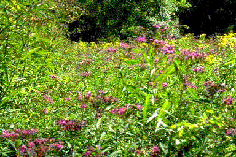
For the nature lover or adventurer, the Chattanooga area provides outdoor experiences just as satisfying as the more urban ones. In addition to its other notable qualities, Chattanooga is also located in a geographic region of unique ecological significance. Numerous habitats and species, some endangered, naturally converge in the pristine regions around the area where mountains meet the valley on the river. Recreational walkers will enjoy the botanical richness of the Chattanooga Nature Center and Reflection Riding Gardens offering 300 varieties of wildflowers. Check out the educational exhibits and canoeing opportunities. While there, stop by the Tennessee Wildlife Center – an environmental education facility and also home of a wildlife rehabilitation hospital. Ask about interpretive activities for the kids.
The North Chickamauga Greenway offers similar hiking opportunities through two miles of forests. The Chattanooga Audubon Society owns and operates three wildlife sanctuaries -each with unique habitats and recreational opportunities. For a taste of real wilderness, explore some of the 25,000 acre Tennessee River Gorge, a canyon preserve along the Tennessee River with an unusually diverse concentration of habitats and rich wildlife population. In addition, many parks and recreational areas such as the Nickajack Reservoir, offer an abundance of camping, boating and fishing. For the beloved Rainbow Trout, go to the Sequatchie River and try the Chickamauga and Nickajack Reservoirs for Bass. Many of the area rivers also provide outstanding whitewater canoeing and kayaking in all Classes.
Spelunkers will appreciate Raccoon Mountain Crystal Caverns. Take a leisurely guided walking tour or arrange an exploration of the undeveloped portions with a cave guide and pan for gemstones. Don’t forget to see Ruby Falls – a 145-foot underground waterfall at the end of Lookout Mountain Caverns. An elevator will take you below ground to view stalactites and stalagmites while guides with pun-enriched vocabularies will explain the beautiful formations. For an adrenaline boost, Chattanooga is also home to Lookout Mountain Flight Park and Training Center. Billing itself as the hang gliding capital of the East and America’s largest hang gliding school, the Center graduates 125 hang glider pilots a year. The Center’s popular tandem flight operations make this an ideal adventure for beginners. A certified instructor will launch, fly and land the glider with each of you in a harness making prior experience unnecessary and allowing you to acclimate to the sensation without dealing with any of the operations.
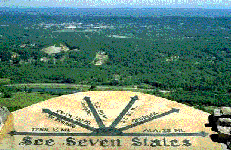
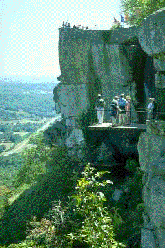
On the delightfully quirky side, visit Lookout Mountain’s Rock City Gardens and the subject of the past “See Rock City” slogans painted on 900 barns and birdhouses throughout the south and Midwest. Opened in 1932, Rock City was a popular honeymoon destination in the 40’s and 50’s and was known as the Niagara Falls of the Southeast. Ebay even has Rock City memorabilia for auction. Originally planned to be the first miniature golf course, Rock City is best described as a 14-acre monolithic rock garden – a dazzling display of 200 million year old geological formations intertwined with pathways, gnomes and gardens of over 400 species of plants. Included is Lover’s Leap with a panoramic view of seven States. Bring the little kids to this one because underground you will find Fairy Tale Caverns and Mothergoose Village. These man-made caves are meticulous displays of storybook and fantasy figures with vivid underground lighting effects.
To fully appreciate historical Chattanooga, you need to experience its Civil War heritage. For many visitors who may be literate about northern events, Chattanooga offers the opportunity to round out their knowledge of what some residents refer to as the War of Northern Aggression. With its protective natural features and strategic location, Chattanooga provided headquarters for Union and Confederate forces alike and was the site for significant battles such as the Battle of Chickamauga and Lookout Mountain’s Battle Above the Clouds. Visit the Chickamauga and Chattanooga National Military Park as your first stop – America’s first and largest national military park – and learn about the areas significance in history. Dedicated in 1895, the park is home to 1,400 monuments and historical land markers and features self-guided tours and Civil War re-enactments in the summer.
Include a stop at the Chickamauga Battlefield Park Headquarters and Visitors Center for audiovisual presentations of the battle. For the memorabilia buff, stop by the Fuller Collection of American Military Arms to see an outstanding collection of Springfield longrifles. Back near Chattanooga, Point Park on Lookout Mountain has the Point Park Visitor’s Center and a trail leading to the Ochs Museum and Overlook that provides additional battle history. Don’t leave out the Cravens House, once a headquarters for both sides. The best display depicting the battles is the Battle for Chattanooga Museum and Electric Map, which features a miniaturized reproduction of the terrain and forces along with sound. When back in the town, visit the Tennessee Civil War Museum, billing itself as “dedicated to the Common Soldier”. The theme is a display of artifacts from the typical soldier’s life and includes an introductory film. Cemeteries provide unique snapshots of life in the distant and recent past and Chattanooga’s VA National Cemetery is no exception. Not only is it the burial site for 12,000 Union soldiers but also has veterans of every American war.
Chattanooga is an easy city to enjoy and a visitor’s biggest disappointment is likely to be that their visit is too short. Finding any faults with the city and its residents is next to impossible in light of their pride and outstanding accomplishments. Some might like the city to have a little more nightlife, but families should not miss it. In an objective effort to find something to complain about, as a visitor, all I could come up with is that the only camera store I could find in the city was closed on a Saturday when I needed more film. Go figure. A visit to Chattanooga is best summed up by what the hostess at the Radisson Read House said after I finished gorging on an excellent dinner at their restaurant. True to southern hospitality and in the subtlest accent, she hoped that I “had a merciful plenty”. Handed down from her grandmother when she was a child, this example of country courtesy best describes Chattanooga.
Contacts
Chattanooga is serviced efficiently and expertly by USAirways, 1-800-428-4322 and the newly renovated and expanded Chattanooga Metropolitan Airport.
Your first stop for advanced information should be the Chattanooga Area Convention and Visitors Bureau near the Aquarium. Send for information ahead of time 2 Broad Street, 1-800-322-3344 or 423-756-8687
 Real Travel Adventures