

“Pantanal” in Portuguese means “the huge swamp,” and huge it is, at half the size of California, the largest wetland in the world. In the rainy season, from December to May, the terrain is mostly under water. But if you plan your visit for the second half of the year, you’ll find that the area, while still quite wet in places, is largely navigable and absolutely beautiful. Edith and I felt as though we were one of the early explorers blazing a new trail into unknown territory.
Our Pantanal adventure began in Cuiaba, where we met our trip guide and close friend, Dr. Charles Munn. Charlie is the head of Tropical Nature, a non-profit ecotourism NGO operating lodges throughout Peru and Brazil. From the airport, we drove to his lodge in the heart of the Northern Pantanal, traversing the Transpantaneira highway, a dirt road stretching 90 miles South to Porto Jofre.

Along the way we saw more than 5,000 large birds of at least 50 different species, including five-foot-tall jabiru storks, savannah hawks, snowy egrets, and roseate spoonbills. The Pantanal is home to 80 species of large birds (those weighing more than a pound)-the greatest variety of large birds of any place in the world! The journey also afforded views of hundreds of black caimans, the South American relative of the alligator, and capybaras, the largest rodent in the world and a relative of the guinea pig.
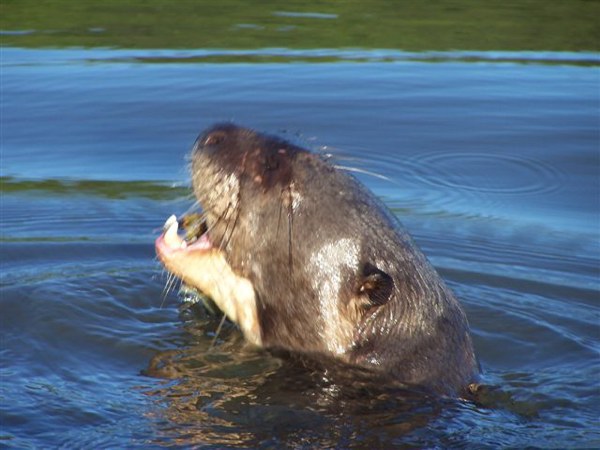
When we arrived at Santa Terazza Lodge we stowed our bags and boarded a small boat for a trip down the Pixaim River to see the giant river otter. These creatures are related to our American otters but grow to seven feet long and weigh up to 80 pounds! On the way to an otter den we observed hawks diving and catching piranhas in their talons, performing their aerial feats in split seconds-making capturing them with our cameras equally challenging. Around a bend in the river, a family of 12 otters bobbed their heads in and out of the water, waiting for us to throw them pieces of piranha. They didn’t hesitate to come right up to the boat so they could eat the fish off an oar blade! Finally, the sun began to set, and as the otters retreated home to their den, we did the same.
On our third day we headed south to Porto Jofre at the confluence of the Cuiabá and Piquiri Rivers. We had come to catch a glimpse of the most elusive Pantanal animal…the jaguar. For two chilly days out on the water, we searched for the iconic cat, but it wasn’t until we were about to head back and give up on our quest that Charlie turned down one last bend of the Piquiri, and we finally spotted him. There, on a beach at the edge of the jungle, the jaguar was lazily sunning himself. As our boat drifted closer to the beach, the cat let us get within 25 yards before he disappeared into the brush, having decided we had seen enough. We returned to camp triumphantly, with many stories to share of this enchanting land and its exceptional wildlife.

WCS in the Pantanal
Ecotourism is a major economic benefit for the Pantanal, creating an alternative, sustainable source of income to the region’s predominant activity, cattle ranching. While the land is largely pristine and intact, over past decades, a number of factors have contributed to its economic decline and increased conflicts between humans and wildlife. Jaguar predation on livestock remains a major source of tension in the region. WCS is working to engage, train, and empower local stakeholders, especially ranchers, to adopt better management practices. Our aim is to integrate socioeconomic development and wildlife conservation in the Pantanal using site-based, applied research. This is part of a regional strategy for wildlife conservation in rangeland habitats.

 Real Travel Adventures