

Spring 2006 kicks off Virginia’s year-long celebration of the first permanent English settlement at Jamestown in May 1607. Jamestown is 400 years old! Festivities throughout the year highlight contributions by Europeans, American Indians and Africans to make the settlement successful. You may have seen Hollywood’s story of this first settlement but this year take time to explore it yourself. Begin with historic Jamestown and nearby Colonial Williamsburg, then head to the European themed Busch Gardens for a change of scene. North is the home of the first President, George Washington, where children will enjoy the mid 1700’s re-enactments and special tours of the plantation.
Jamestown, English house, VirginiaJamestown was settled by 108 Englishmen looking for riches and a water route to the Orient. Four hundred years ago the Europeans had no idea how large North America was, and still thought it might offer a “short cut” to the Orient. The first years were rough and many of the early settlers died of disease, starvation and skirmishes with the existing occupants – the Powhatan tribe.
Today’s visitors to the Jamestown Settlement start at the Visitor’s Center with an exhibit and short film detailing the early 1600s. Learn more about the reasons for the exploration to this new land. After the film make a stop at the restrooms before heading out to the villages, as there aren’t facilities out there.
A short walk from the Visitor’s Center are reconstructions of the settlers’ fort and a Powhatan village. The English compound sits behind a wooden wall fortress. While there chat with interpreters working in the iron forge, or at the church. When children see the housing and straw mattresses, they will appreciate our current “luxuries”! Go on board and explore the replicas of the ships that brought the settlers from England.

The Powhatan village is a short distance away, but a much different world. There are no fortress walls and housing is more mobile. Walk through the village and watch interpreters tanning leather, or gathering food. The sleeping space consists of skins stretched across wooden stalks. Walk through the housing and compare how the two cultures approached living in this area.
At Jamestown, a little distance from the visitor’s center, there is an on-going archeological dig around the actual fort. The dig is changing researchers’ view of what life was like for those early settlers.
The settlement was right on the James River, where the ships were tied up. It was actually an island. The site that seemed wonderful in May froze in the winter. It was also a swamp, so fresh water had to be hauled in. When the people couldn’t get fresh water, they drank the river water which led to health problems. By 1699, the capitol was moved to Williamsburg about 20 miles inland. Give yourself at least one-half a day to visit. Make time for lunch and wandering through the well-stocked bookstore. Admission is $11.75 adults, $5.75 children 6-12 years. See http://www.historyisfun.org for more information.

There are numerous lodging alternatives in the historic triangle area, but my favorite is 20 miles away at the Woodlands Hotel at Colonial Williamsburg. It is right next to the Colonial Williamsburg Visitor’s Center and shuttle stop to take visitors into the village. Add swimming pools and this is the perfect spot to stay. Arrive early enough to eat, buy admission tickets and hop the shuttle for evening activities. There are several choices such as the Tavern ghost walk, where children will thrill to “ghost stories”, or the mock trial at the Courthouse, where you might end up being a juror in a trial similar to ones in the mid-1700s. Both keep children’s attention throughout.
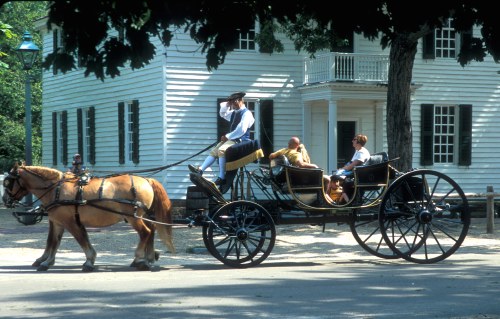
Plan to spend the next day walking around Colonial Williamsburg. Step into the mid-1700s as it would have looked just before the Revolutionary War. No cars, just wagons and carriages. Treat yourself to a carriage ride around the area. Interpreters are dressed in periodic clothing and are engaged in period appropriate activities. They even speak as they would have then! Slaves can be found in the back rooms or kitchens working, while shopkeepers are minding the stores. Tours are offered to many of the 500 reconstructed or restored buildings. Visit some of the ninety acres of award winning gardens. We enjoyed the African American tour, learning about the lives of the slaves and free blacks in Williamsburg. Go to the Governor’s Palace, walk around the commons, and visit the stores. Maybe as you walk the commons you will meet and speak with Thomas Jefferson! There are various packages for admission to Colonial Williamsburg. Consider a Historic Triangle package which includes admission to Jamestown, Yorktown and Williamsburg.
The next day, children may be ready for theme park entertainment offered at the European themed Busch Gardens Williamsburg. Rollercoasters thrill rides, shows and shops will keep the family enthralled for the day. There is even a beer school for the adults! Admission is $51.95, $44.95 for 3-6 year olds.

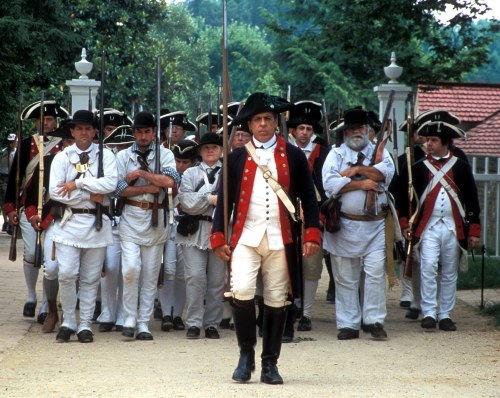
Two hours north, visit Mount Vernon. Interpreters are dressed as they would have been during the lives of President George Washington and his wife Martha. Visit the inside of the 21 room house, the separate kitchen building, and walk through the massive gardens. Sit in a rocker for a few moments on the large piazza (back porch) overlooking the Potomac. Children and adults alike will be fascinated with the rebuilt slave quarters of those slaves who worked in the house. Other slaves lived further away near the fields where they worked. Time your visit to watch enactors show troops preparing for the revolutionary war. Plan to spend at least a half day here. Food is available, and there is a well stocked book and gift store. Open every day, admission is $13.00 adults, $6.00 children 6-11 years of age.
 Real Travel Adventures