

“When you see the bear, you know you’re there!” As we drove into Polar Bear Habitat for Rescue and Rehabilitation, which we had to see! Sherry Ellerton, Assistant Director, greeted us and took us on the guided tour, her enthusiasm for her job contagious.
The giant eleven-foot Nanook is the granddaddy of the Habitat. He was rescued from very unpleasant circumstances in a sub-standard zoo where he had been kept and mistreated for over two decades. At 26 years of age, he is now happy and thriving here and potentially will live another ten years. He is fun to watch as his favorite pastime is to play with a long stick about two inches in diameter. It is unbelievable that he can handle it so dexterously in his huge front paws. He also adores getting grapes to eat. Unbelievably, he holds the bunch in one forepaw while picking off just one grape at a time with his giant teeth and savoring it! He lives gently with the young female cubs, now three years old, Aurora and Nikita. These twins, orphaned at a very early age in the wild, were discovered by a ranger who knew they could not survive if left. The Toronto Zoo kept them while the Cochrane center was being completed. All three bears were brought simultaneously to their new home in Cochrane when it opened in 2004.

For a very special experience you can choose to get into the sparkling clean (with swimming pool standards) pool beside the polar bears’ pool, with only a thick glass separating people from bears. The furry friends love the close-up experience, too, and are as fascinated with you as you are with them! Your shocking photos will look like you are right beside the bear! However, this educational facility stresses that, although we all love to cuddle teddy bears, polar bears are dangerous and actually are the world’s largest carnivore. The Habitat was carefully constructed with people-safety foremost, so that the community and visitors are never at risk.
The beautiful facility, which is open 365 days a year (with plans to close for Christmas Day in the future) is not like a zoo because these polar bears, within the tall safety fence, have free range of the large enclosure, which is like their natural habitat with trees and a large grassy area, where they can dig and roll, an air-conditioned building with their preferred temperature, and a large, clean swimming pool within another range area. The bears go in and out of each area at will. Three keepers care for the bears, making sure at all times that they are healthy, comfortable, and content. Feeding time is not on a set schedule for tourists but is varied each day to simulate nature. As omnivores, polar bears eat meat and vegetables, so their diet is fish, moose, and fruit, and largely green varieties of vegetables. Whatever is prepared for them is mixed with leaves and dry grass and tossed about so the bears can forage as they would in their natural habitat. Although these bears will never be released to the wild, because there are no known instances of this being successful, they are given the opportunity to feel like natural bears.
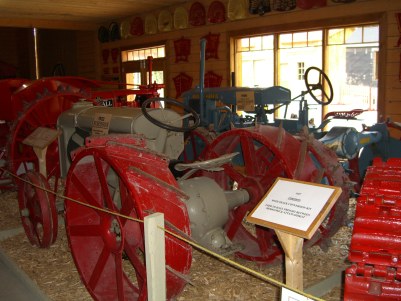
Adjacent to the Habitat is Heritage Village, a walk back into the early Twentieth Century, with guides in period costumes in summer. There is a ski mobile museum with models back to 1960. The rest of the village consists of a home, a general store, an automobile repair garage and service station, a barn of old farm machinery and equipment, antique cars, and myriads of small items. Soon to be complete are the animal barn, schoolhouse, and shoe shop. All items in the village are in working condition and are demonstrated at various festivals and events throughout the year. School children come here to learn how their forebears lived. This superb collection is the property of Jerry , who has searched for antiques in working condition as a lifelong hobby. He has loaned his collection to the city for this education center.
To make your visit North complete, you must continue from Cochrane on the Ontario Northland train to Moosonee at James Bay, the end of the railroad line north at the edge of the sub-arctic region, where polar bears are occasionally seen in the wild. The best time for tourists to go is July and August when you can ride the non-stop Polar Bear Express, which leaves Cochrane in early morning and travels through beautiful tundra and dense forests, crossing picturesque rivers. After the first few miles you’ll see the rare goose-hunting or fishing shack as the only signs of civilization along the way. At one point in the distance, where only a construction dirt road leads, is the enormous hydro-electric dam on the Abitibi River. In the early 1900’s this track was miraculously laid through the swamps of this wildly remote territory laced with rivers and tributaries. It had to be built on a special corduroy foundation of logs, canvas, and gravel, and it utilizes a non-ribbon form of track to withstand the undulation of the wetlands and the extreme temperature changes. With reserve seats that are oh-so-comfortable, a special observation car, and dining cars with freshly prepared meals, you can sit back and enjoy the scenery through the large bay windows, arriving by mid-day in Moosonee at the mouth of the gigantic Moose River, where it empties into James Bay. There are many land or water excursions or hikes you can choose to fill your delightful afternoon before returning on the train late at night, or you can stay overnight in one of several modest motels or B&B’s in Moosonee, a Cree Village where U.S. and Canadian armed forces had a base in World War II.
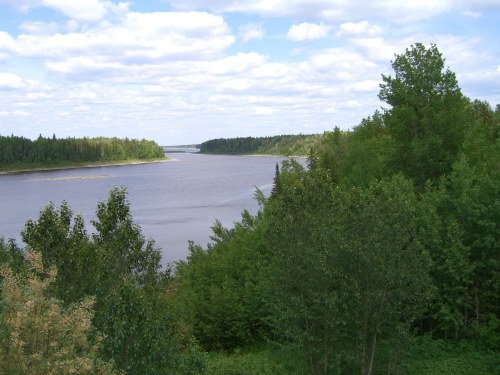
We chose to take a water taxi from Moosonee across Moose River to the Mocrebec town of Moose Factory, which was founded in 1673 by Hudson Bay as their main fur trading post. We were fortunate to get reservations at the Cree Village Ecolodge (1 888 273 3929), which should be booked far in advance, for the most luxurious stay available in the area. Owned by the Mocrebec Native Peoples, the lodge is extremely well-managed by Greg Williams, who also may help the excellent cook, Jerry, to prepare your delicious meals. And the meals are fabulous! Although the 20-room lodge offers normal restaurant fare for locals who enjoy eating here, tourists from all over the world usually prefer cuisine specialties from local wild game: caribou, moose, buffalo, and numerous fish. The freshest of vegetables and homemade desserts make your meals forever memorable. Our favorite was buffalo raggout. And be sure to have an evening delight of their special cranberry tea. (No alcohol.)
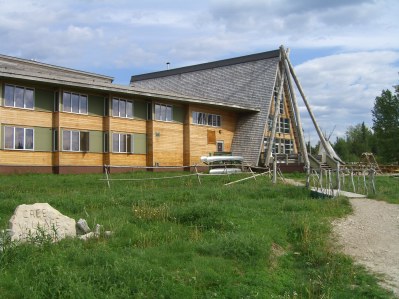

The unique lodge, which is non-smoking, was built to simulate Native People’s early homes and to use only the best environmentally protective materials while offering the traveller extreme comfort, hospitality, and relaxation. Our room, with its handmade log furniture and modern bath had luxurious cotton sheets and wool carpet and woven wool covers. Our beds were so very comfortable, with all natural content. At the enormous river’s edge, we loved looking out at the late night sunset and drifting off to sleep with the lapping water gently creating our lullabye. Birdsong awakened us to our nice continental breakfast. Proud not to be an Indian Casino, Ecolodge is a prime example of the real First Nation’s ways of living close to nature and respecting it with the seventh generation to come always in mind, protecting Mother Earth forever. Although you will find TV and Wi Fi, here is the respite and welcome you came for, the relaxation you need, offered with the feel of a comfortable, modern home.
Stay for days in summer to enjoy the water excursions, hiking, fishing,canoeing, river rapids, kayaking, and sports offered by the Macrobec guides at Moose Factory and by Two Bay outfitters on the Moosonee side of the river. Frequently tourists see seals and beluga whales and many different species of sea birds. Weather and safe conditions permitting, Eco-Lodge will make arrangements for your desired excursions, including a tour of the First Nation town and native arts and crafts. In September for about two weeks when leaves are at their peak, you can ride the Dream Catcher Express on a different route for color. In winter you might want to return on the Little Bear train to enjoy all the winter sports of cross-country skiing, ice fishing, snow shoeing, snow mobiling, and the beautiful Arora Borealis on long winter nights.

The daily Little Bear is one of only two trains in Canada which operate as a flag-stop service to local residents in out-of-the-way places, carrying freight and passengers to wherever they need to stop and picking them up wherever they flag the train. For nearly a century, going north on Monday, Wednesday, Friday and returning South the alternate days, it has carried everything from sacks of gold from the old mine, to mail, to heavy machinery, live animals, and supplies. We loved talking to the experienced and friendly conductors and engineers who make sure every passenger is comfortable, welcome, and gets the service he or she wants. Most of these highly qualified men are second and third generation train workers and love their job, and it shows. It was such fun to eat in the dining car, and we were amazed that Dianne and Irene prepare the really tasty fresh food in the on-board kitchen each day. The satelite radio constant communication and the advance track scouts, who check each segment of the track before the train passes over it, assure that emergencies of any type in any kind of weather can be handled safely. If you are a train afficianado you’ll find this route irresistable. If you have not been a train passenger before, this ride will addict you to the clickety-clack experience!

Editor’s Note: We are especially grateful to Diane Bradley and Terry Vaschon for capturing the moment and introducing us to all the wonderful holiday experiences available in Cochrane, the James Bay area, and on the ON railway system, which we might not have discovered without their expert help.
 Real Travel Adventures