

Island of Fire. Orchid Isle. The Big Island. Dynamic Hawaii, the southernmost tropical Hawaiian island, offers adventures for all ages and interests. Adventures can come from the sea with sailing, fishing, diving and whale-watching excursions. They can come from hiking, driving or viewing the mountains that reach more than 13,000 feet into the sky. Mauna Kea’s often topped with snow. Mauna Loa has a side kick that spews hot lava. Island scenes, island scents and island history add appeal to Hawaii’s 4,030 square miles. Some favorite adventures of mine and my family members follow, but for current details like hours, price and specific directions pick up free booklets when you land at Kona Airport. Tall racks hold an abundance of materials: “101 Things to Do in Hawaii”; “Big Island Gold”; “This Week in Hawaii”; maps; flyers touting tours.
We often stay in condominium resorts along the Kona Coast (the island’s west side), a few miles south of the town of Kailua-Kona. Great sunsets come with those dwellings at the water’s edge. One of my quiet adventures includes watching the bright orange sun as it drifts toward the cobalt blue ocean, changing white clouds to shades of raspberry and pink.

“What was the most fun this February when we spent a week on the Kona coast?” I polled two grown daughters. “The snorkeling in the cove with all the colorful fish and the big turtles,” said Paula. “Yep, Kahalu’u Beach Park,” Peg added. “Those turtles have such hefty jaws that you can hear them crunch the algae off the underwater rocks.” They talked about the rented kayaks they paddled for two hours in Keauhou Bay. The rental included snorkeling gear, a surprise, so they weren’t dressed for swimming. No matter, they jumped into the bay, fully clothed, to be up close to more colorful fish. And more turtles.

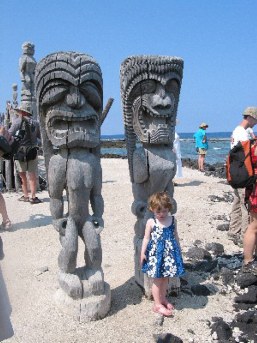
Head south a few miles from Kailua-Kona for those activities. Farther south, 22 miles from town, you’ll find the City of Refuge, Pu’uhonua o Honaunau National Historic Park, and a chance to soak up Hawaiian history and culture. Huge tikis guard the sacred spot where Hawaiians accused of a crime could run to for safety. Green turtles find refuge here, too, amidst peaceful coves and rocky reefs.
If you’re a coffee lover, the mountainous coffee territory (about 1,500-foot elevation) south of Kailua-Kona is a dream. Some plantations are serious about showing you coffee trees, roasters, and educating you about coffee. The beans roasting smell delicious, as is the coffee. Their sales rooms have pure 100% Kona coffee, upwards of $30 a pound (or 10% Kona coffee at one-third the price). In a hurry? Stop at roadside “stands” to sample pure, flavored or mixed-bean coffee and make choices. Maybe take a few minutes to sit and sample coffee on a veranda that overlooks lush green cliffs below and the sparkling blue ocean beyond.
Farther south and east, about 90 miles and more than a two-hour drive from Kailua-Kona, you’ll find Hawaii Volcanoes National Park and Kilauea, the island’s fire-making spot. Kilauea Volcano, the newest property on the planet still continues to grow. Explore the Visitor Center displays, ask a ranger about eruptions and get advice on safe places to walk near the hot spots.
Three times I missed seeing red hot lava, but thrilled to see great clouds of steam rise when the hot lava flow spilled into the ocean. Too chicken to try a helicopter ride, next time I might choose a small plane tour. Black lava rock covers miles of the surrounding land: chunks of hard frothy rock; rock that’s smooth like chocolate frosting smeared on a cake. In still other spots, the molten lava became glass. When lava oozes through the ground, it sometimes leaves a cave-like hole big enough to walk through. You can do that at the Thurston Lava Tube where tall chartreuse green ferns decorate its entrance. They grow right out of the desolate soil.
North and northeast of Kailua-Kona (another day!) visitors find spectacular cliffs, high country ranches, beaches and old sugar towns. Cowboy country is Waimea, on the slopes of another volcanic mountain, Mauna Kea. Stop for steak in this paniolo country, or picnic along the mountain slopes. We once stopped by the side of the road, up about 3,000 feet, in breezy but warm weather. The sandwiches and sodas were the best ever high above the sea beneath the clouds surrounding the mountain peak.
From Waimea, one road leads to Honoka’a on the eastern coast. A few miles farther along the coast you’ll find the Waipio Valley Overlook, 1800 feet above the sea. From there, it’s a spectacular view of the sea cliffs beyond with waterfalls that spill down them, the dark beach, and a glimpse of the valley.
We drove to the impressive overlook several years ago, but when we saw pictures our girls took going through Waipio Valley on horseback, we wished we had gone with them.
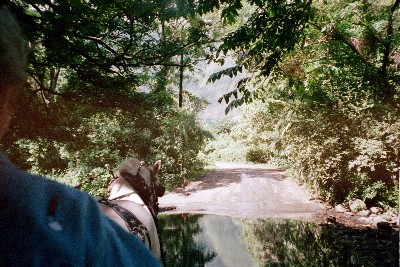
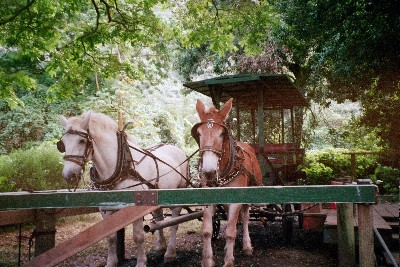
We found a way that fit us better three years later when we chose a ship’s tour out of Hilo called the Waipio Valley Wagon Ride. After an hour and a half bus ride from Hilo through beautiful country along the Hamakua Coast, we changed to a four-wheel drive van (no regular cars allowed) at Honokaa. After a wild ride down the steep (25% grade) narrow road to the valley, we transferred to an open mule-drawn wagon that took us past taro patches and farmers’ huts, kukui nut trees and papaya trees. We bumped across rocky streams – a bouncy ride through a tropical paradise.

Our young driver/ guide, Carlos, lives in the “village” with a back-in-time lifestyle by choice. He came to the valley in the late 1980’s, lives here with his wife and two children and 80 other people, a close-knit community. He told some of the realities that come with idyllic living in a remote location: 4 phones in the entire community; limited electricity and water; no cable TV; some flush toilets; children go to school fourteen miles away (2 round trips a day for his wife). Also, wild horses live in the valley – protected – so they gallop through gardens and farms wherever they please.
Another day trip that my husband and I like is the drive along the Kohala Coast north of Kailua and the airport. We have explored the grand hotels, recently the Hilton Waikaloa where visitors can roam the grounds, swing in a hammock overlooking a serene blue bay, be transported from one spot to another by canal boat, and check out the dolphins. Continue north to find beaches like Hapuna Beach State Park and on to the top of the island and the town of Hawi.
Hawi takes visitors back to earlier days. It’s fun to wander in and out of the small town’s shops and art galleries, pick up a mac-nut ice cream cone, or shave ice, in one of the diners. We drove to the end of the road on one trip for history – King Kamehameha’s birthplace and statue.
“Don’t forget the shopping,” said daughter Paula. Downtown Kailua-Kona is fun. I never miss ABC stores for food, drink and souvenirs nor a Hilo Hattie’s for a new shirt and a free cup. There’s a Farmer’s Market downtown on some days, and this past trip we found a strictly food market north of town in the industrial section. We bought bargain pineapples, papaya and vegetables straight from the farm. Downtown Kailua-Kona is also a place to spend a few hours browsing and eating. Stroll around the King Kamehameha Hotel’s historic grounds, visit the Hulihe’e Palace nearby, and find more shops along the waterfront.

A highlight of our February trip with “kids” from four to forty-plus, was the whale watching trip starting from the coast north of the Kona airport. The whale watching boat was sturdy, held about 20 people (not a catamaran), and the captain guaranteed we’d see whales (pretty safe in February). We saw a dozen or more humpback whales humping up out of the water and then blowing air with a “whoosh” that made water spouts. Picture-takers leaned over the side, squeezed up to the front of the boat, took endless shots of whale backs and fins and water spouts, thankful for digital cameras.

That’s a bare beginning of activities we’ve taken in four trips in the past decade. The island of Hawaii has a variety of extraordinary scenery. You do have to search a bit to find beaches to catch the sun’s rays. On this island we lie around pools for sunning. Many restaurants sit along the Kona Coast at the water’s edge where mai-tais and dinners come with sunsets, the scent of the ocean and the splash of the waves. Paradise it is. Aloha!
 Real Travel Adventures