

Sitting in the airport in Puebla, Mexico, staring out the window at the flat, hot, empty asphalt parking lot, I can’t help but think to myself, So this is how they do it in Mexico. This airport is more disorganized than an ice cream shop, I wanted to scream! The airline only operates one outbound flight a day, to Houston, and today, ours has been cancelled. Go figure. Just a bus trip to Mexico City and two more flights later, and I’ll be back in my apartment in Boston. It’s been quite the long weekend.
It was surely easy to get to Puebla, I thought, now how come it’s so hard to leave? Maybe it’s because Puebla is the kind of place that sucks you in, so vastly different than New England in every essence: from sights, to tastes, to scenes, to scents. As I try to get my mind off the long day of travel ahead, a montage of images from the past four days wheels through my head.
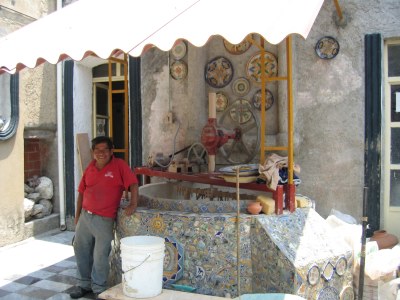
The crisp and juicy crunch of watermelon cubes sprinkled with lime juice, the clamor and chaos of the outdoor market, the sweat droplets slowly falling off the brow of a man who spends all day, every day, crafting handmade talavera pottery in a courtyard behind the factory store: in Puebla, everything we saw had a different flavor to it, an edge I won’t soon forget. Especially the cockfight, where traditional entertainment jarred against 21st Century cultural norms, reminding me at every moment how far away from Boston Puebla really is.
It was dark and hot and sticky when we arrived at the annual feria for the cockfight. I can still taste the scent of fried dough on the air as we wove through the tightly packed stalls, passing vendors hawking handmade goods, the colorful flags over their heads dancing to the clang of traditional music as locals and tourists bartered side by side for hand crafted wooden trinkets and blown glass decorations. Leaving the flashing lights and excitement of the carnival rides behind, we had no grasp of the scene we were about to encounter.
Passing counters displaying large legs of spit-roasted ham and flowering cuts of bright and juicy mango fruit, we squeezed our way around young children begging for candies and sweetened nuts. Older people slowly strolled past, leaning on their canes and holding each other’s arms, gazing about as if searching for the sights and sounds of ferias of years past. On that night, the spirit of victory was as alive as it had been at the great Battle of Puebla, over a hundred years ago.
As we reached the cockfight pavilion, though, it was clear that victory had yet to be decided. We entered the stadium and followed as an attendant led us to our seats, wiping them down as if we were about to view a grand opera. But this opera would have no melody to it, we were sure, just the faint fluttering of feathers as the roosters’ carried on their frantic dance of death.
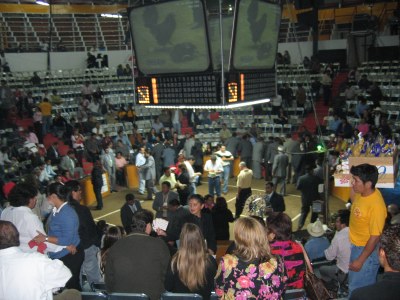
Inside the tin roofed stadium, I searched the crowd for signs of apprehension and guilt about the morbid rooster battles that were about to unfold, but found none. This was not the cockfight of my imagination, that’s for sure, played out on the dusty floor of a back-alley cantina, a cluster of a dozen men betting on the fates of the birds on the ground, shouting and waving dollar bills. No, this was to be a cockfight Puebla-style, the real thing, a true Mexican tradition. It was garnering the attention and respect of a Las Vegas boxing match, I observed, a tacit understanding within me beginning to take hold. Except in this ring, I knew, only one will come out alive.
Waiting for the games to begin, we sipped red cans of Mexican beer sprinkled with salt and lime juice, watching as the seats in the arena began to fill. Men with slicked back hair and expensive dress shirts draped their arms around their dates, the women sitting on the edge of their seats, just as anxious and hopeful for the entertainment ahead. Beside them sat fathers with their sons, the young boys eager to learn the tricks of the trade, waiting to watch the chaotic battle of life and death.

We sat and waited some more, munching on bags of potato chips doused with a spicy salsa-like liquid. We were about to watch the great games of riches and regret play out in front of us, and it was exhilarating.
Down on the floor, bookies dressed in suits and ties crowded the center of the arena as wealthy looking spectators peeled off thousands of pesos for one cock or another, judging the fate of their wealth and dreams on the rooster who shows the most promise, the most vicious vigor, and the greatest luck. Life or death, money or loss, whatever happens, the bettors would know soon enough.
And in a roar of excitement, the games began. We didn’t understand much of the announcer’s language, but we knew. We sat, rapt with attention, as the crowd grew silent around us, and watched as handlers brought the roosters into the sand-covered ring. Bettors stood with nervous energy, hands clasped in sweat-drenched anticipation. We had to crane our necks to see the roosters meet in the middle for their first face off, a final kiss of death before being pulled apart, placed on the ground, and sparked to action. With sharpened hook-like blades tied to their talons, the deciding moment would come soon. They had to know, and there would be no looking back.
Seconds stretched for minutes as we watched the frenzied flurry of feathers and dust. We take it all in: A shriek from the one with the white plume, a drop of sticky red blood falling to the sand with a silent plop. We watch as the red tailed rooster scurried a foot or two in the air, only to quickly fall to the ground again before resuming battle. All around us, cheers and screams took hold of the acrid air as the birds wrangled in the dirt. Spectators punched their fists in the air, clasped their hands over their mouths. It was all sheer chaos and confusion and madness and mess, but not without some semblance of order. Because we knew, like everyone else in the stadium, that the cockfight signifies not just pandemonium, but peace too.
Suddenly, a buzzing bell marked the end of the battle, and we watched as a rooster’s head fell to the floor, his beak piercing the sand. The handlers stoop to scoop their prize birds, bright crimson blood droplets soaking the front of their shirts before falling onto the ground below. For one rooster there was victory, a moment to be hoisted in the air, a chance to bask in the cheers of the 2,000 spectator crowd. For the other, a slow suspended death, held upside down by the feet, carried off to who knows where.
And just as quickly as it began, it was efficiently cleared away. Brooms swept the feathers and blood from the ground as the bookies returned to the ring in a rush, ready to answer to anxious faces marked by riches won and lost. Men around us took long drags of cigarettes, debating the merits of placing their pesos on the red cock versus the green one. Chaos and organization sat side by side, and we watched while a game deemed barbaric in much of the developed world garners fervent enthusiasm here in Puebla. There was no denying the energy in the air, so thick and so tangible you could almost reach out and grab it from amongst the uproar and hubbub of the arena.
We stayed for the next fight, and the next, though our American conception of cockfighting’s very brutality made us shield our eyes from the gore at times. It was like watching an accident on the highway and not being able to resist the urge to stare, to gawk, to take it all in. But at the same time, we felt pity and horror at the abject finality of it all. As the cockfights went on, we watched as some of the roosters didn’t give up as easily as they should. Right in front of us, these roosters clawed at each other, droplets of blood littering the floor, and fell to the ground only to get up again. My stomach turned as I watched a handlers suck the blood out of his cock’s mouth, clearing their airways so he could keep fighting, keep battling until the end.
The cocks, born and bred and traded and bartered their whole lives, have been passed to the highest holder in anticipation of this final moment, I know. Eventually, whether in this fight or the next, they will find themselves splayed on top of another, their final thoughts playing out to the roar of the crowd, which has staked so much on their very existence and its inevitable end.
The Mexicans have a way of expressing regret at the carnage, as one local acquaintance told us. The cockfights that night were the scene of “too much blood,” not “a lot of blood,” as an American would put it. And I couldn’t help but wonder, as the last winnings were doled out by the slick bookies, how much blood is too much? But we didn’t have much time to consider it. Moments after the final cockfight is finished, and the last victor watched his foe surrender his head to the dirt, a big burlap cover was brought into the ring. One of Mexico’s most popular pop stars was about to take the stage, and if it weren’t for the cardboard boxes filled with bloody scraps of rooster carnage in the hallways, we could almost let the sights and sounds of the cockfights fade away into the melodies of Emmanuel’s music. It was a celebration, after all. A celebration, Puebla style.
 Real Travel Adventures