

By Saul Schwartz
Flying into the Ted Stevens Anchorage International Airport from the east coast of the U.S. requires one stop; ours was in Houston. My wife Fern and I had never previously been to Alaska, so we booked a five-night Alaskan land adventure prior to our Viking Ocean cruise. We really wanted to see the sites on land first.
It only took about twenty minutes to get from the airport to our downtown hotel, covering about seven miles.
Anchorage:
The biggest city in Alaska has a population of around 300,000. The city is in a scenic coastal lowland, surrounded by the snowcapped Chugach Mountains.
We stayed two nights at the Marriott Anchorage, located at 820 West Seventh Avenue. We took advantage of the hotel’s large fitness center, which included a wide variety of cardio equipment and free weights. Although this Marriott is an older property, the rooms were very comfortable, the Internet worked well for Alaska and the staff was attentive to our needs. We had better than average breakfasts at the hotel. The convenient downtown location was great for walking to various attractions.
We began with a short city bus tour of the historic downtown, driving by Earthquake Park, established in memory of the monumental 1964 earthquake in Anchorage. We then headed to Lake Hood.
Alaska Aviation Museum – We spent about one hour listening to a very interesting presentation by a bush pilot. The museum is located right off the Lake Hood Seaplane Base. Opening in 1988, this museum displays historic aircraft, artifacts, and memorabilia. The museum explains the importance of aviation in Alaska within its four hangers of exhibitions. In one area, we were shown a work in progress where volunteers are restoring a World War 2 Curtiss P-40 aircraft. The museum is open daily.
The Museum adjoins the Lake Hood Seaplane Base and Air Harbor, the world’s largest and busiest seaplane base. We spent a few minutes watching floatplanes take off and land from the shoreside park. The base is a short drive from downtown Anchorage.
Anchorage Museum – We spent an entire afternoon at the Anchorage Museum, clearly the best museum in Anchorage. This large museum has exhibits featuring the art, history, ecology, and science of Alaska. The world-class museum is located on 625 C Street, in the heart of the downtown. Opened in 1968, the museum has since expanded in size of space and in terms of its collections. We particularly enjoyed the art exhibits by Alaska artists, the dioramas of Alaska’s native peoples, whimsical bear sculptures in several colors and totem poles. One entire wing house the Smithsonian Artic Center, with Alaska native objects. Current temporary exhibits feature the 100-year anniversary of the Alaska Railroad and the art of photographer Bradford Washborn, with great pictures taken in Denali National Park. Adult admission is $20 per person, and we also paid an additional fee for the planetarium show. We concluded our visit with drinks in the Marx Brothers café.
Places to Eat – We had a fun lunch at Urban Greens, an informal restaurant focused on subs and salads. Located downtown at 304 G Street, the eatery has limited seating. We enjoyed a salad with excellent hummus. The staff was very friendly, and the prices were slightly high, as seemed typical for food prices in Alaska. We had a second lunch at the food court on the fifth level in the downtown 5th Avenue Mall, after we needed to check out the mall stores for an electronics item. The food court offered several food options within the large but old-fashioned mall.
We had a group dinner at the Bridge Seafood Restaurant in Ship’s Creek. The Bridge, located at 221 West Ship Creek Avenue, currently only offers dinner to tour groups. Our buffet-style dinner had a nice variety of food offerings, but the grilled salmon entrée was disappointing. The strawberry rhubarb crisp dessert with a granola crunch topping and the garden salads were more flavorful.
Ship Creek – Just outside The Bridge restaurant, we watched locals fish for salmon with fishing poles and nets. Several species of salmon spawn in Ship Creek. It was exciting to see the catching of the fish, which are then weighed on a hanging scale. This is the only area where we saw salmon swimming upstream during our trip.
We went on several walks downtown. The Visitor Information Center, set within a rustic log cabin with a sod roof, has a fun milepost outside showing directions to various cities around the world. For us, it showed 3322 air miles to Washington, D.C.! It is located at 4th and F Streets. A series of colorful bear statutes are positioned throughout downtown, along with numerous murals and sculptures.
On to Denali National Park:
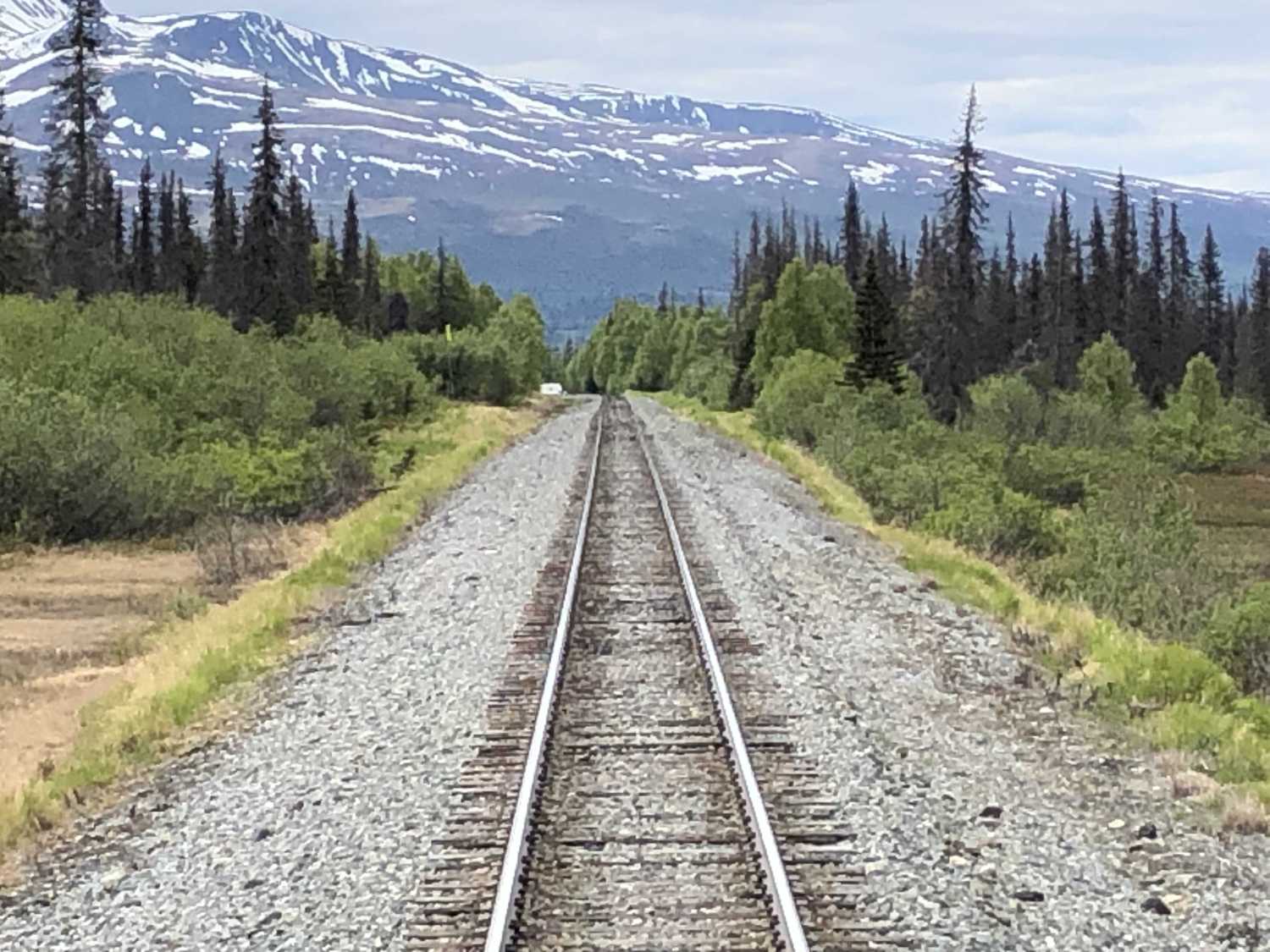
After two days in Anchorage, we arrived at the Anchorage Railroad Depot for our train to Denali National Park and Preserve. Denali is 240 miles north of Anchorage. We spent the full day on the White Pass and Yukon railway trip. On the trip, tour guides point out the sights and explain the railway’s history. We were told that tipping the host guide on the train is common practice.
The state-owned Alaska Railroad runs 470 miles from Anchorage to Fairbanks. The impressive dome railcars allow a very picturesque journey.
The historic narrow gage train is much roomier than a tour bus. The dome cars provided great window views and we were able to step out of the back of the car to take pictures and have an even better view. Our trip included very nice breakfasts and lunches, with several meal options.
This is reputed to be the most scenic train ride in Northern America, with views of waterfalls, trestles, mountains, and tunnels along the route.
In 1898, construction began on this railroad. Construction was completed in 1900. Originally the route was focused on gold mining and supplies. In 1982, the railroad suspended operations. In 1988, the railroad reopened as a tourist attraction. It is an international historic engineering landmark.
Upon arriving at Denali, we attended a short presentation in the Murie Science and Learning Center. Although the presentation was basic, it introduced the animals of Denali, focusing on prey and predators. The park was created in 1917 as Mount McKinley National Park. In 1980, the park’s name was changed, and its area tripled.
We stayed two nights at Denali Park Village. There are no lodges within the park, and the Village may be the closest lodging option to the park. The Village lodge offered extensive breakfast buffets, but since the Gold Rush Dining Room was the only option, it became quite crowded, despite the efforts of the wait staff. At dinner time, we opted instead for an informal meal on the rustic outdoor patio. Operated by Aramark, the Village offered a free shuttle to the National Park Visitor Center, several times per day. The Village is about 7 miles from the National Park and the shuttle took about 15 minutes to get to the Visitor Center. The standard rooms are typical for a National Park lodge. The grounds were nice for walks, as there was no fitness center on-site.
We did a one and one half-hour hike on the Triple Lakes Trail just inside Denali National Park. This trail provides visitors with one of the best opportunities for a serene immersion into the boreal forest of interior Alaska. The improved trail begins with a gradual and consistent hill climb providing spectacular views of the Nenana River and the glacially carved Yanert Valley. One trail head is located a short distance from the Visitor Center. The trail is rated moderately strenuous due to the hills. We walked over a short suspension bridge. As it is not a loop trail, we turned around after 45 minutes. The full trail would have taken about three to four hours.
Unlike many other national parks, because Denali is primarily a wilderness preserve, hiking areas are restricted to a few miles into the park from the Visitor Center. Nevertheless, there are several hiking trail options within this unrestricted area of the park. The park rangers at the Visitor Center provided maps and explained hiking options. Private vehicles are only allowed access to the first fifteen miles of the park road.
One of the highlights of our trip was our five-hour Tundra Wilderness Tour into Denali. Our tour took place on a small bus with a guide who pulled over every time we or he saw wildlife. The guide was a local naturalist. During this trip, we saw two grizzly brown bears, many caribou, bald eagles, moose and dall sheep. Our guide had a special camera system whereby he was able to enlarge pictures of the animals onto monitors on the bus. The tour included a box lunch which we ate on the bus. We traveled about 30 miles on the park’s road, which is only accessible this deep into the park with this type of tour.
We stopped several times to see wildlife and observe mountain views. Due to a road collapse, the thirty-mile point is now the required turnaround point for these tours. Ironically the peak of Denali cannot be seen from within the park. One particularly beautiful stop was at the Teklanika River, with its views of the river and the mountains.
Fern and I also really enjoyed the thirty-minute sled dog demonstration. Denali is the only national park with a kennel of sled dogs. Rangers offer demonstrations daily in summer. Demonstrations are given three times daily in peak season. Some seating is available for the demonstration, and there is plenty of standing room. Rangers and dogs work together to demonstrate a traditional Alaskan mode of travel. These unique programs include an opportunity to tour the park kennels and see the beautiful Alaskan huskies. A shuttle from the Visitor Center took us to the historic kennels. In the winter, the dogs assist in patrols.
We had a great dinner at the very lively 49State Brewery, about fifteen minutes from the national park. Outside the brewpub offered music in a very crowded atmosphere, celebrating the summer solstice. Fern and I ate inside, and we were pleasantly surprised at the amazing vegan Budda bowl, which was very tasty with many vegetables. Our group was otherwise served buffet style. On the buffet, the grilled salmon option was only mediocre.
Talkeetna:
Next, we took a bus twenty miles south to Talkeetna. At this location, the views of Denali are superb! Talkeetna is a quaint village. There is an excellent viewpoint of Denali at the end of Main Street.
We spent one night at Talkeetna Wilderness Lodge. The Lodge had a small fitness center and offered us a chance to do our laundry in coin-operated machines. The Lodge is about one mile from the town and was easily accessible with the hotel shuttle. The grand lobby includes a towering stone fireplace and windows framing Denali and other local mountains. The guest rooms were small but comfortable. We were very fortunate to see majestic views of the tallest peak in North America, at 20310 feet above sea level. Views of the peak are only visible about 30 percent of the time due to cloud cover. The on-site Foraker Restaurant provided an extensive breakfast buffet, but once again the staff had a hard time keeping up with the crowds (given that this was the primary dining option at the Lodge).
We spent several hours in Talkeetna walking around Main Street and enjoying the mountain views. The historic Nagley’s General Store opened in the 1920s and is the main place for groceries, coffee, and snacks. We had a great salad lunch on the outside deck at The Homestead Kitchen Restaurant. This newly established restaurant was a great place to sit and watch people stroll up and down Main Street. The lunch menu had a nice variety of salads and bowls.
We had dinner at the informal Mt. High Pizza Pie restaurant, further down on Main Street. This lively restaurant offered tasty vegan options, flatbreads as well as pizza options. We enjoyed flatbread with hummus and excellent salads. During our dinner, Fern and I listened to the live music outside in the beautiful garden deck.
There is an historic district within the town which preserves about thirteen buildings from the town’s mining and railroad era, including several cabins. We stopped at Ole Dahl Cabin number 1. Ole Dahl immigrated from Norway in 1906. He was a “jack of all trades” like many others and did whatever work to survive. He built this cabin around 1916. It is likely now the oldest building still standing in Talkeetna.
On to Seward:
On the way to Seward, we stopped at the Alyeska Resort. At the base of Mount Alyeska, is the Alyeska luxury resort. Adjacent to the resort is the Alyeska Tram, an aerial tram that transports visitors above the valley floor to the 2300-foot level of the mountain. The tram cars hold 60 passengers and take about five minutes to go up or down the vertical slope. At the top, we enjoyed panoramic views at the mountaintop complex with a restaurant. In the winter, this is a major downhill skiing resort within the Chugach range. The tram is about 40 miles south of Anchorage in Girdwood.
Seward is about 127 miles from Anchorage. The town has a population of about 3000.
Seward enjoys a magnificent setting between snowcapped peaks and Resurrection Bay, a pristine harbor ringed by mountains. Seward was named after Abraham Lincoln’s Secretary of State, who defied public opinion to pursue the purchase of Alaska from Russia. Today Seward is steeped in marine culture, with its busy fishing port.
We spent two hours at the Alaska Sea Life Center in Seward, which is focused on animal preservation efforts. The Center is dedicated to putting visitors in close contact with cutting-edge marine research. We admired the species in the aquarium and learned about the research animals in the exhibit tanks. Fern and I learned how both injured wild animals and resident animals requiring medical treatment are nursed back to health. We spent some time with Tuq, the harbor seal who was born with a neurological condition, so the center is his permanent home. The Center profiles North Pacific mammals, birds, fish, and invertebrates. It is located at the south end of the town and may be Seward’s most popular attraction.
In the afternoon we headed to the Kenai Fjords National Park. Here the massive Harding Icefield covers an area of about 30 by 50 miles. We entered the park to hike to the Exit Glacier, one of Alaska’s most accessible glaciers. At the trailhead, there is a small ranger station.
The three-hour guided Exit Glacier Hike near Seward covered about two and one – half miles. The hike ends at a scenic overlook of this valley glacier with its massive wall of blue-tinged ice. The beginning part of the path is paved and level, but then ascends upward, so I would consider it to be of moderate difficulty. Fern and I enjoyed hearing about the topography, vegetation, and natural habitats of the glacial environment from our young guide. The glacier descends the mountainside from the Harding Icefield to the Resurrection River.
Rising global temperatures are affecting the glacier. Markers on the trail indicate its aggressive retreat.
After the hike, we began our Viking Cruise throughout more of Alaska.
The land portion of our trip was not to be missed! –
Tips for Alaska Land Travel:
Although the temperature in June was mild for Alaska, I would still recommend being prepared to dress in layers to maintain personal comfort. Rain is common and temperatures fluctuate during the day and night.
Drink plenty of water. The climate is dry and staying hydrated is key for your health.
The land of the midnight sun is a little disorienting in the summer. During our stay, which included the summer solstice, the sun “set” around 11:45 p.m. and rose around 4:00 a.m. Even between 11:45 p.m. and 4:00 a.m., it rarely was totally dark outside. Hotel blackout curtains are essential or alternatively, have eye shades to wear when you go to sleep.
We relied on two books for our trip that were somewhat outdated, but useful, nevertheless: Alaska By Cruise Ship by Anne Vipond and the Moon Alaska Handbook by Don Pitcher.
 Real Travel Adventures