

By Emma Krasov. Photography by Yuri Krasov
The South of France is a fixture in every American tourist’s dreams. Years before we make the trip, we eagerly learn about Le Sud, about its natural beauty and glamorous lifestyle, sunny beaches and historic cities, amazing culinary creations and legendary wines. We admire the artists, poets, and filmmakers who made South of France famous all over the world. When the time comes, we hurry to visit the most prominent sites, mentioned in every guide book, in every glossy magazine, on every tourist website, only to discover that there are still too many places remain to be seen, admired, and explored, just because this gorgeous land has a history so rich, a charm so profound, an appeal so endless, that it would be hard to embrace it all, not alone confine any impressions of it into a comprehensive narrative.
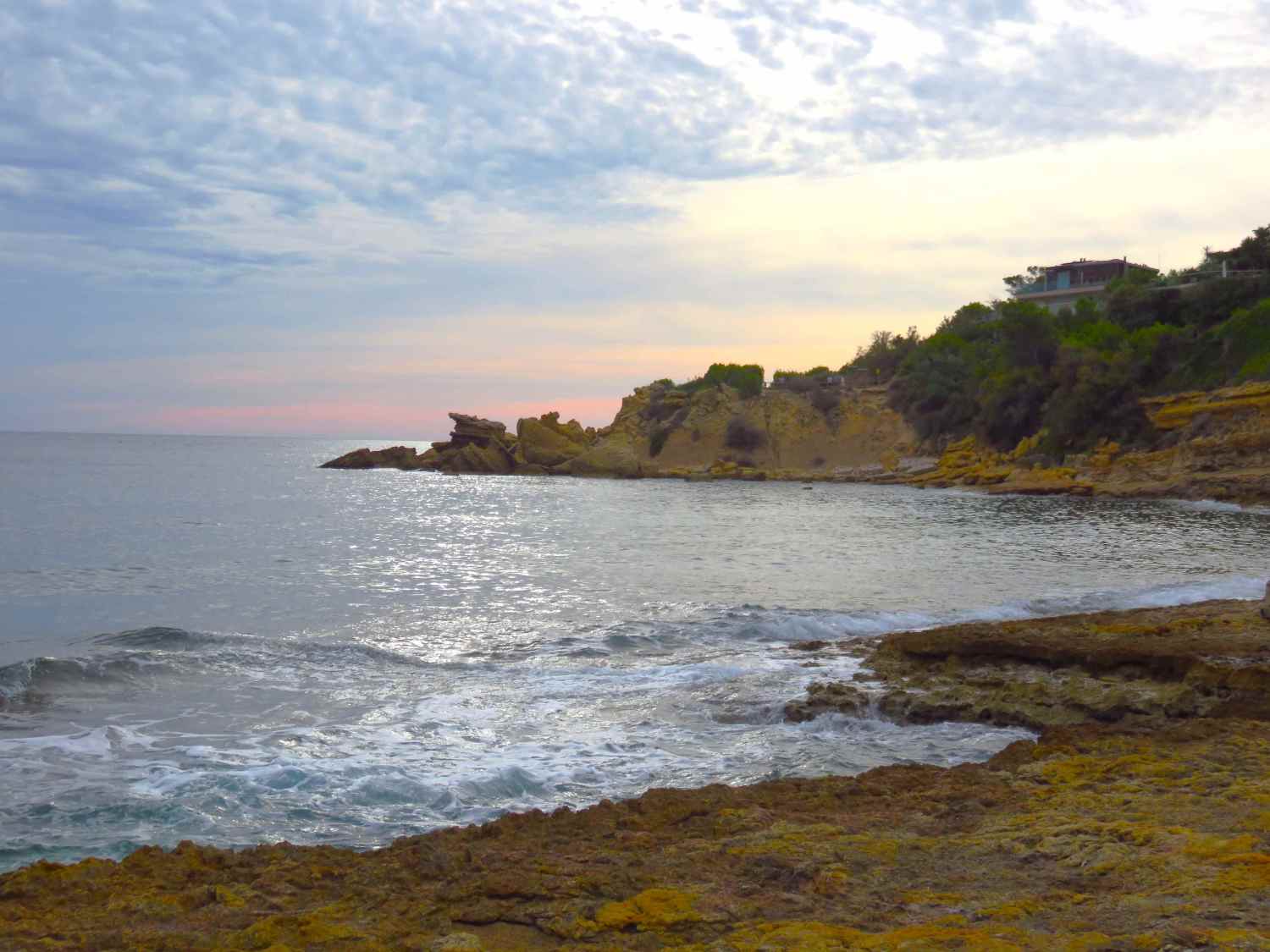
Our recent trip covered just a few memorable places in Provence-Alpes-Côte d’Azur, a large and diverse region in southeastern France, stretched out from the sparkling Mediterranean of the French Riviera to the snowy peaks of the Southern Alps—and I’m happy to share with you our journey to inspire your own adventure.
Marseille in a Day
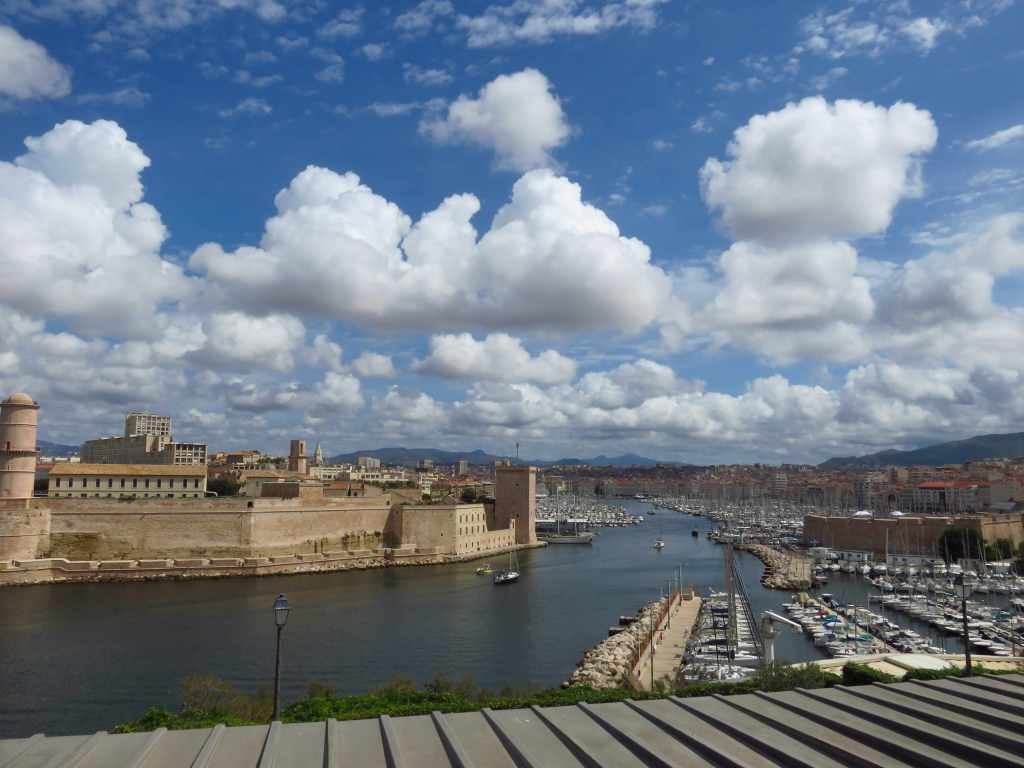
Having very little time to spend in Marseille, the oldest and the second-largest city in France, we took a radical approach to sightseeing, and headed straight to the Office de Tourisme de Marseille for a 24-hour CityPass, which includes unlimited access to public transportation, a ride on Le Petit Train to Basilique Notre-Dame de la Garde Romanesque-Byzantine church on a hill above the city, a Colorbüs tour (Hop-On Hop-Off panoramic bus), and entries to Le MuCEM—museum of European and Mediterranean Civilizations, and to Cosquer Méditerranée—a recreated Grotte Cosquer with prehistoric cave paintings—among other landmarks.
Our entire full-day exploration happened in and around the Vieux-Port (Old Port)—a walkable, tree-lined city center with pronounced historical significance and a lively, contemporary vibe.
Founded by the ancient Greeks around 6th century B.C., the city of Marseille, right on the Mediterranean coast and near the mouth of the Rhône River, was destined to become a major international port, and to maintain its maritime position for more than two thousand years.
Welcoming, vibrant, and open to all, Marseille absorbed many different cultures throughout its history. Today, you clearly feel its cosmopolitan atmosphere with influences from North and West Africa, Asia, Middle East, France’s European neighbors, and farther removed countries, like Turkey and Armenia.
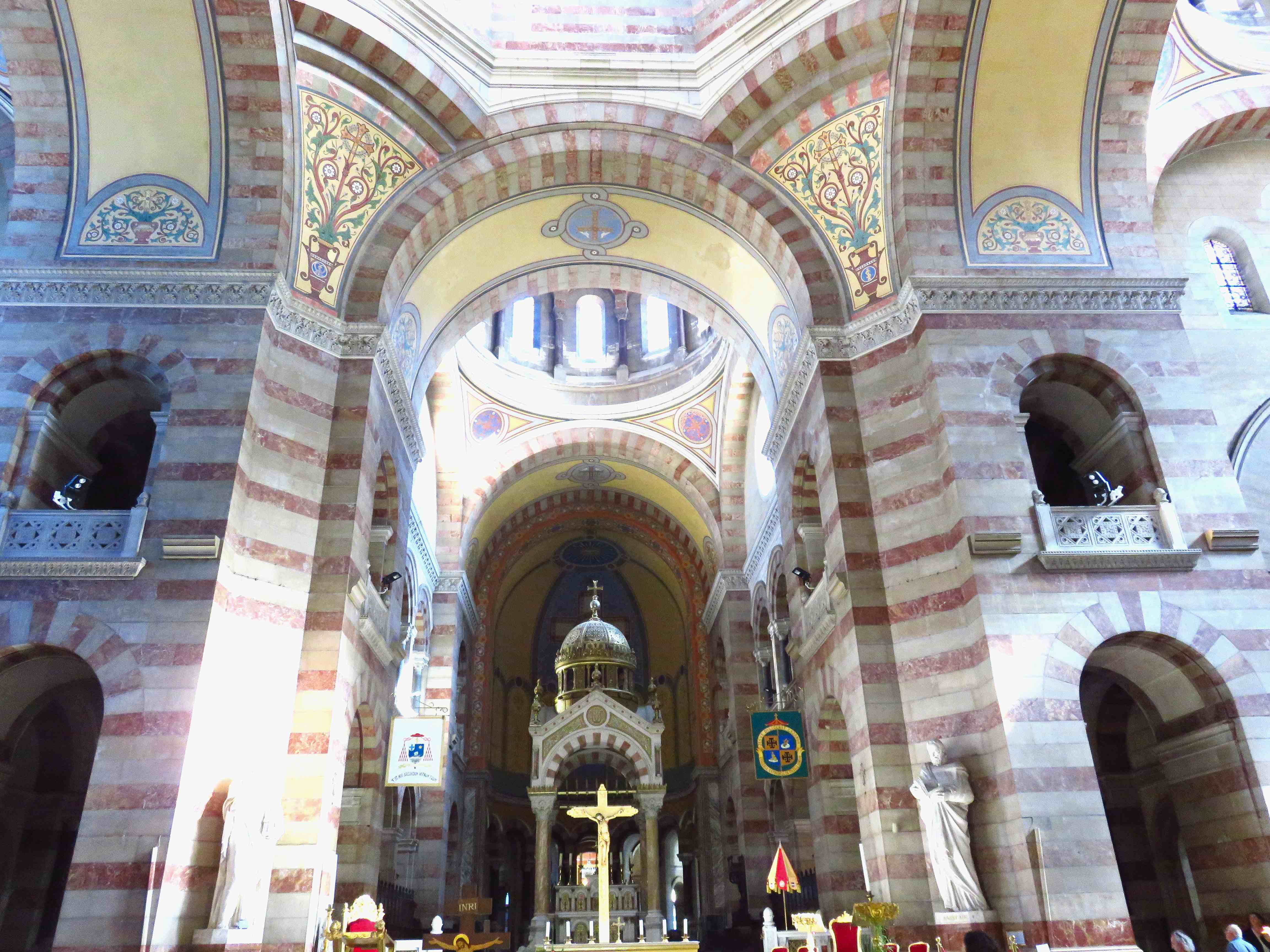
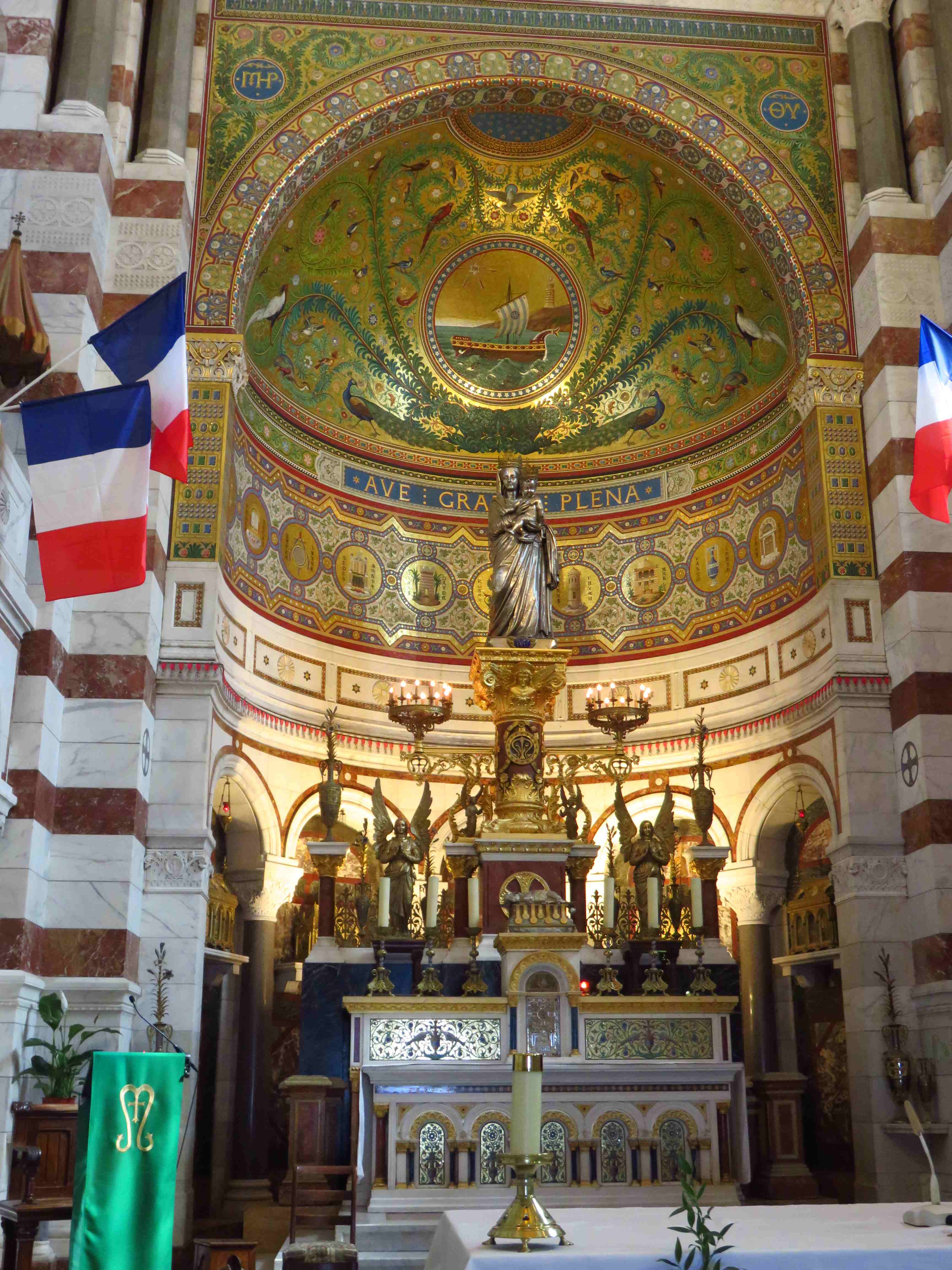
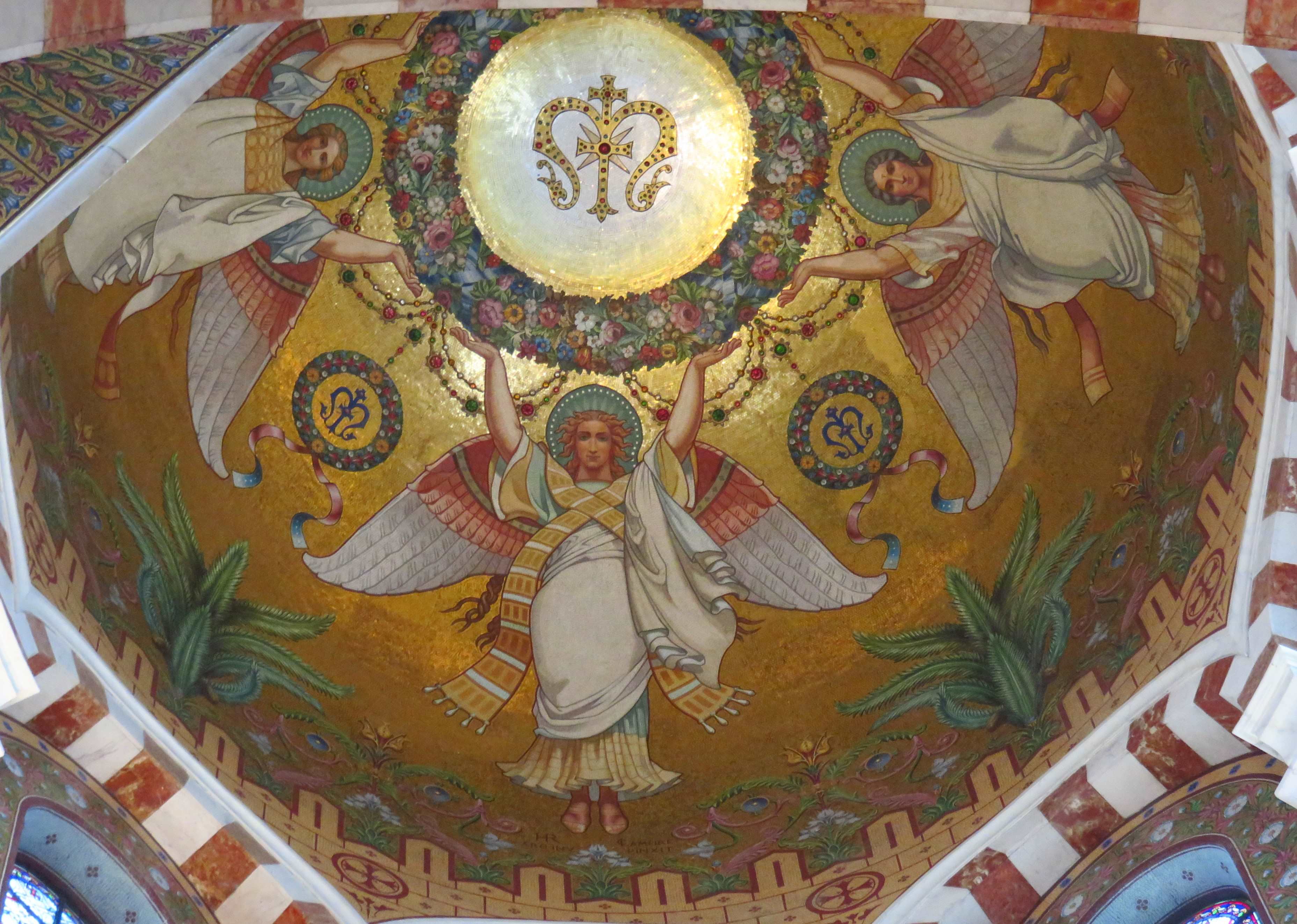
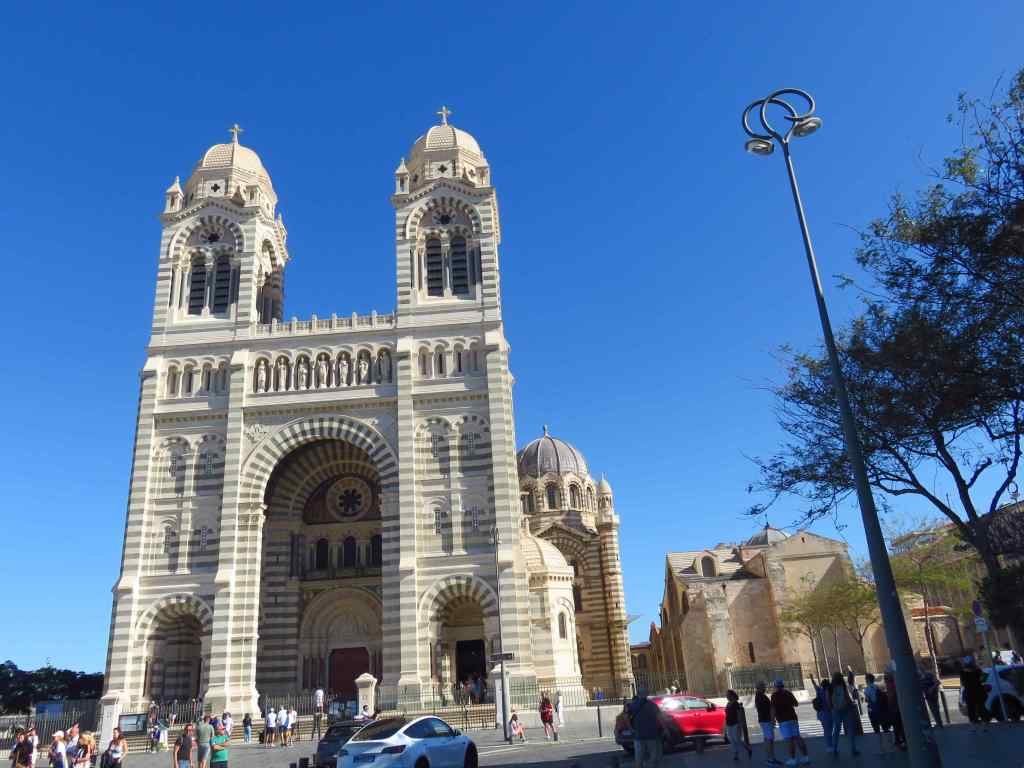
At the historic Old Port, we took a fun mini-train ride in an open-air car through the narrow city streets to the Notre-Dame-de-la-Garde, an iconic basilica nicknamed, the Bonne-mère (Good Mother). Popular with millions of visitors that flock to the famous church year after year, the lavishly gilded interior features a mosaic of a sailboat in its very altar, and multiple miniature models of tall ships, suspended from the ceiling—donated by the seamen who used to pray here for their safe return.
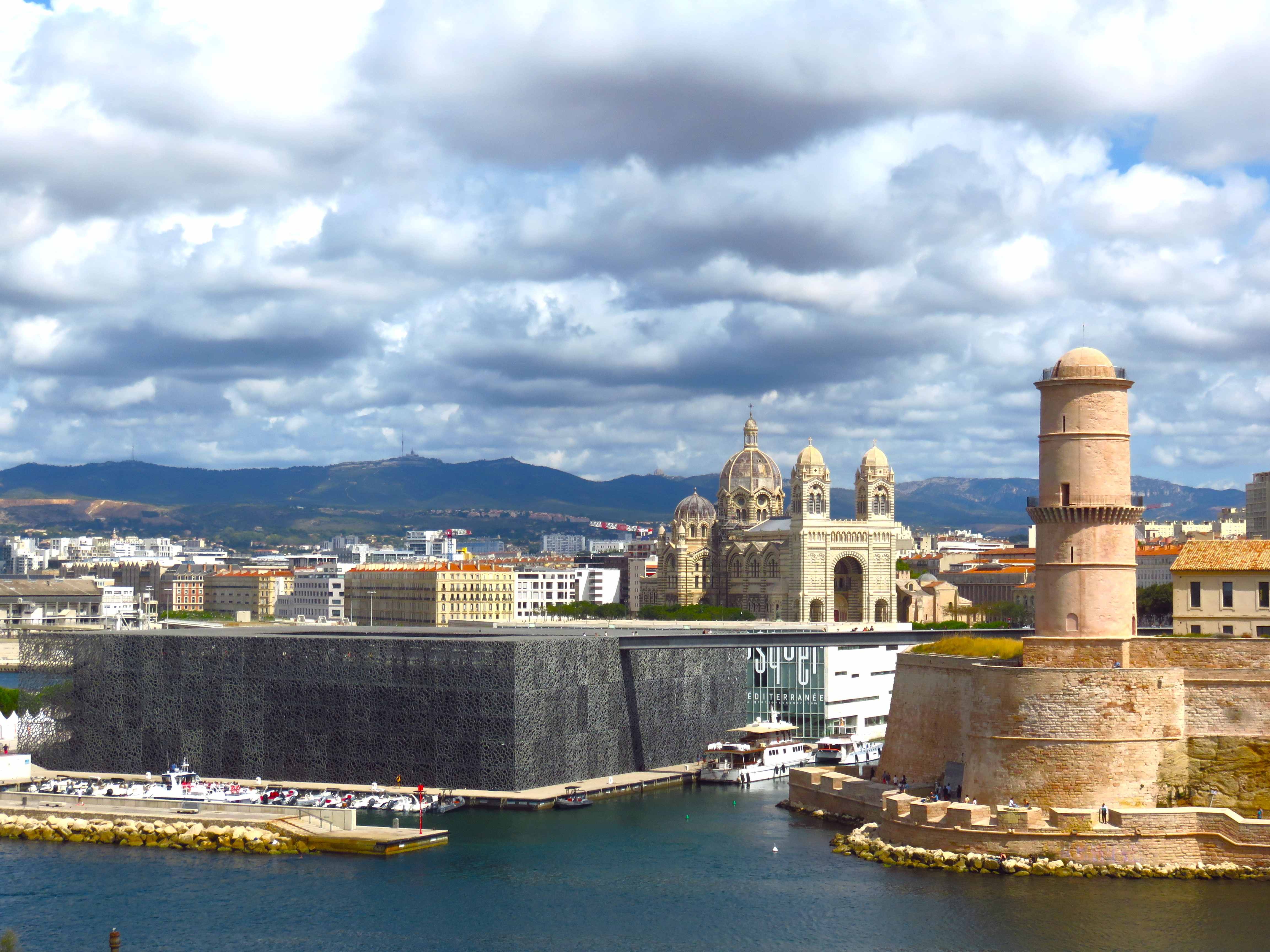
The pioneering museum dedicated to the cultures of the Mediterranean, MuCEM, is also found at the Old Port, right on the water’s edge. Visually stunning, designed by the architects Rudy Ricciotti and Roland Carta, the central building features an outer shell of elaborate latticework of fiber-reinforced concrete. The exhibition halls are located inside this building, on several levels. The “fishnet” façade casts intricate shadows upon inner terraces, and it’s a pleasure just to walk along the black ajour walls, and to peek through the openings onto the historic Fort Saint-Jean, to which you can walk along the aerial bridge to see the museum’s other facilities.
In its numerous, multi-themed exhibitions, MuCEM presents an array of often unexpected artifacts in “anthropology, history, archaeology, art history and contemporary art, to show the public the many facets of the Mediterranean world and its ongoing dialogue with Europe.” The entire museum collection contains more than 350 000 objects, countless documents and works of art, carefully curated to promote a better understanding of the Mediterranean world.
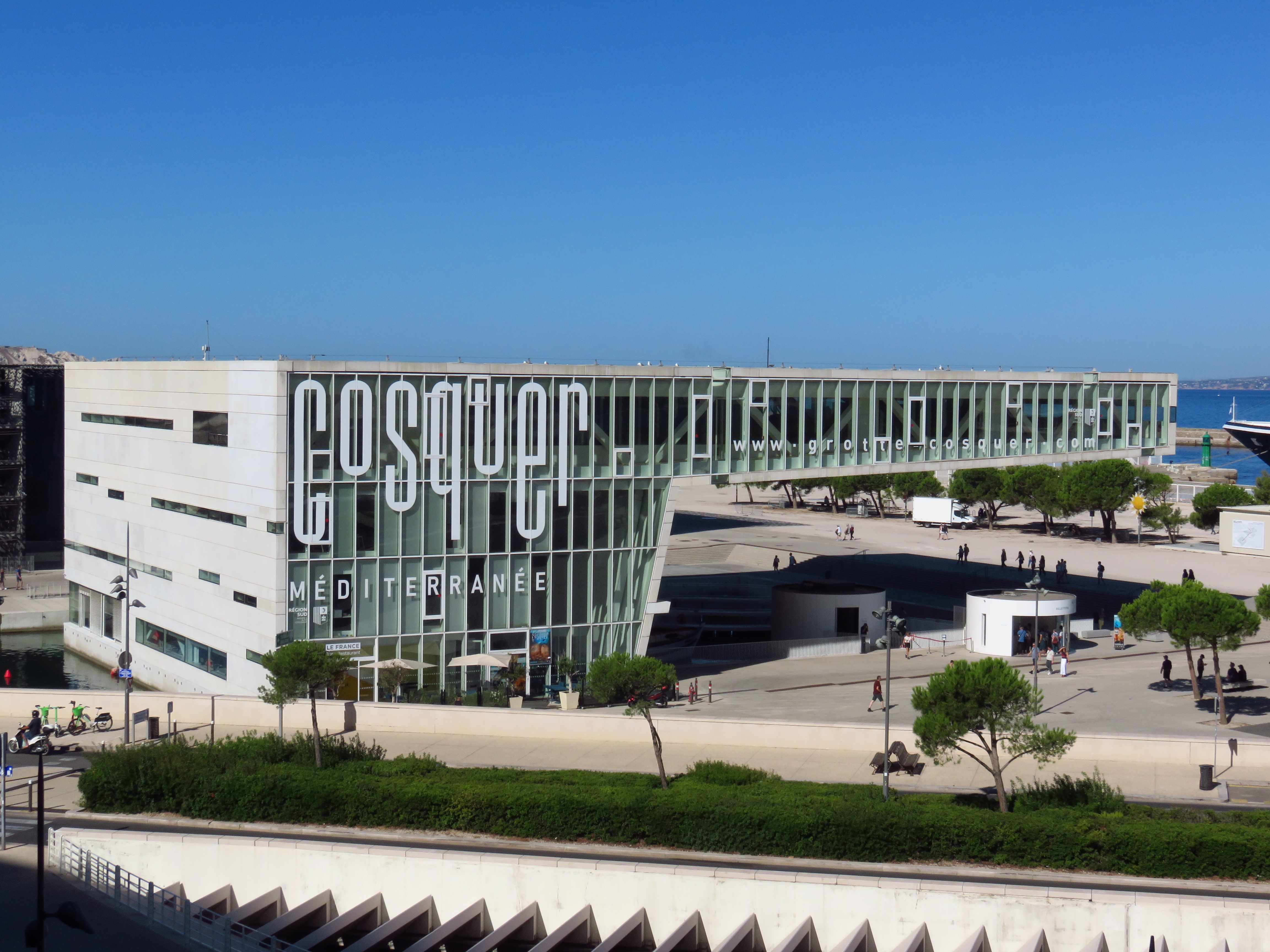
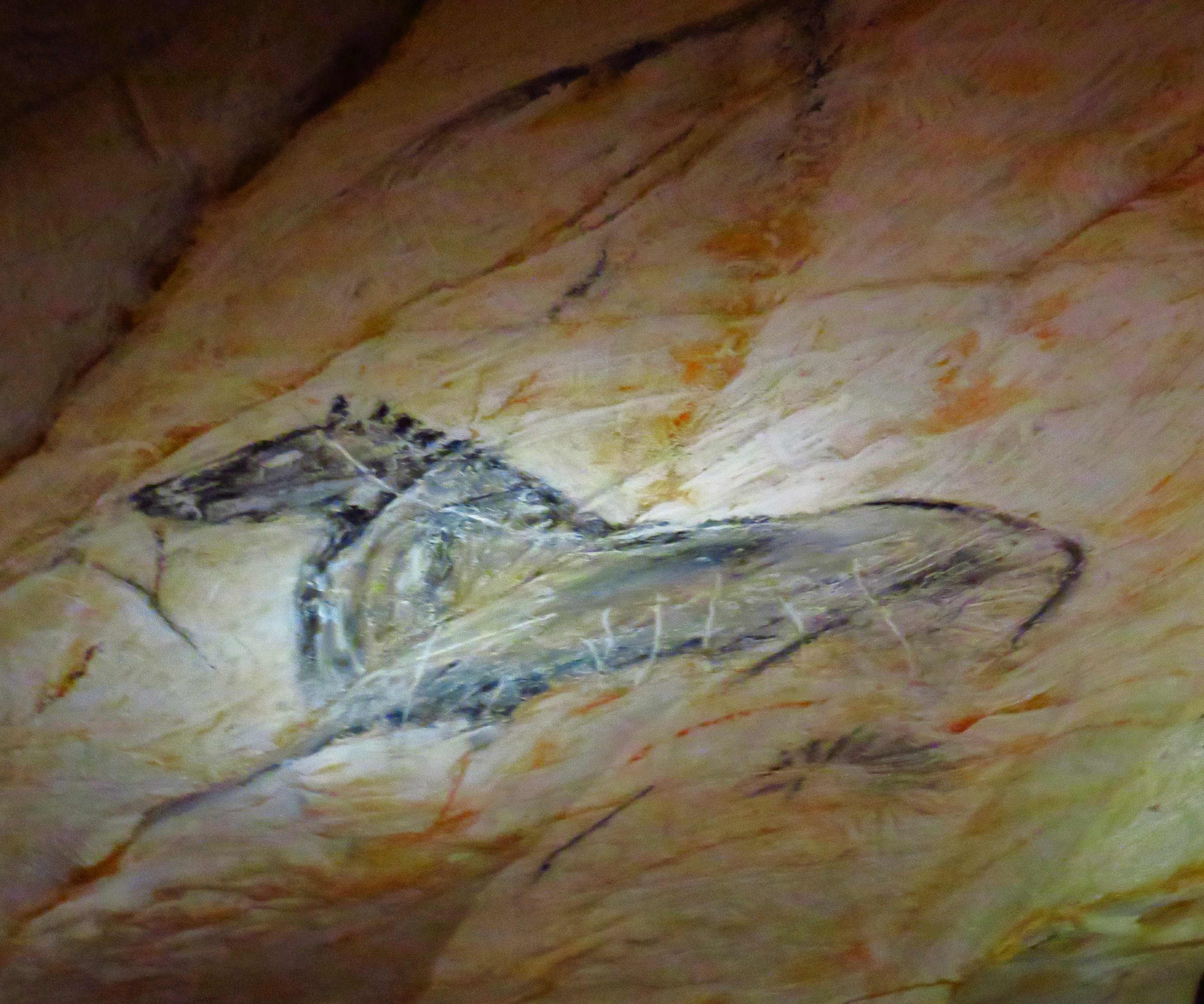
Next to MuCEM there’s a large glass building that houses the Disneyland-like ride through the Cosquer Cave replica, made extremely life-like and utterly fascinating due to the latest technological advances. The real cave is located in the Calanque de Morgiou, a rocky inlet between Marseille and Cassis. The cave’s entrance is submerged underwater more than 120 feet. It was discovered by Henri Cosquer, a professional diver from Cassis, back in 1985.
Due to the cave’s enormous size and labyrinthine structure, its exploration took many years and multiple expeditions of different groups of divers. Only in the 1990s the dry part of the cave, containing the prehistoric paintings, was discovered. Later, the experts identified the various rock art engravings—rather skillful depictions of animal and human figures—as produced from around 27 000 to around 19 000 years ago. A ride inside the recreated Cosquer Cave, accompanied by an individual audio guide is an excellent attraction for visitors of all ages, both educational and entertaining.
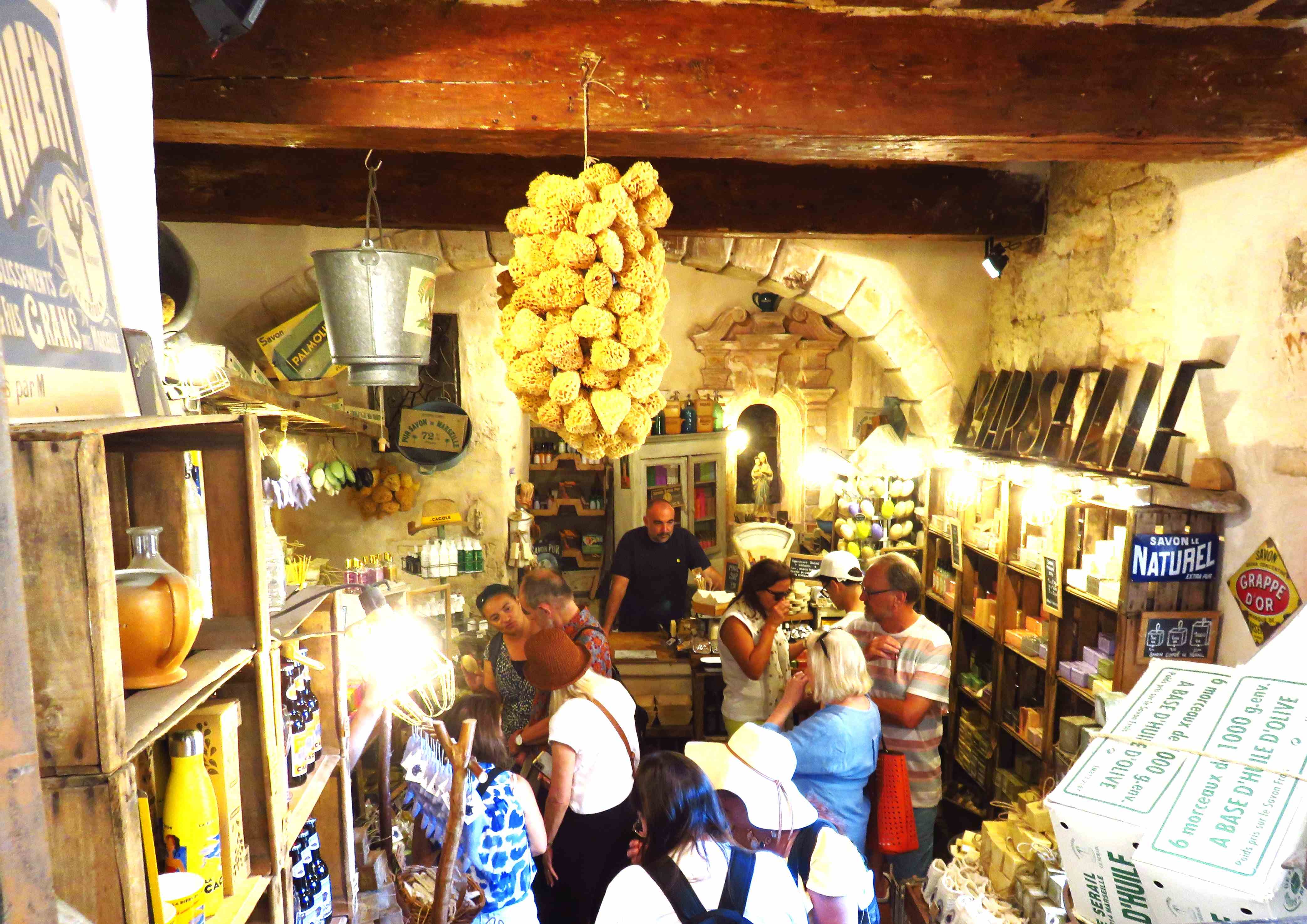
We were regretfully leaving Marseille, but with a cute little souvenir as a consolation prize. It was an olive-green, fish-shaped peace of a traditional olive oil soap. The city is famous for hard soaps, made of vegetable oils continuously for about 600 years here—a great testament to the hygienic practices of its dwellers! There are quite a few soap shops in the Old Port area, where tourists are looking for their favorite shapes, colors, and fragrances. When in Marseille, you should get one, too!
Office de Tourisme, des Loisirs et des Congres de Marseille is located at: 11 La Canebiere 13001 Marseille. https://www.marseille-tourisme.com/en/. You can buy a CityPass at the office and preorder it by email: citypassmarseille@marseille-tourisme.com.
Carry-le-Rouet’s Relaxing Hotels
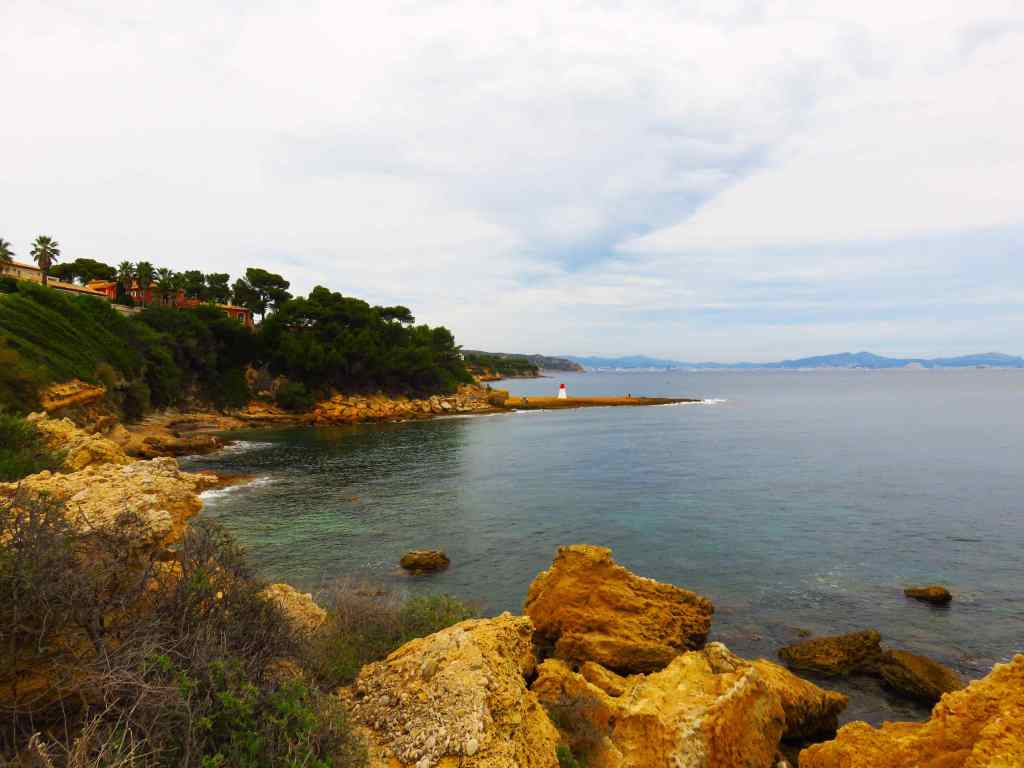
To the north of Marseille, you won’t find a better place to relax and restore your energy level than a picturesque little town of Carry-le-Rouet on the seafront of Côte Bleue.
Stretching for about 16 miles, the Côte Bleue is a rugged, well-preserved part of the southwestern Mediterranean, populated since prehistoric times, loved by the locals, and favored by the tourists who seek water sports and nature hikes in uncrowded environment. Several small communes along the coast that serve as fishing ports also offer leisurely activities, like boating, swimming, diving, and bicycling alongside unspoiled scenery, sandy beaches, and pine forests.
Carry-le-Rouet, known as a port and a residential area since 1915, when the Marseille rail road has been opened, today is home to more than 5 000 residents and dozens of thousands of seasonal visitors attracted by the blue clarity of the water along its coastline, the serene and unhurried lifestyle of the town, and the well-developed tourist infrastructure—several high-ranking hotels and numerous seafood restaurants around the port in a walking distance from practically any place.
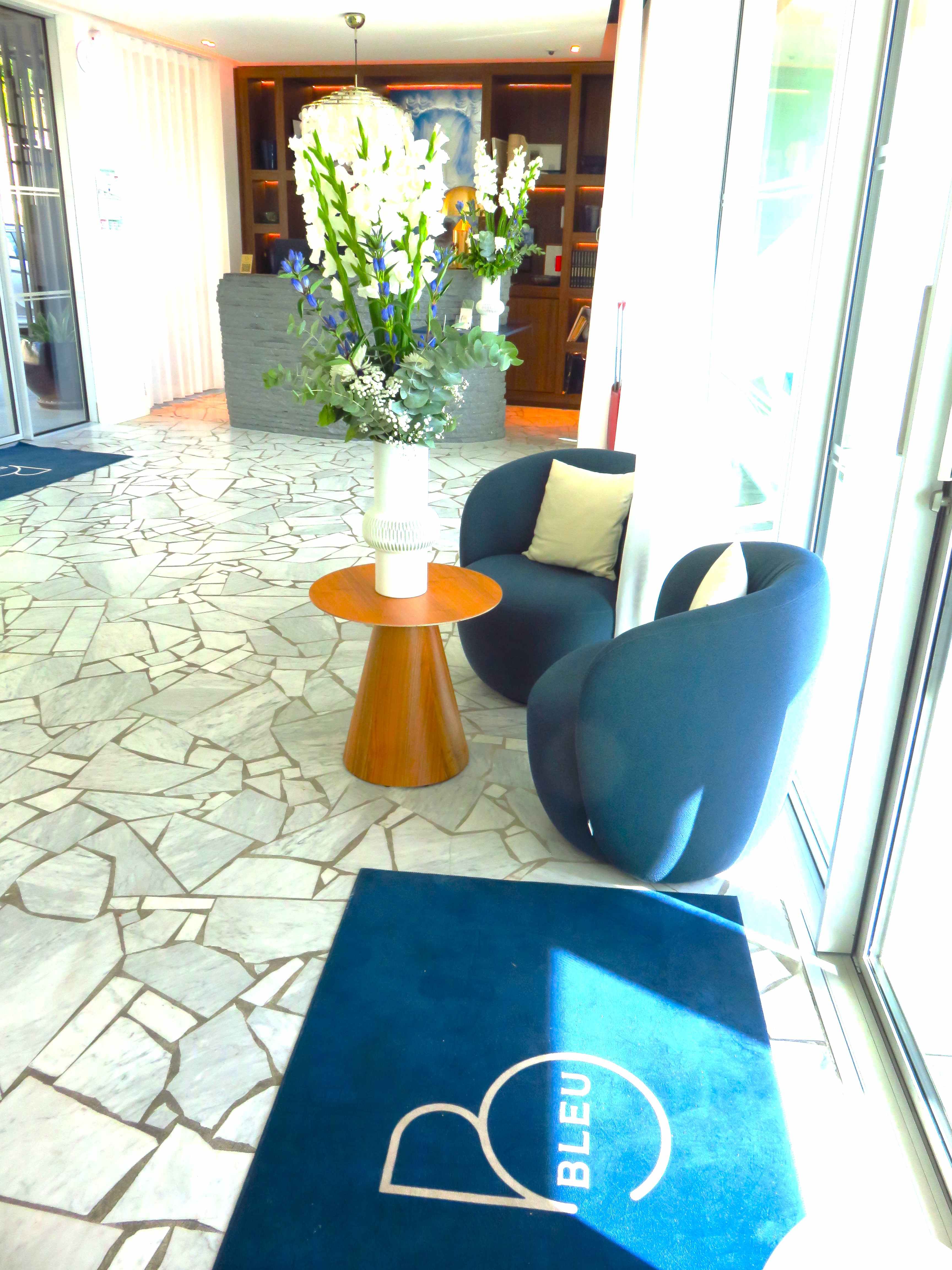
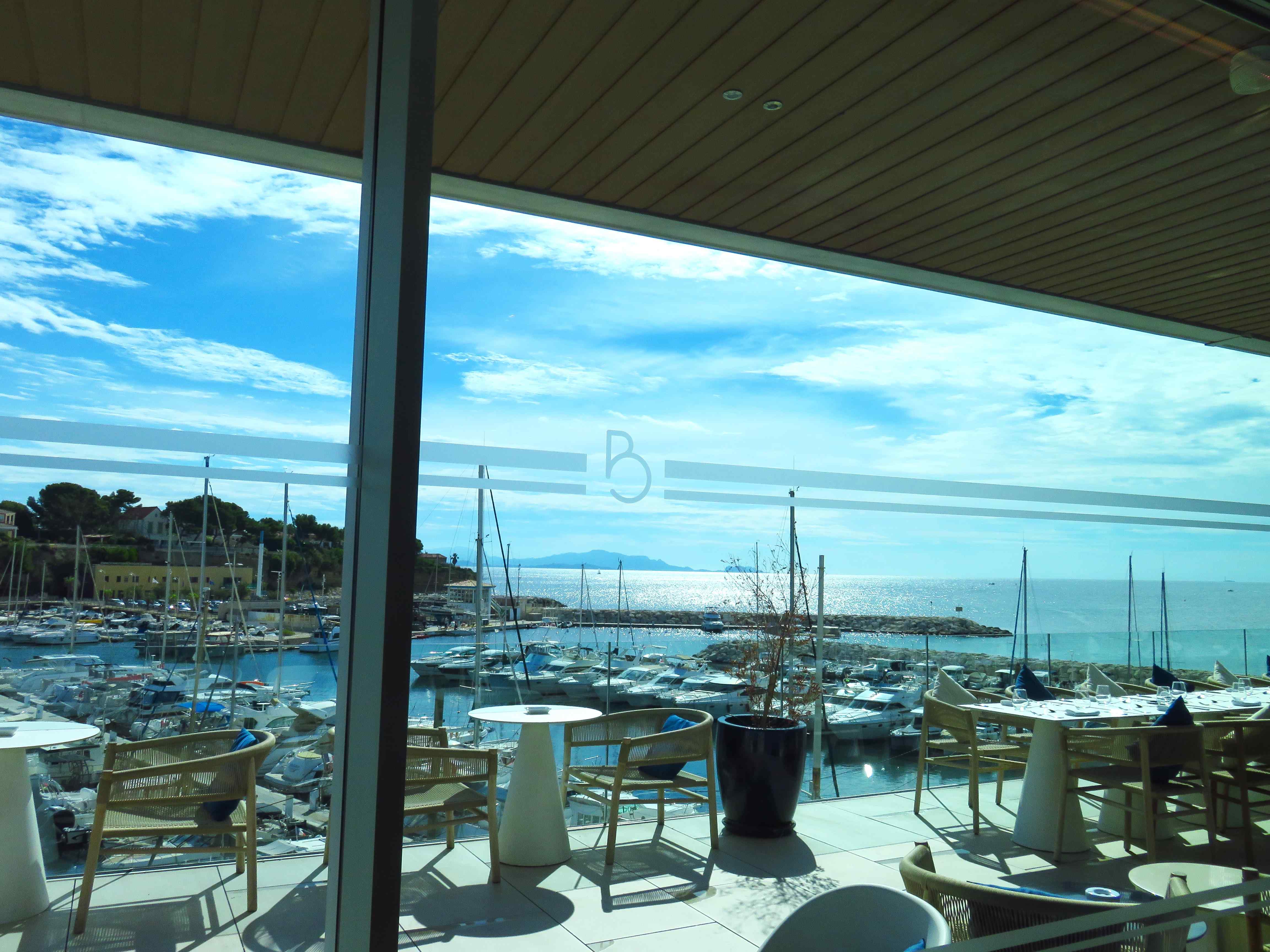
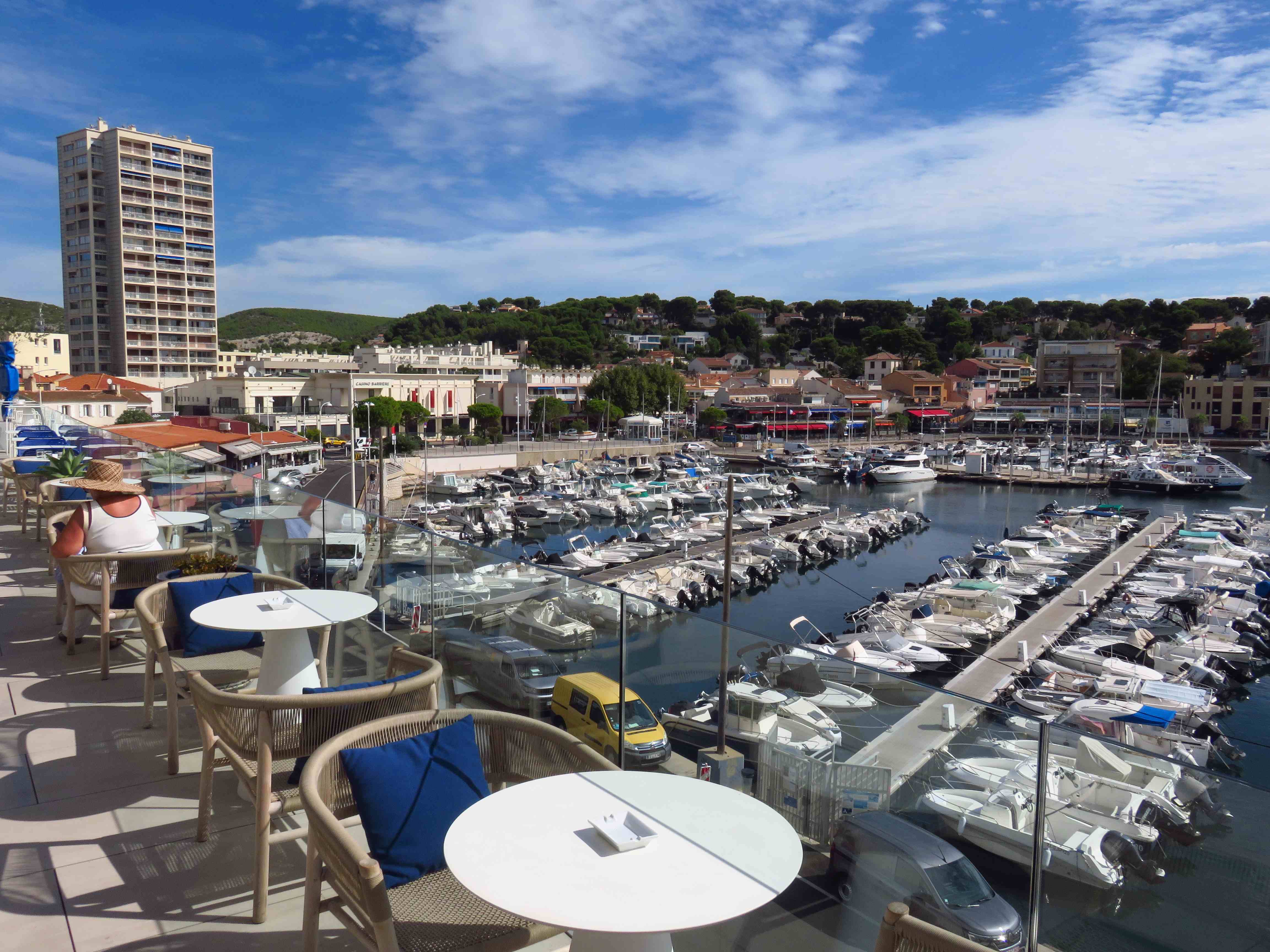
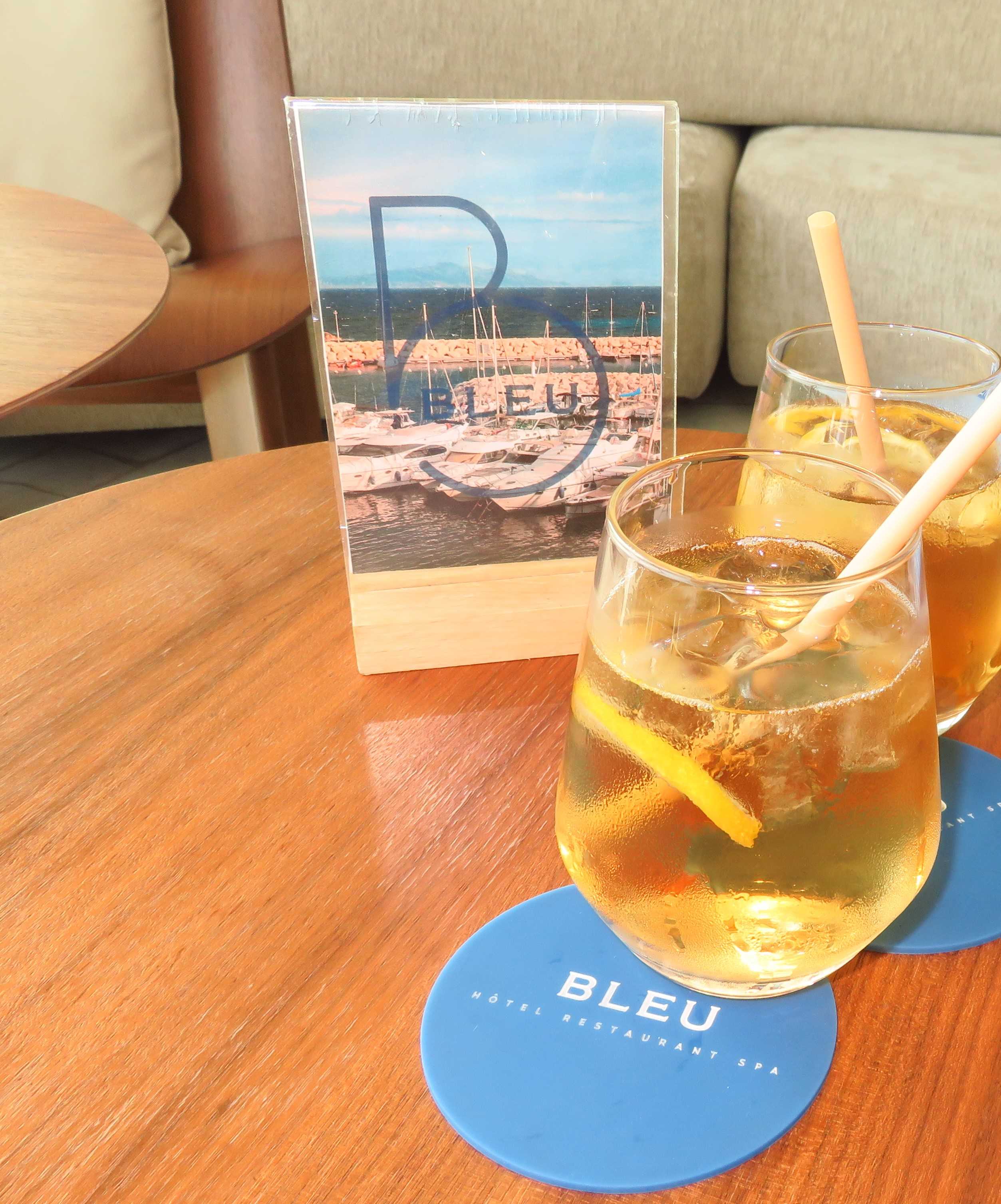
The new, opened just over a year ago, 4-star Hotel Bleu is located right on the waterfront, stretching alongside the marina, and towering over the moored boats like an imposing cruise ship—all its guestrooms overlooking the sea.
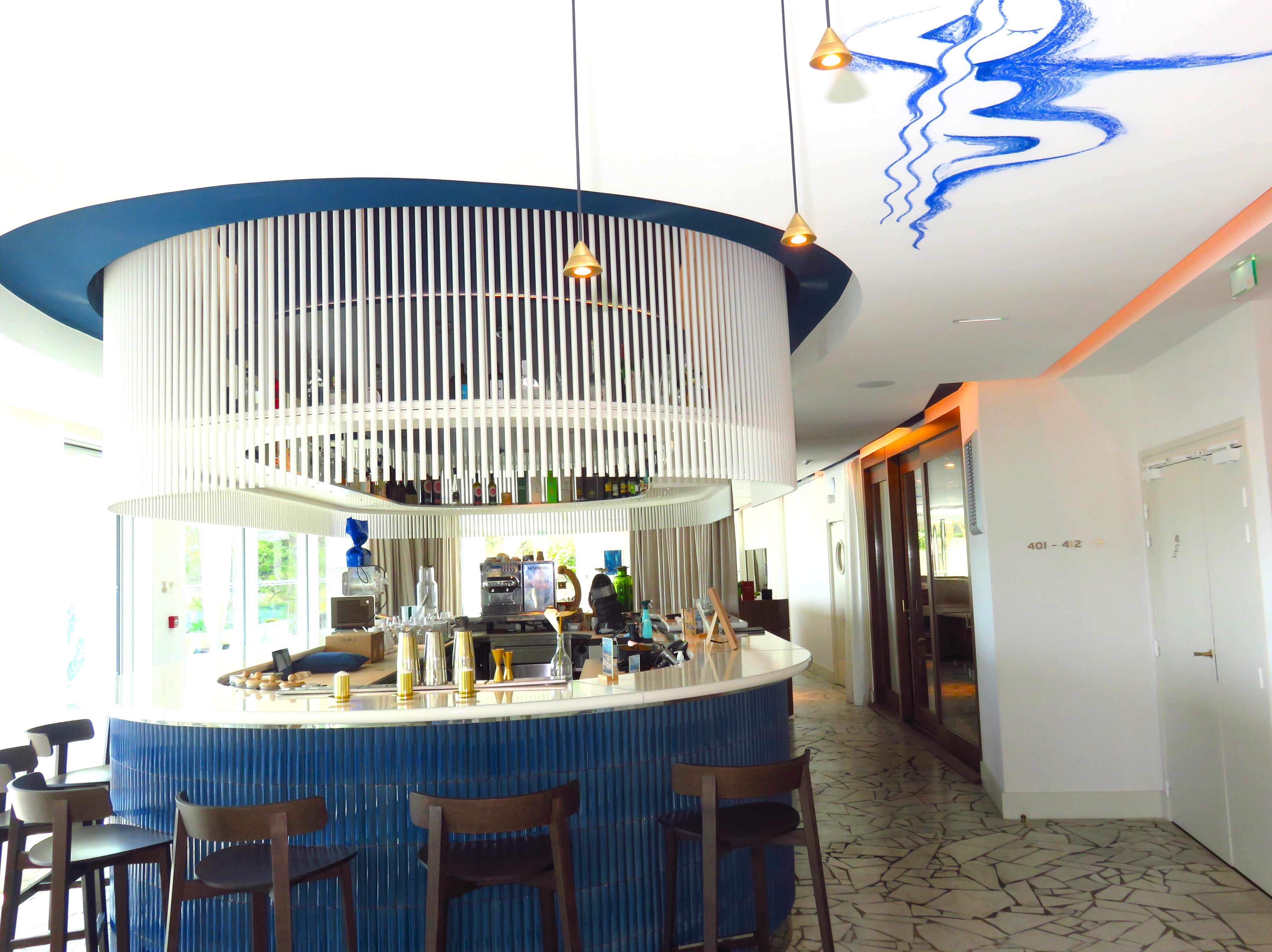
Upon our arrival, even before the check-in time, we were greeted by an attentive front desk receptionist, and offered a welcome drink. We took this opportunity to look around the sparkling-clean white-walled lobby, filled with sunlight, decorated with multiple art pieces and antiques that all shared a blue palette, and the most original and refreshing ceiling drawings in piercing-blue color.
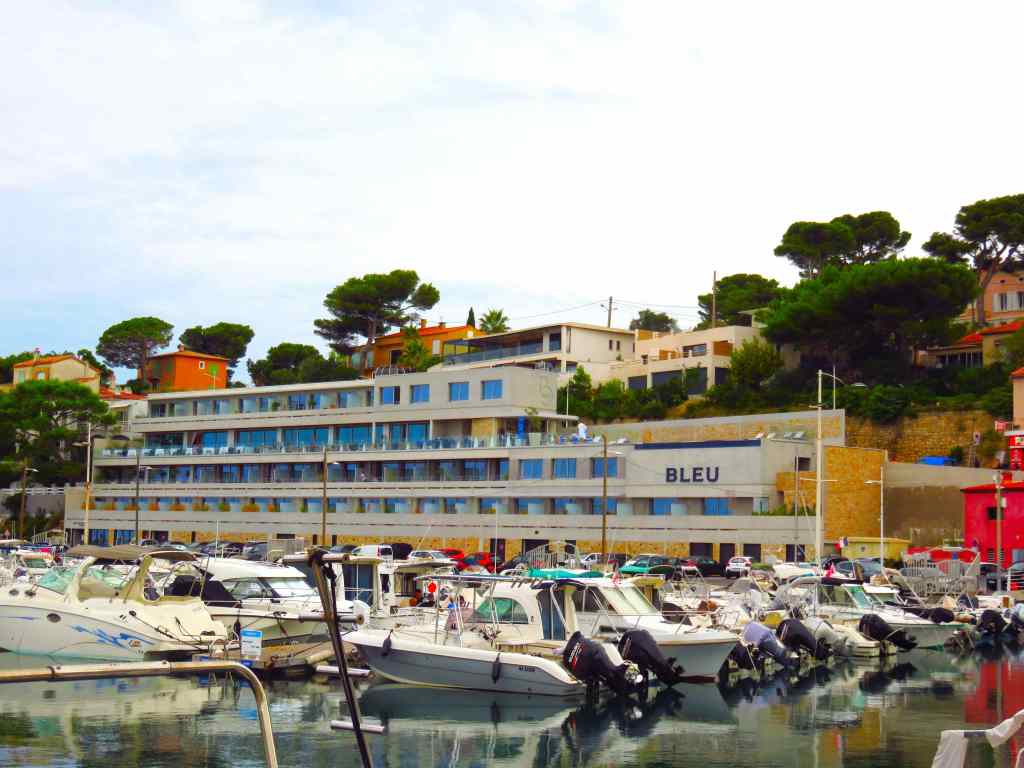
Hotel Bleu was designed by the Architecture 54 firm with the focus on all shades of blue to emphasize the natural aura of the Côte Bleue whispering waves and the perennially sunny skies. In the hotel building layout as well as in every detail of the interior, the architects, Thierry Lombardi and Pascale Bartoli, founders of the Architecture 54 firm, created a vivid counterpart to the surrounding landscape with natural materials, like raw wood, leather and woven fabrics; simple, noble forms; blue tones in everything, and the abundant southern light, bringing the ambiance of the hotel to artful perfection.
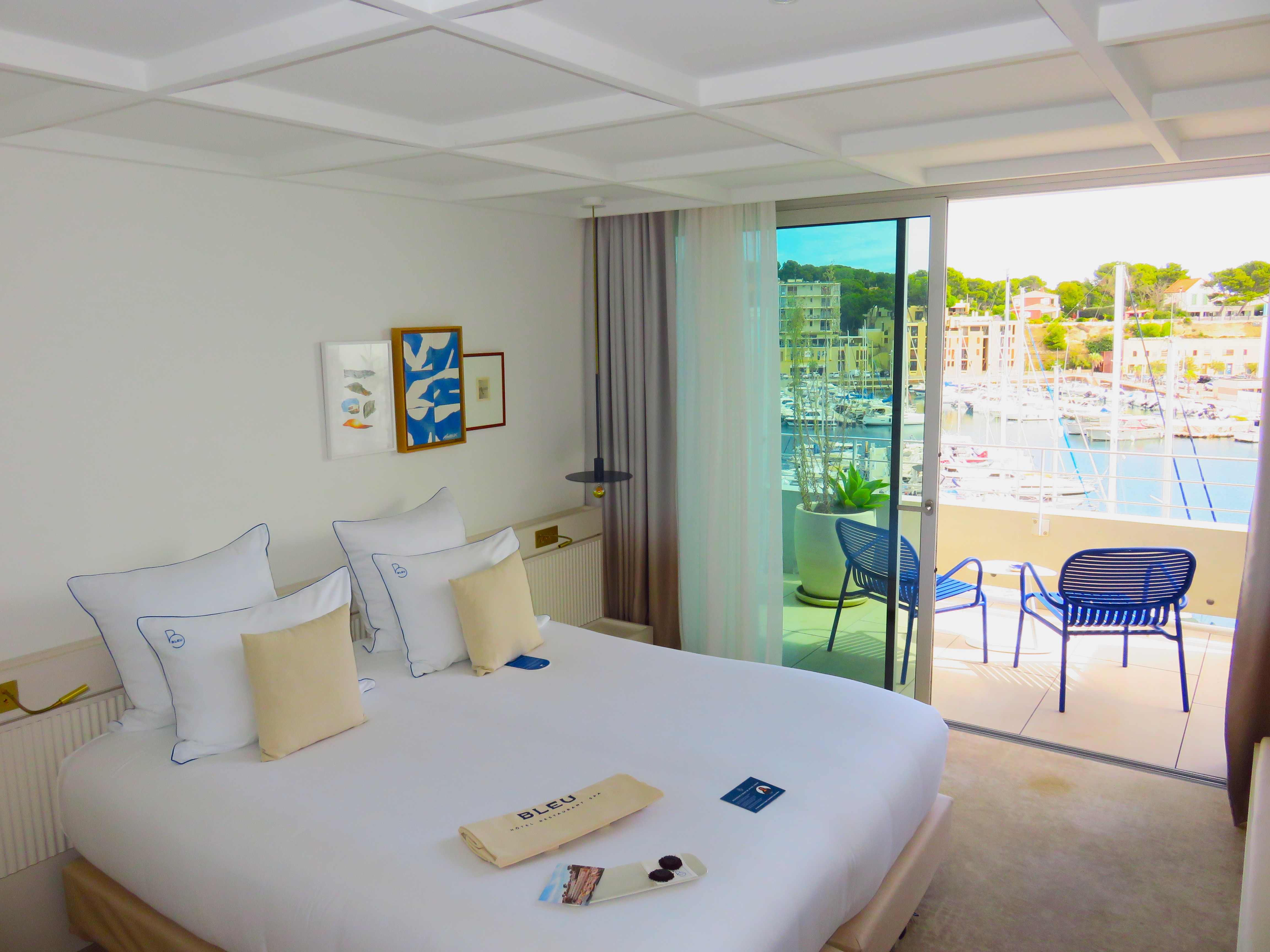
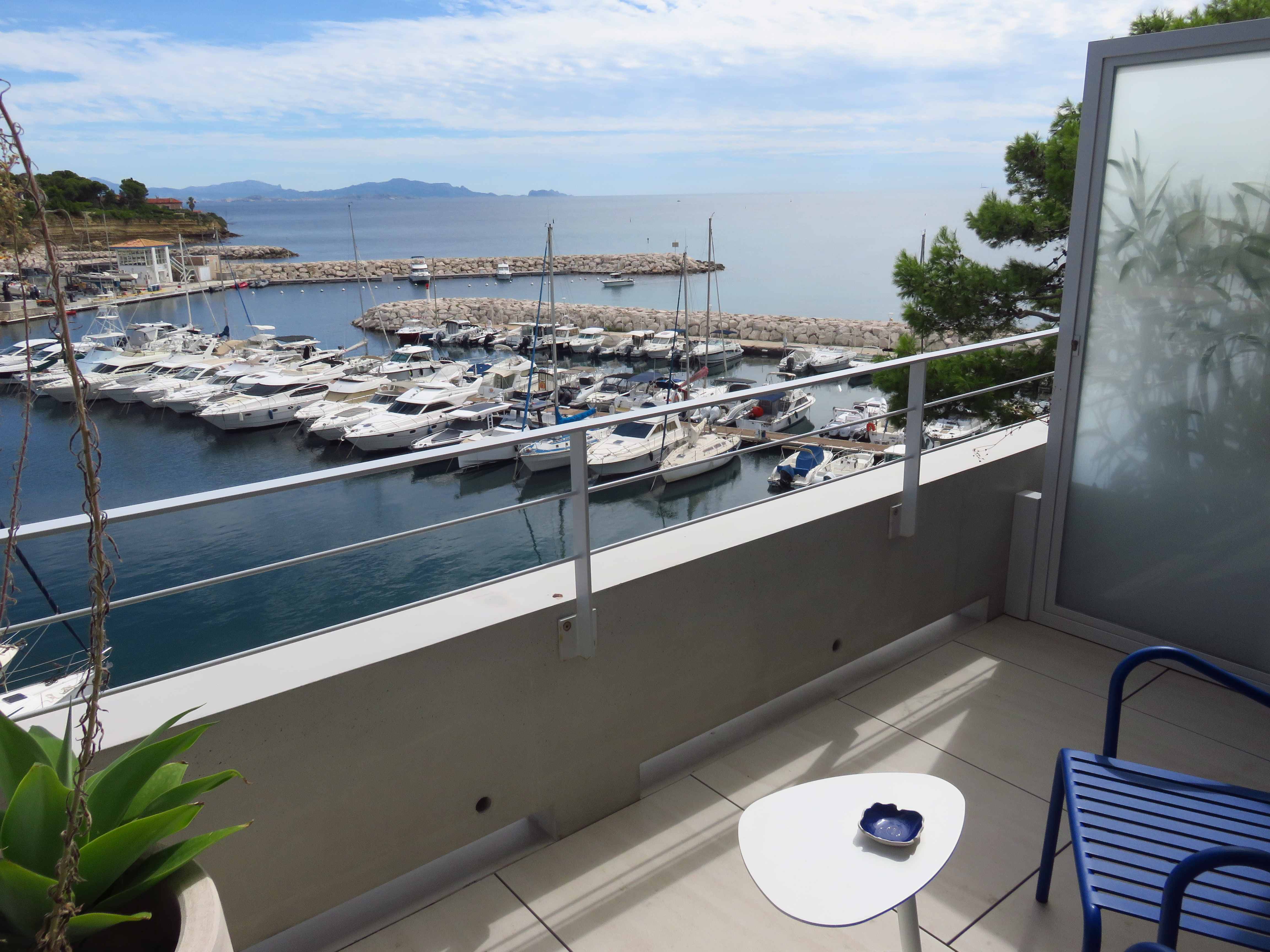
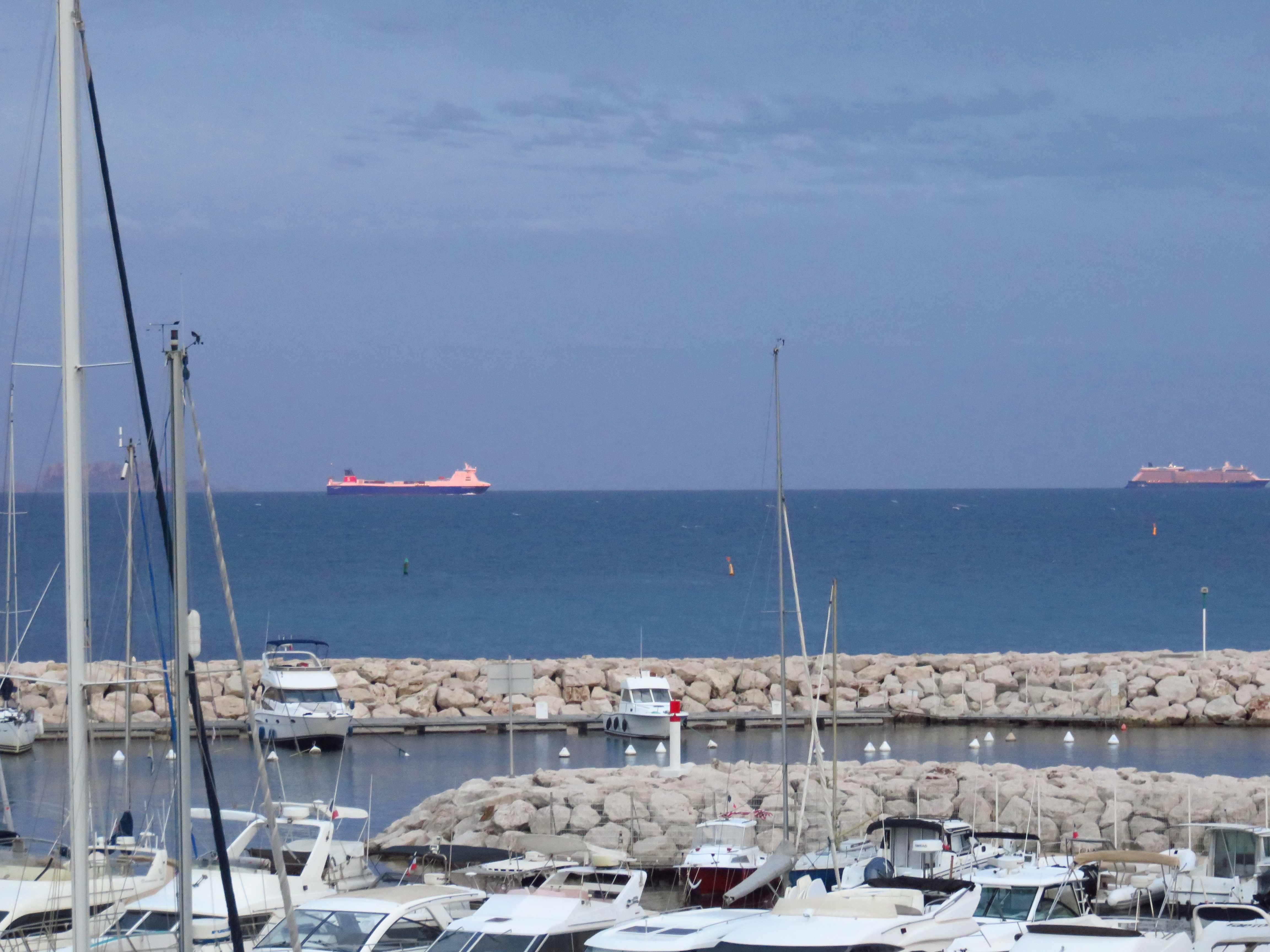
Our room, neat and clean, welcoming and comfortable, was decorated with a few tasteful art pieces with a prevailing blue theme, and since Carry-le-Rouet is famous for its sea urchins, we were surprised by a welcome treat of two chocolate sea urchins on our bed. From our spacious balcony, sitting in bright-blue outdoor chairs, we enjoyed the view of sailboats coming and going from the port, while sipping our in-room Nespresso coffee and herbal tea.
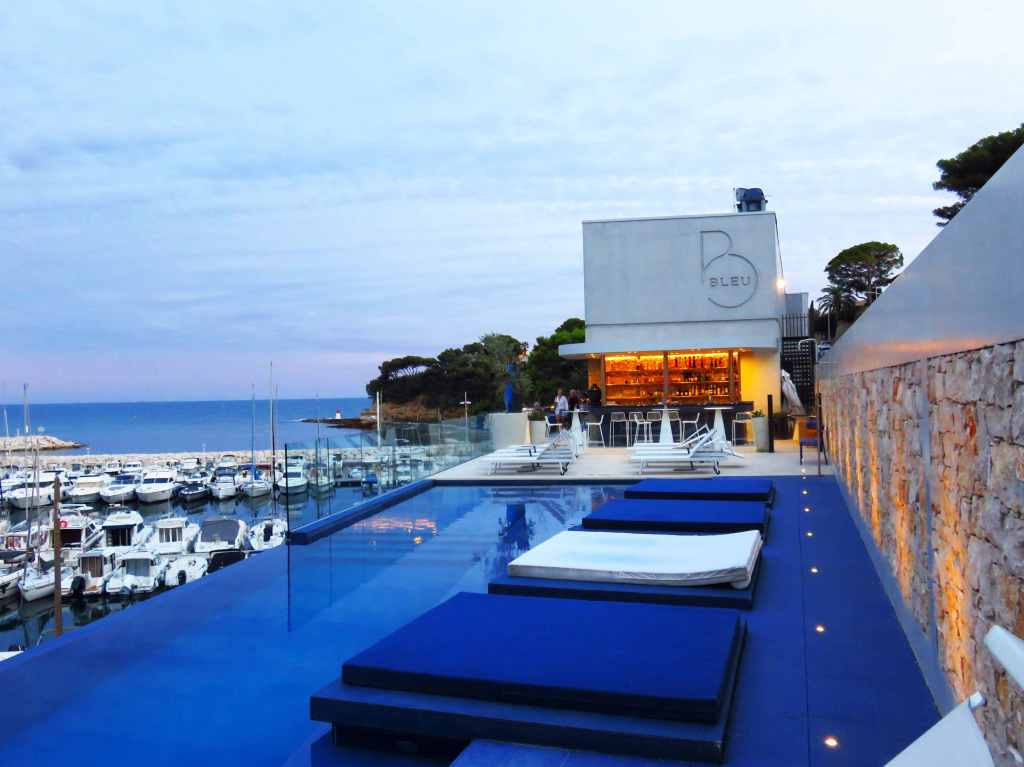
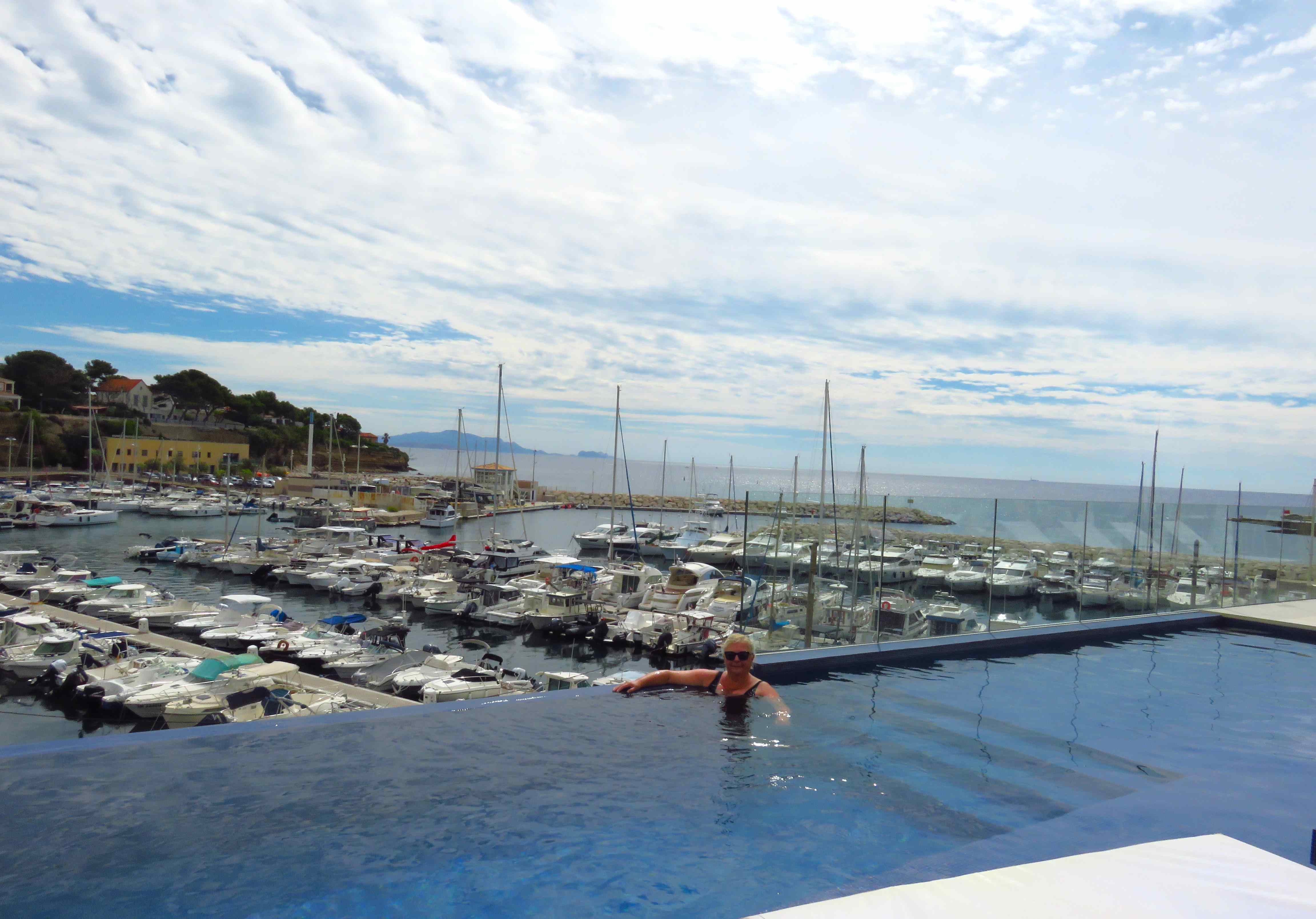
Among the very best features of Hotel Bleu is an outdoor pool with an infinity edge. It’s long and narrow, with enough depth to lap swim, but also suitable for just soaking in warm water, cocktail in hand, watching the passersby down below.
Speaking of cocktails, the signature libations, including mocktails, curated by mixologist Loïc Gilbert, are readily available at Le Nina bar, named after Nina Simone, the American singer who chose Carry-le-Rouet to spend her last years of life here. Open daily, La Nina features live piano music in the evening.
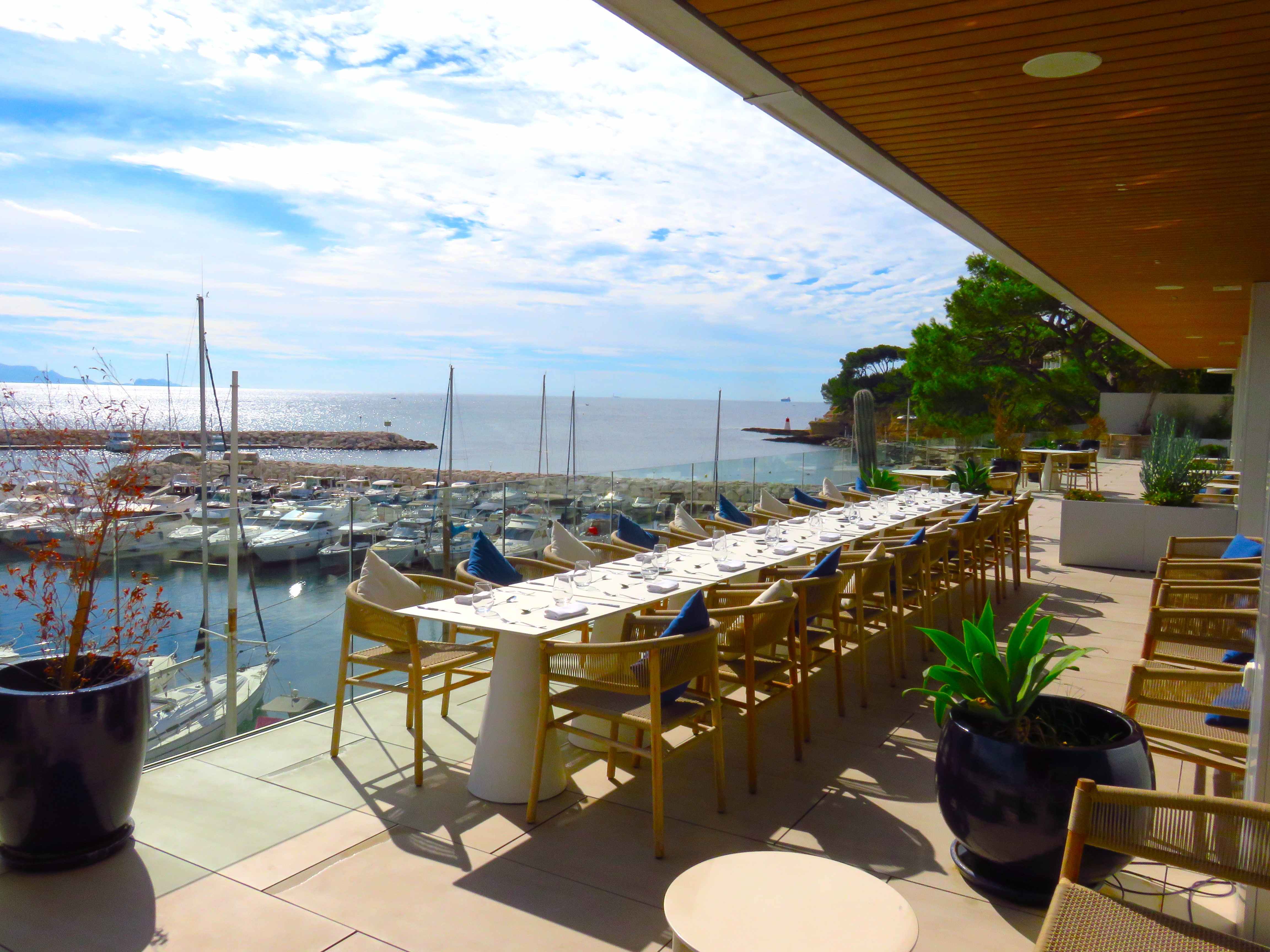
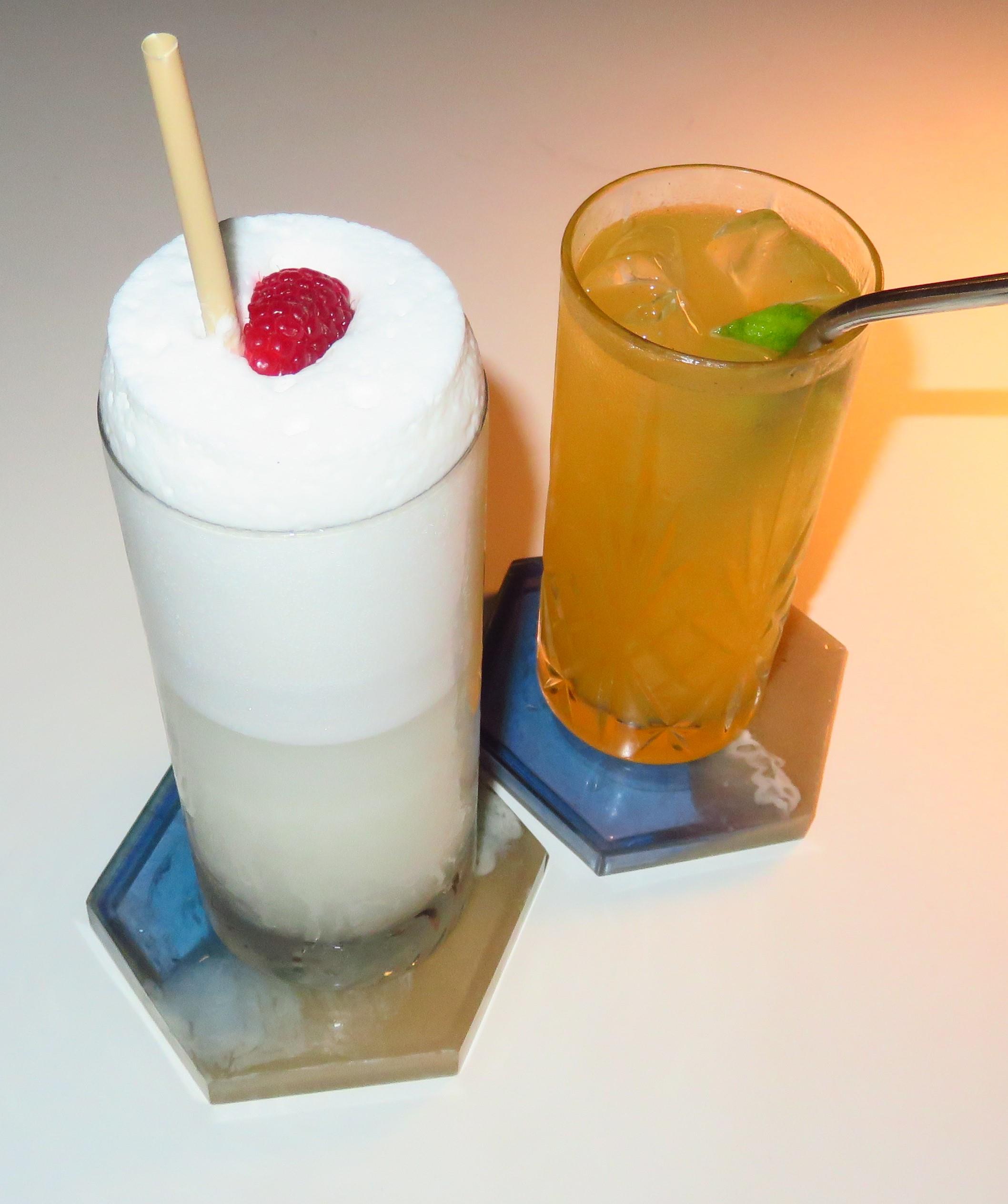
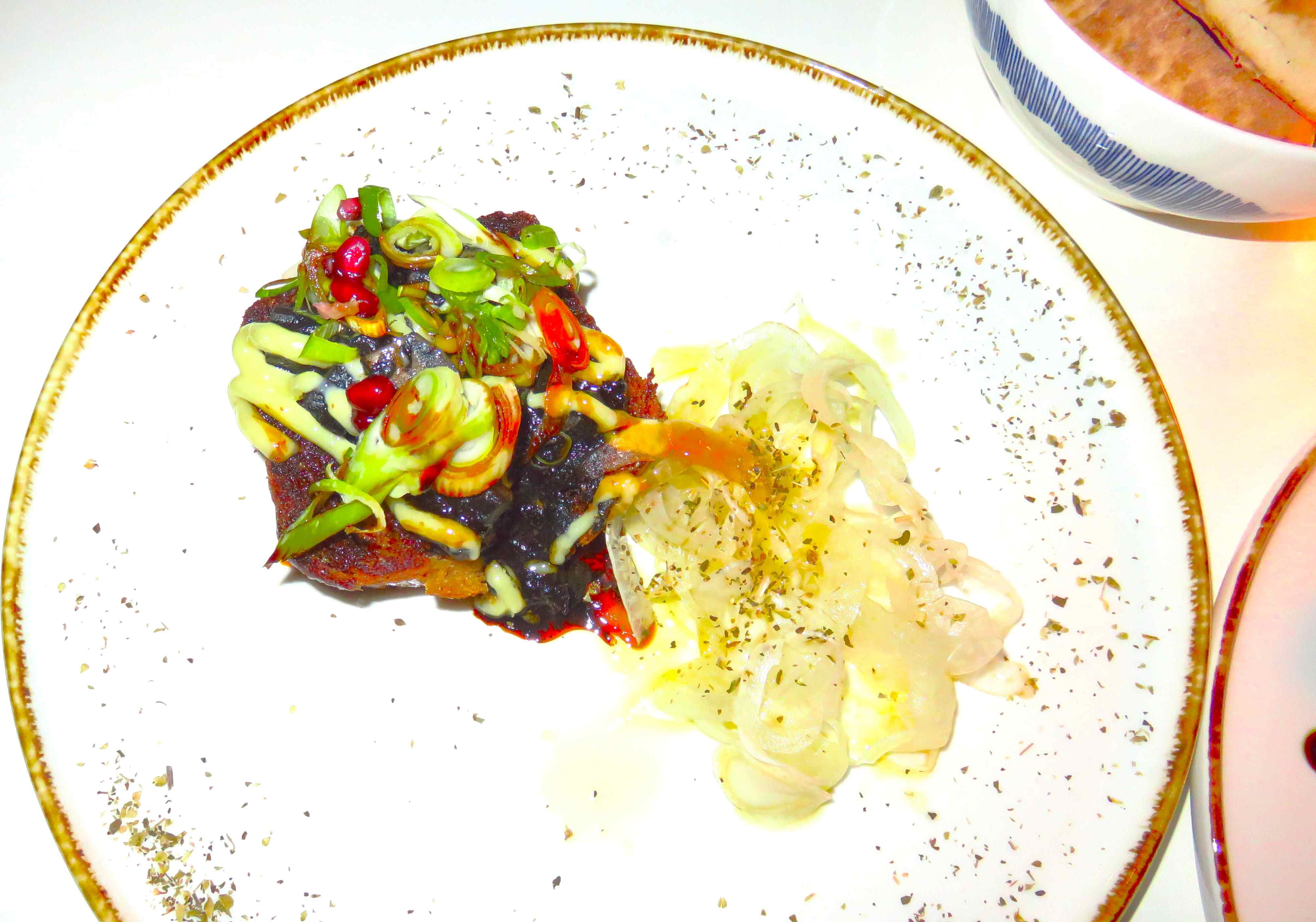
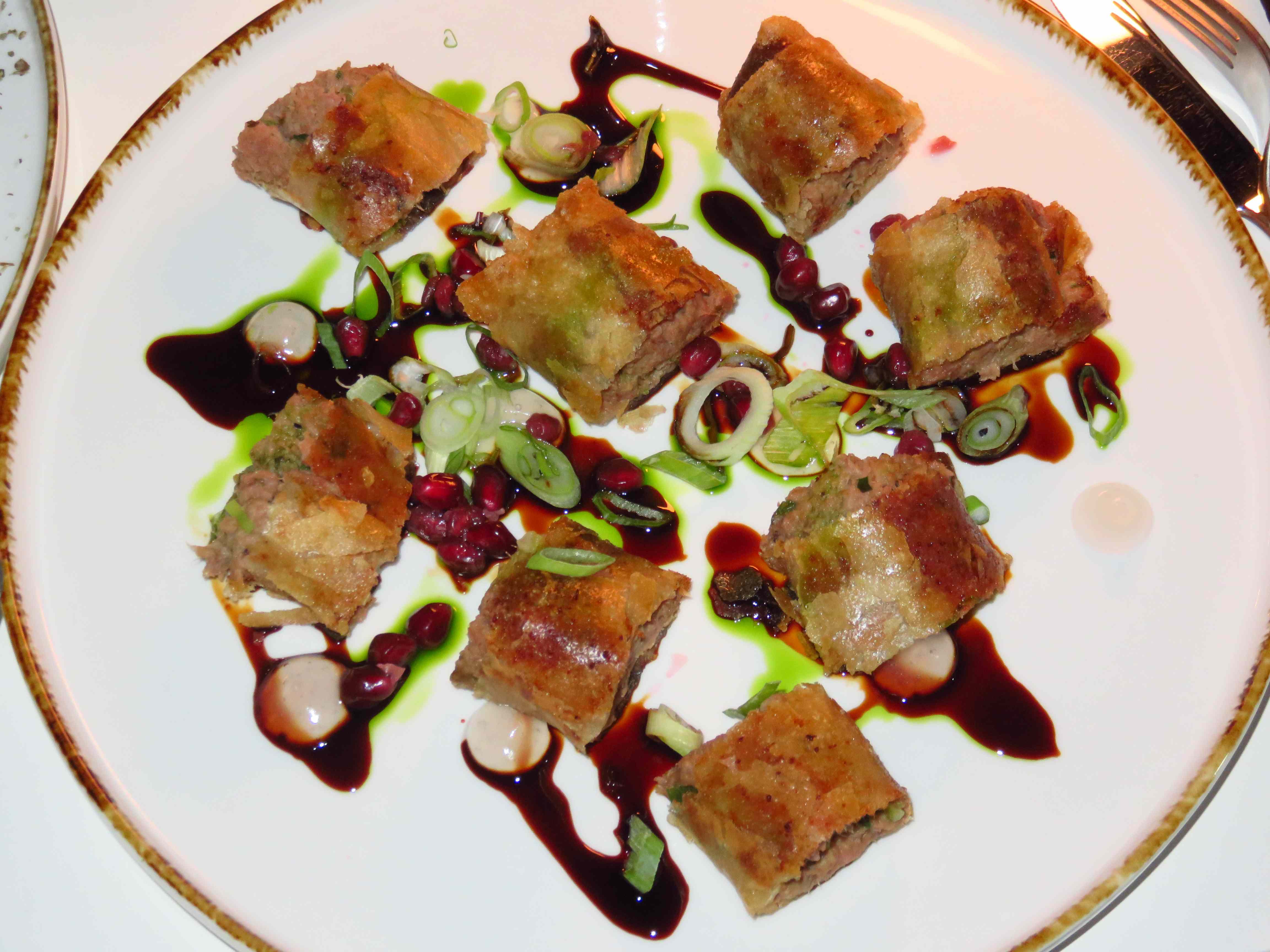
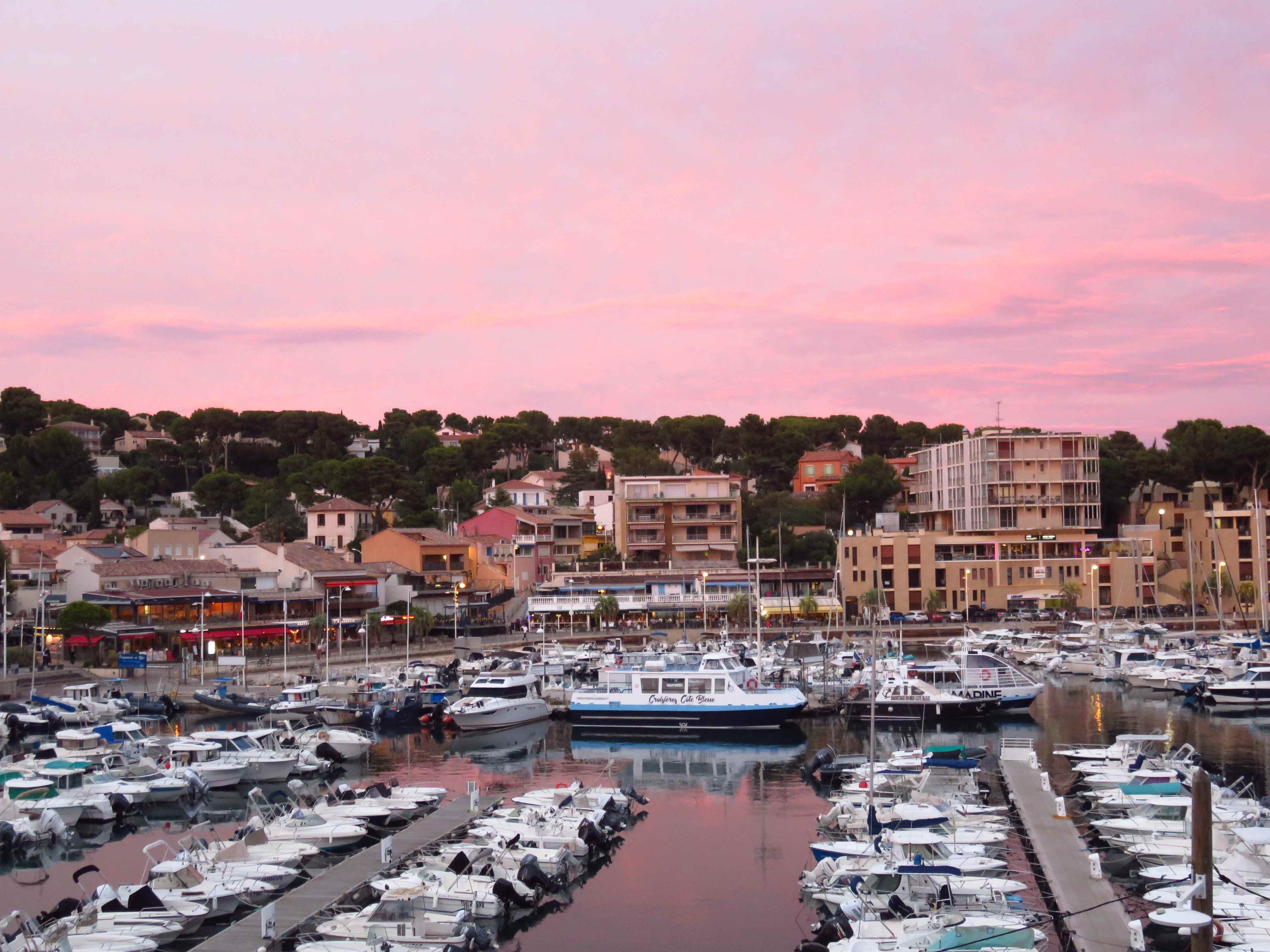
Another world-renown celebrity, Fernandel, a Marseille-born French comic actor, who also loved Carry-le-Rouet, and had a house built on a cliff here, gave a name to an outdoor bar-restaurant Fernand next to the pool, that serves light snacks during the day and a full dinner menu at night.
The following morning, we had a lavish breakfast at the indoor dining room of Fernand, and couldn’t be more pleased with the assortment of freshly baked breads and pastries, charcuterie, yogurts and smoothies, fruits and juices, and prepared to order omelets and avocado toasts.
The hotel’s commitment to the rules of an eco-friendly establishment deserves a special mention. “At Bleu, the importance of water as a precious resource is deeply valued,” and so there’s a water fountain on every floor, and a carafe of filtered still or sparkling water is offered to every room. To conserve energy, in-room electric blinds, air conditioning, and heating systems are all designed with a goal of sustainability in mind.
Hotel Bleu is located at: 1 Boulevard des Moulins, Carry-le-Rouet, France 13620. To learn more, visit: https://www.hotelbleucarry.com/en/, or reserve your room by email: bonjour@hotelbleucarry.com.
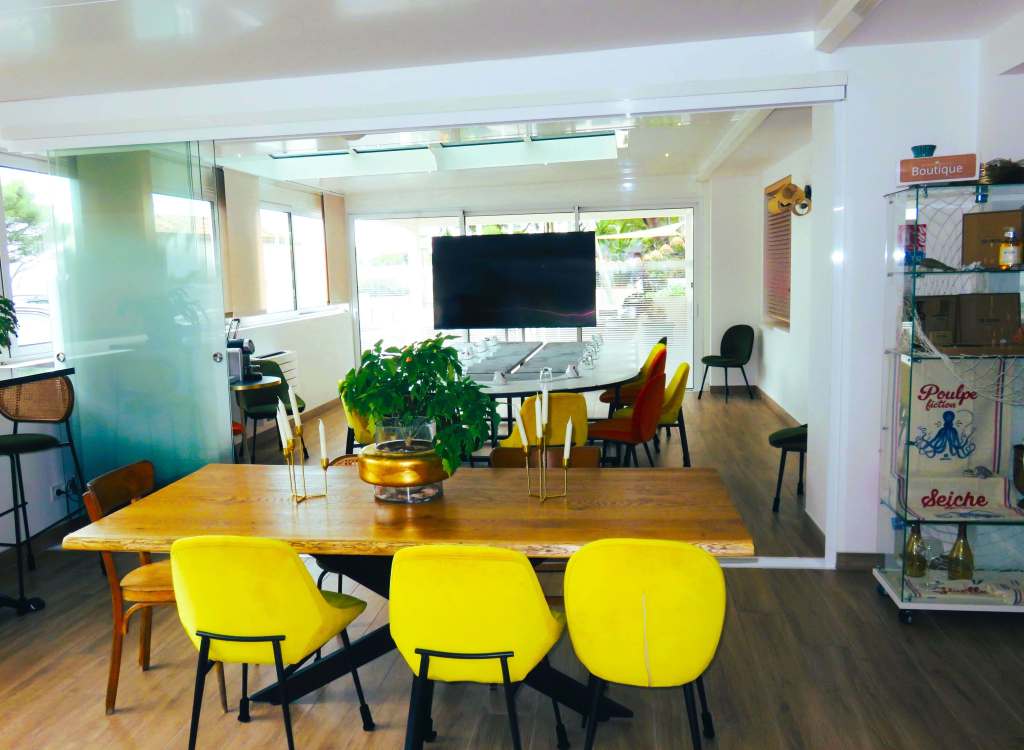
Hôtel la Tuilière is a small boutique hotel on a quiet street, steps from a beach, and a short walk from the Carry-le-Rouet port. It is located in a nicely renovated building, and features many wonderful amenities, like a heated outdoor pool, hot tub, gym, bike rentals, laundry facilities, air-conditioned rooms, free Wi-Fi, and free self-parking.
Despite its small size, this well-appointed hotel has a garden, a terrace, a lounge, and even meeting rooms and business services.
Besides all the practical conveniences, the atmosphere at Hôtel la Tuilière is warm and homelike, cozy and inviting. It’s a wonderful place to stop watching the clock, relax, take your sweet time, and just enjoy every moment of being in one of the most beautiful locations on Earth.
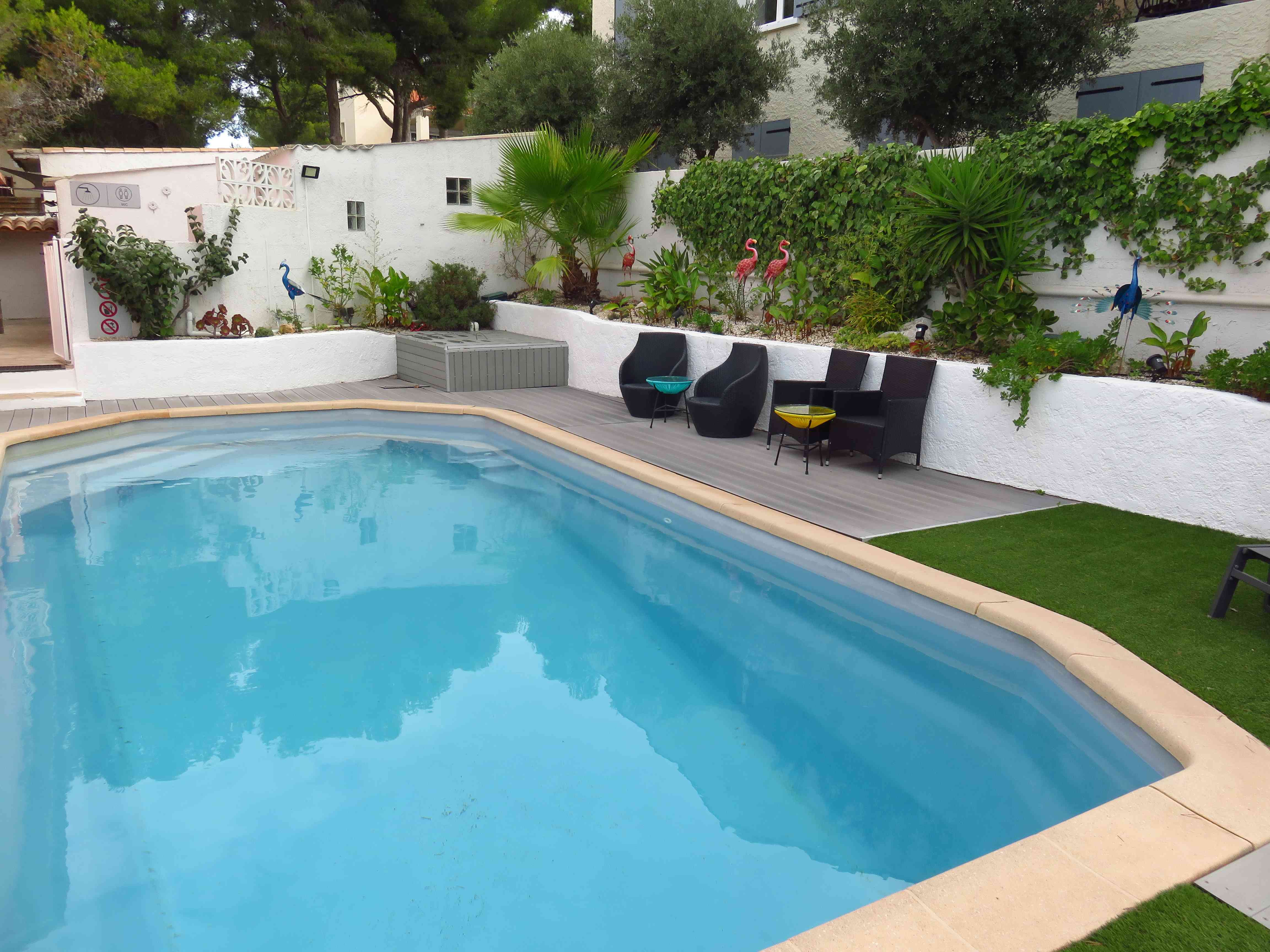
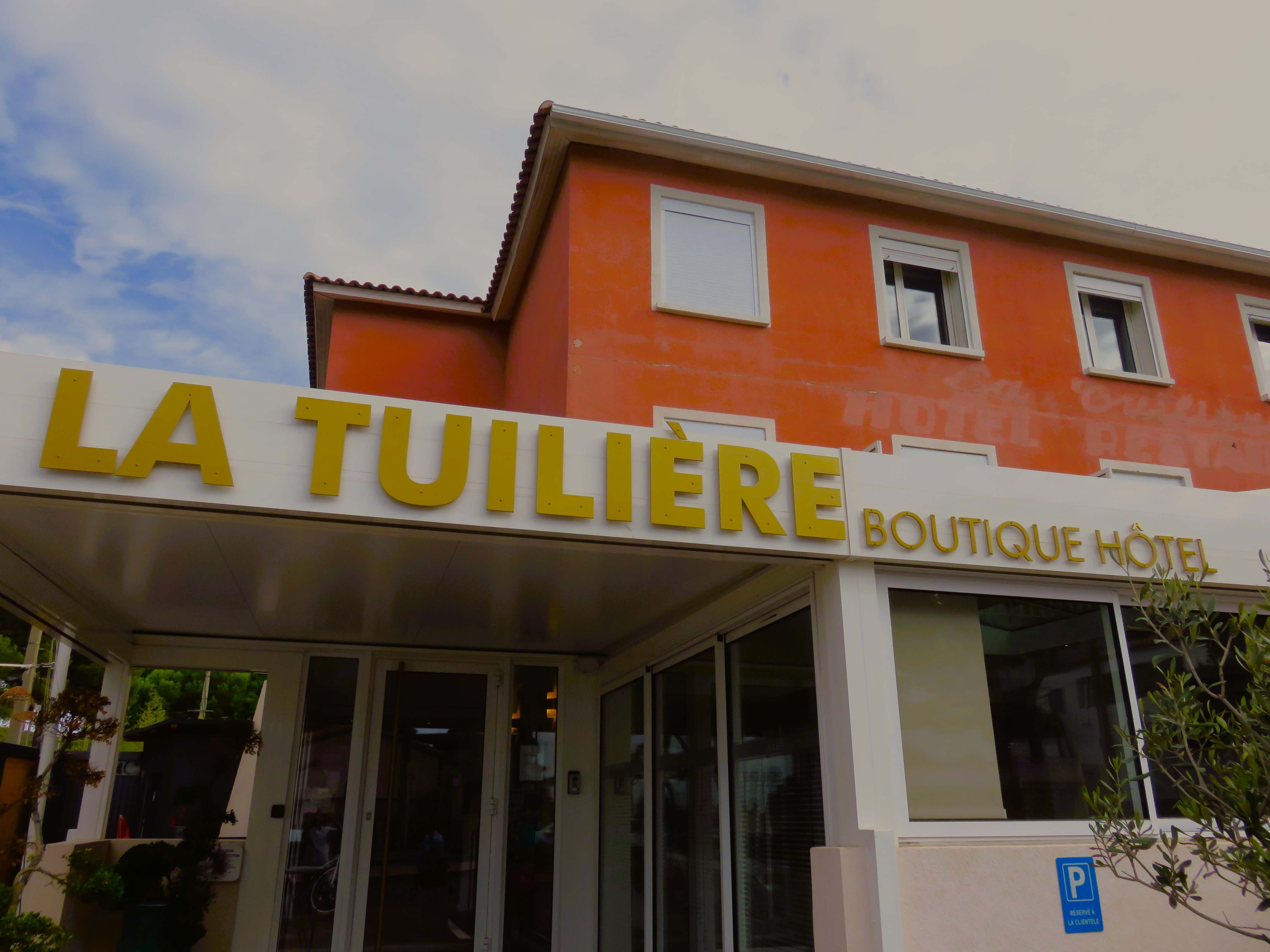
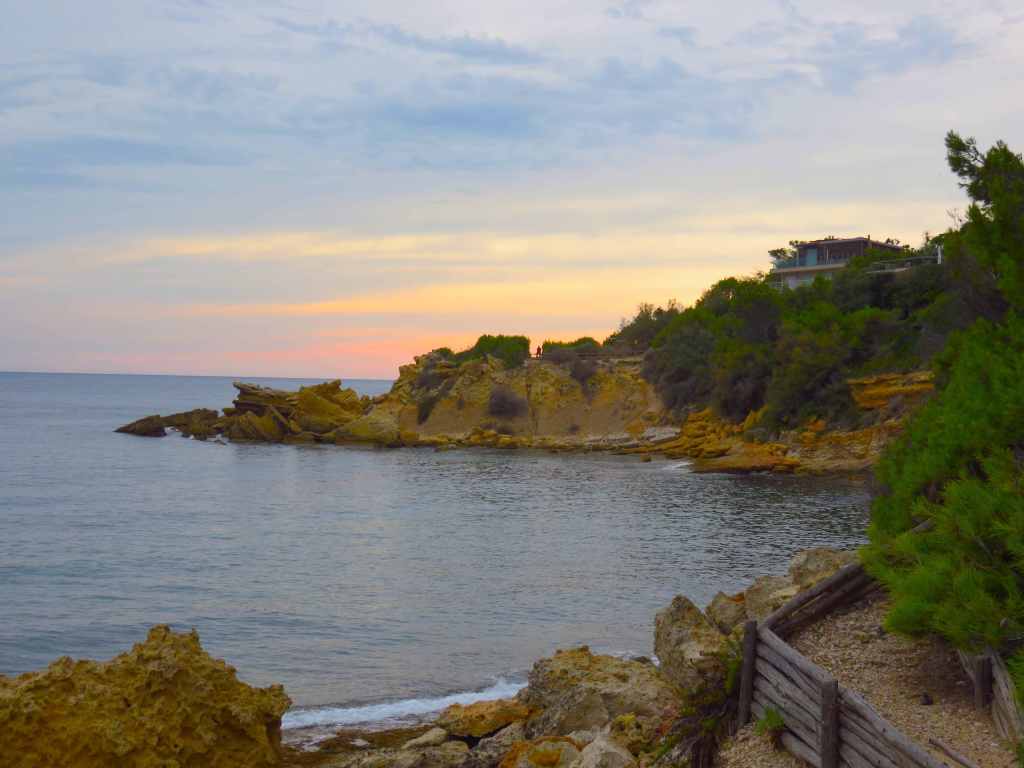
That’s exactly what we did right after our check-in. We walked along the wild rocky waterfront, stopped for drinks and snacks at a beach restaurant recommended by the hotel, and then spent a couple hours swimming in the hotel’s pool, surrounded by lounge chairs and beach umbrellas, and decorated with whimsical and colorful metal sculptures of peacocks and flamingoes.
Conveniently located, the hotel is across the street from a walking path that runs along the sea, so we took another walk, this time for longer hours, to watch the beautiful sunset.
We returned to our clean and comfortable room with a pristine bed, decorated with embroidered throw pillows and a vintage poster on the wall, promoting Carry-le-Rouet. At this point, we hardly needed additional persuasion, already charmed with this little town.
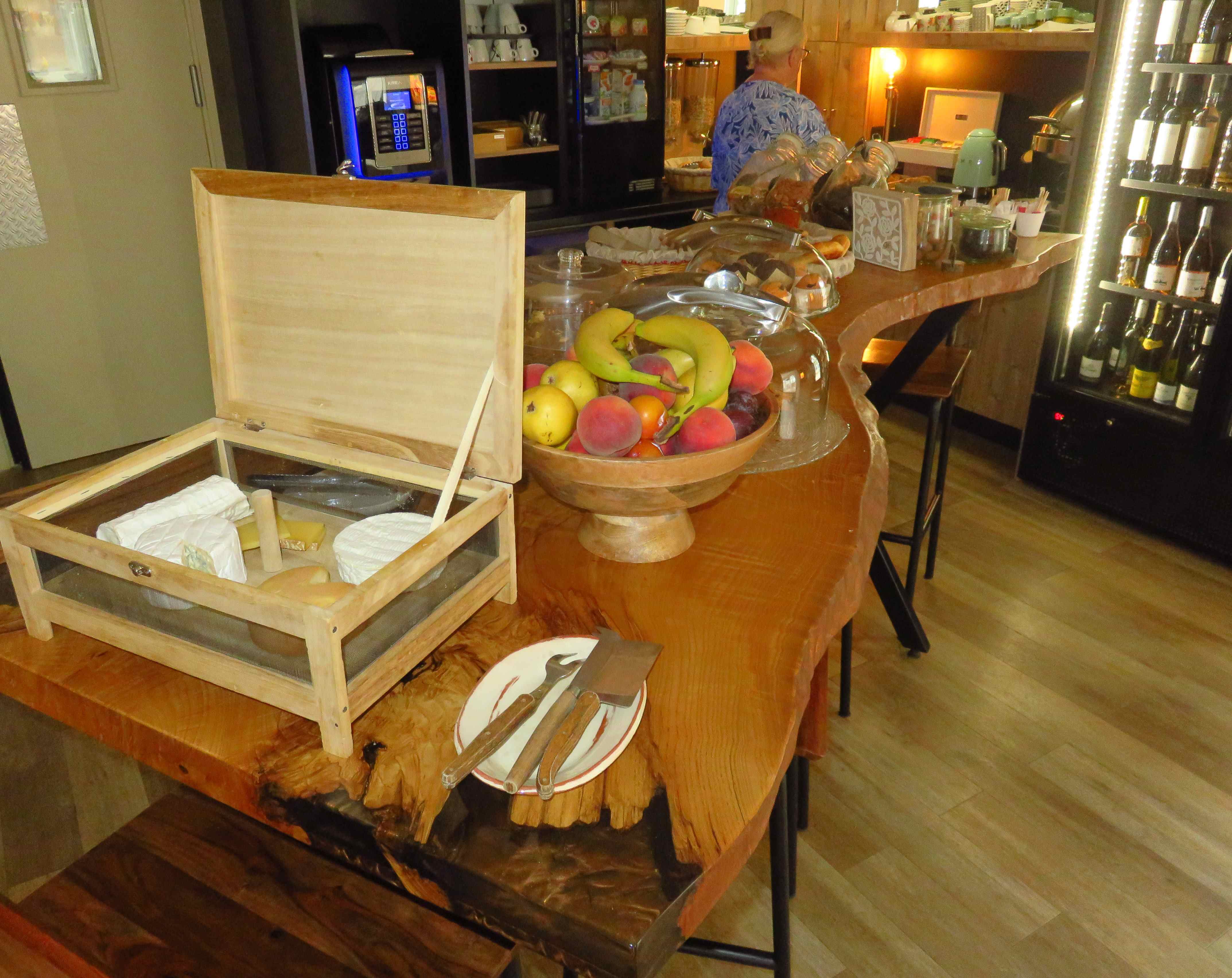
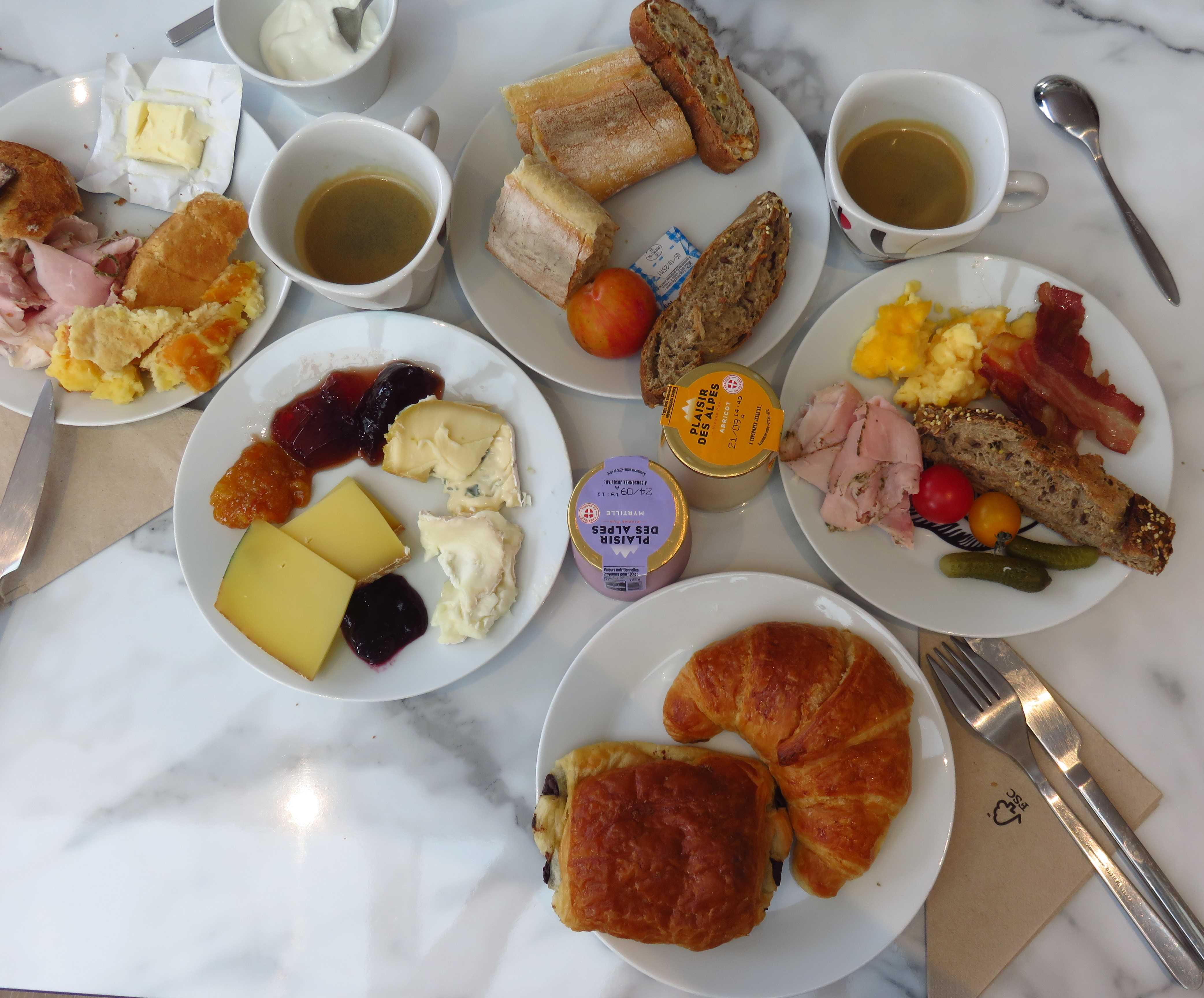
The next morning breakfast at the hotel’s spacious dining hall exceeded our expectations. Artisanal cheeses and jams, wonderful French ham, homemade preserves and cakes with seasonal fruit, locally produced yogurts and honey, fresh baguette and croissants—that was a real treat every American Francophile dreams about.
Right then and there we decided that Carry-le-Rouet is a must-stay in the region of Provence-Alpes-Côte d’Azur.
Hôtel la Tuilière is located at: 34 Av. Draio de la Mar, 13620 Carry-le-Rouet, France. For more information, visit https://en.otcarrylerouet.fr/, https://mairie-carrylerouet.fr/.
Aix-en-Provence’s Year of Cezanne
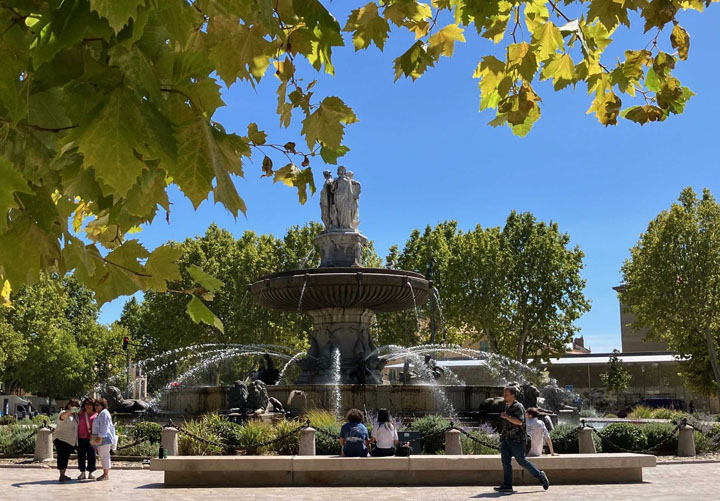
Nicknamed La Ville aux Mille Fontaines (The City of a Thousand Fountains), Aix-en-Provence seemingly has a fountain on every street corner, at every square, in every passageway. The grand, ornate, beautifully sculpted fountains and the small, sometimes defunct ones, crowned with a solitary figure of a plump cupid or a limestone urn are tied to the city’ ancient Roman origins and its hot springs and thermal baths legacy, reflected in its very name—Aix means “waters,” derived from the Latin aquae.
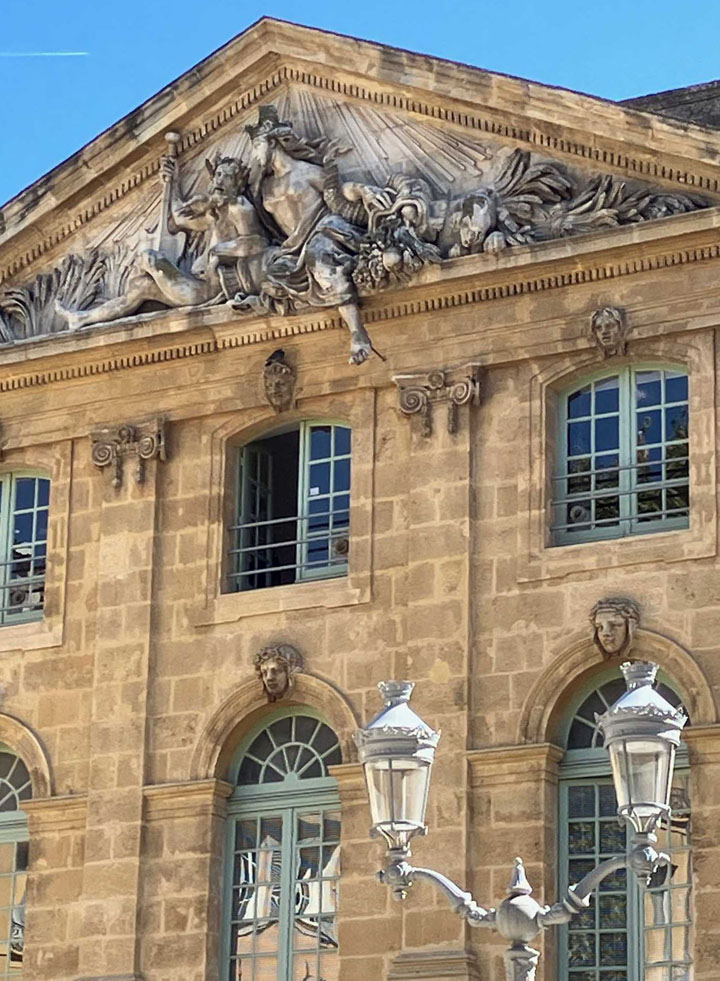
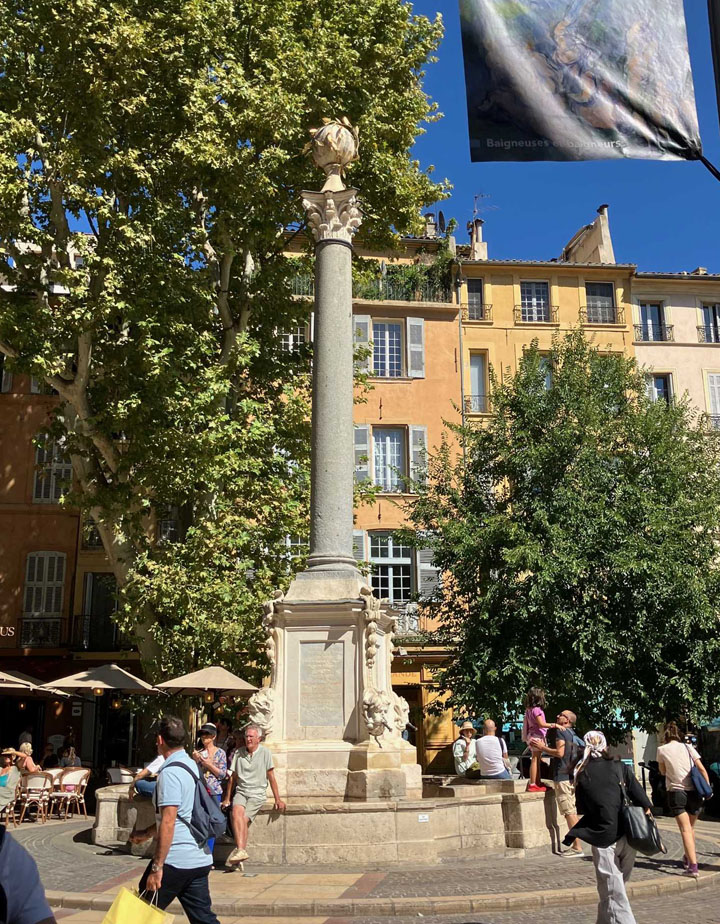
The city is also called, “Aix-en-Provence, Ville de Cezanne,” and we were traveling here for a short day trip mostly because the birthplace of the most famous Post-Impressionist painter Paul Cézanne (1839-1906) is celebrating the artist’s achievements this year on occasion of the reopening of Les Lauves studio—his final workshop—following a major renovation.
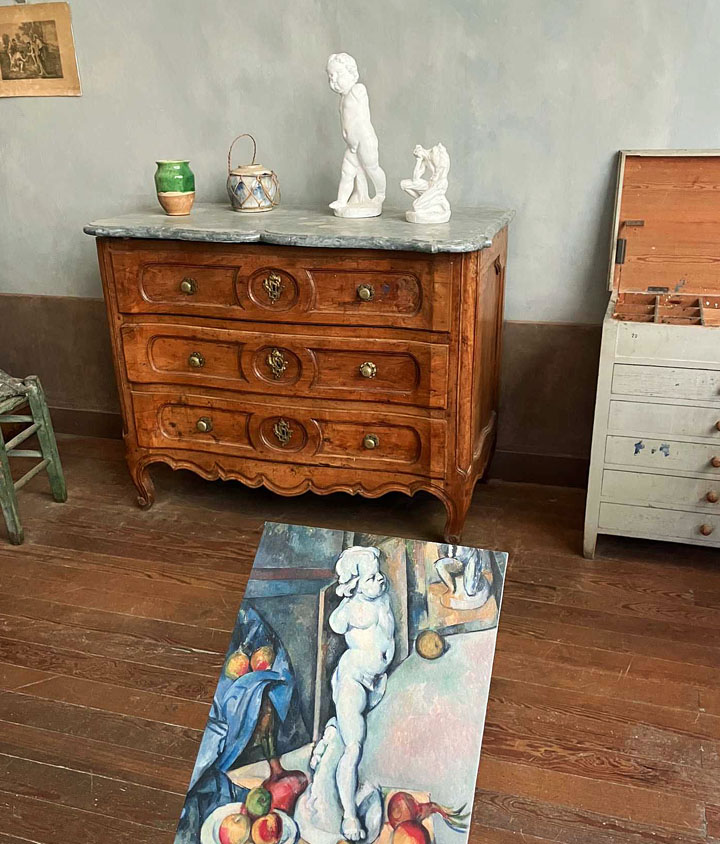
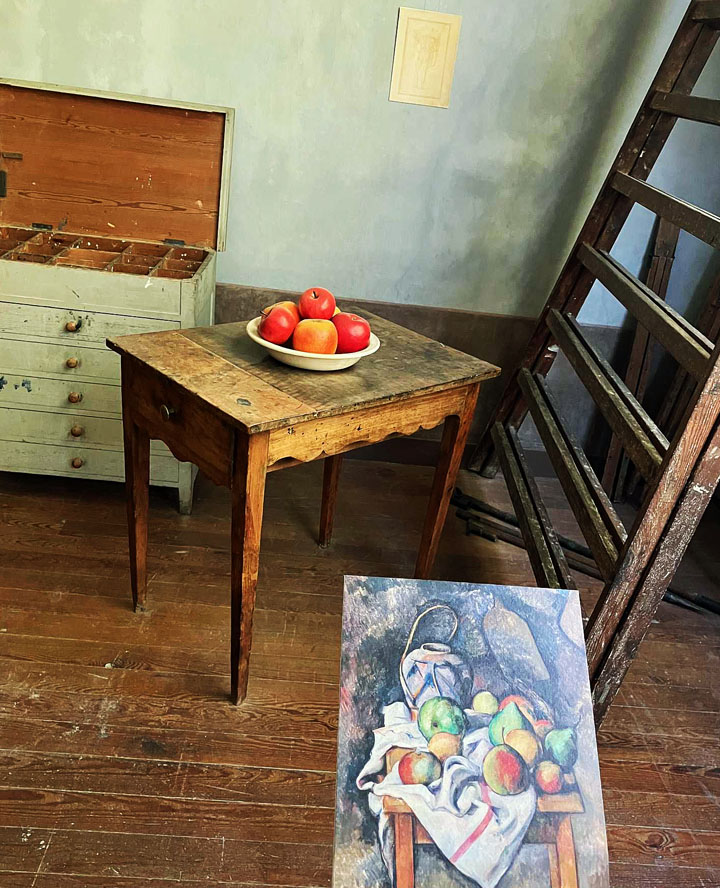
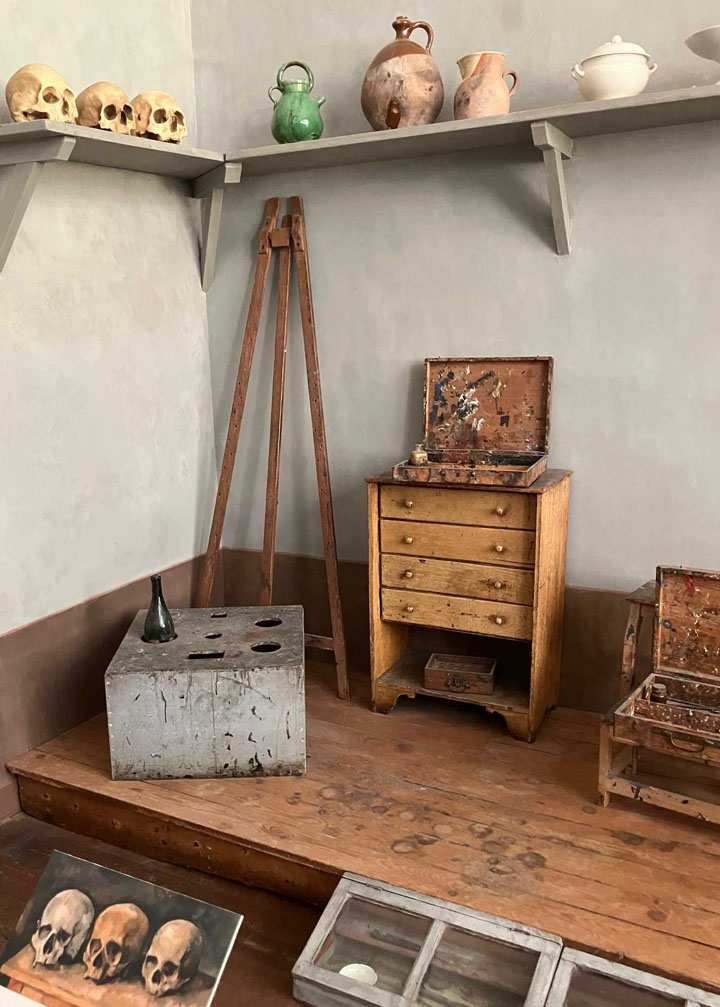
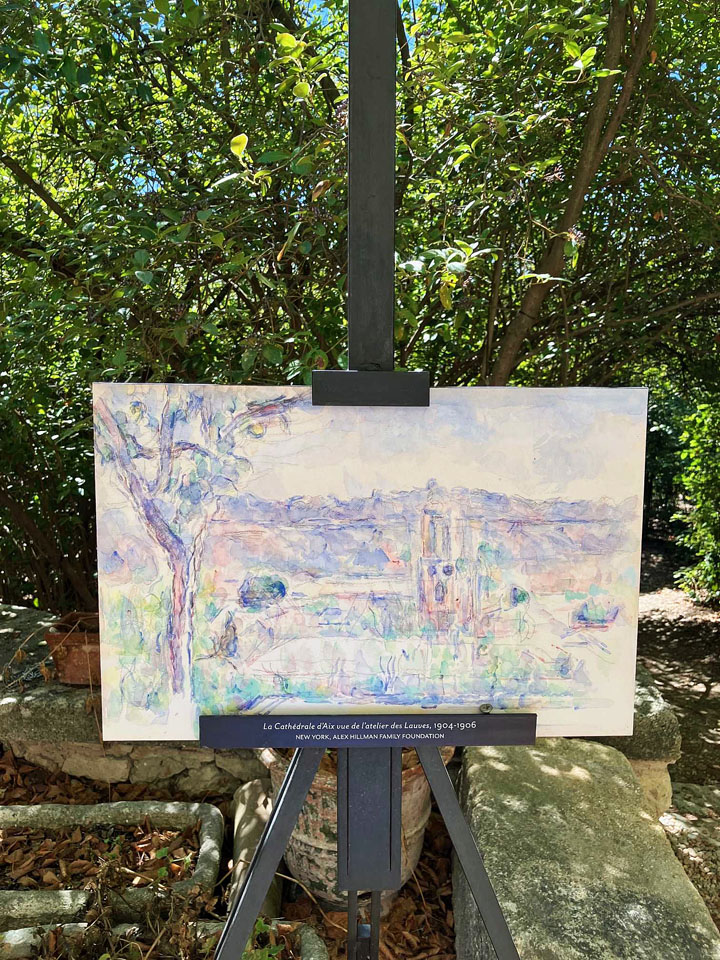
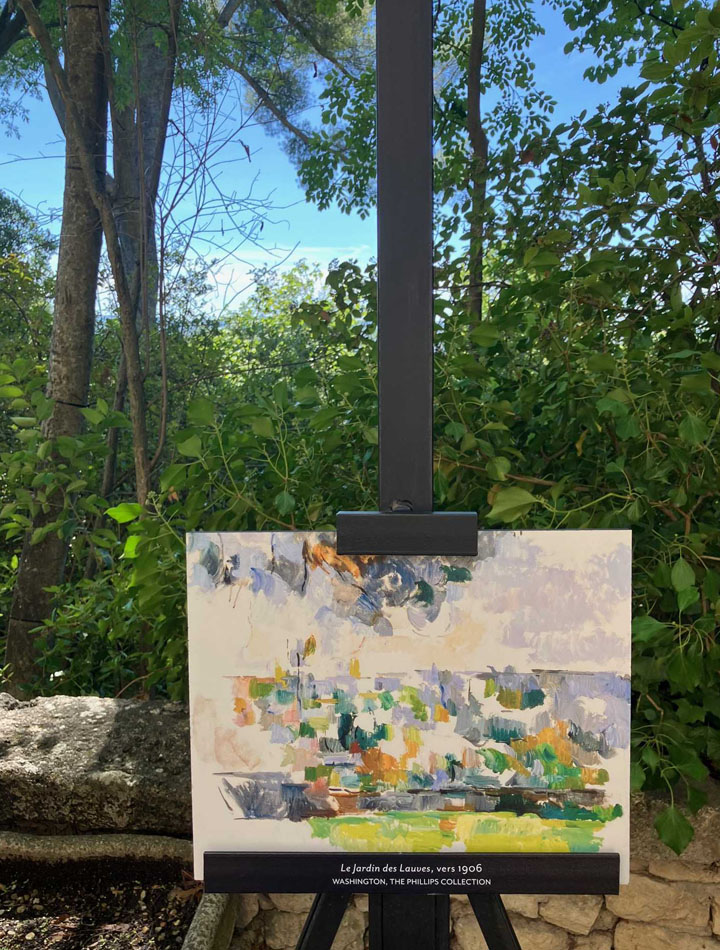
“When I was in Aix, I thought I’d be better off somewhere else,” admitted the artist in one of his letters from afar. “Now I’m here, and I miss Aix. When you’re born there, it’s hopeless, nothing else is good enough.”
We were lucky to book a high-in-demand tour to Atelier des Lauves, built in 1901 at the top of an isolated road amid hillside greenery, according to the artist’s own plans and requirements. Here, he could paint outside as well as in his second floor studio, awashed in natural light and still filled with his original prompts—household items, figurines, and skulls…
Cezanne’s paintings of this period broke all the rules with the innovative use of color, geometric forms to represent organic objects, and unnatural angles. He outraged critics and confused the public with statements, like “Treat nature according to cylinder, sphere, and cone, and put the whole in perspective, so that each side of a surface leads to a central point.” His bridging of the gap between the outgoing Impressionism and upcoming Cubism and other avant-garde movements at the turn of the century rendered Cezanne the most influential figure in the newly reformed realm of art, where both Henri Matisse and Pablo Picasso have regarded him as “the father of us all.”
Indeed, credited with inventing modern expressionism, Cezanne is widely considered the prophet of modern art. He identified his artistic goal as wanting “to make of Impressionism something solid and lasting like the art in the museums,” and by boldly experimenting with form, color, and perspective, challenging the hierarchy of art canons by elevating still life, and by “astonishing Paris [salon]” with the artistic potential of everyday objects, he was moving beyond the dissolving effect of the Impressionist style to create a more structured and stable composition.
Cezanne achieved his artistic peak at Les Lauves, where a walk through the olive grove inspired him to create one of his best-known masterpieces, The Bathers. Up until his death in 1906, the artist worked daily in this sunlit studio, creating dozens of works, bathed in the ethereal light of Provence, and now preserved in the greatest museums of the world.
Atelier des Lauves is located at: 13, avenue Paul Cezanne, 13090 Aix-en-Provence. More information at https://cezanne2025.com/sites-de-cezanne/atelier-des-lauves/.
 Real Travel Adventures