


By Emma Krasov. Photography by Emma Krasov
Full disclosure: I’m biased. Having in my background more than a decade as a private guide at a major San Francisco museum, I feel a close affinity with all the tour guides everywhere. In my travel writing, no matter how thoroughly I learn about a destination in advance, it’s always helpful to glean some valuable information from local guides, and even in the most publicized places guidance from a passionate and knowledgeable chaperon proves useful time and again!
In my recent journey to central/northwestern Germany, I took advantage of the German National Tourist Board’s offer of walking tours with local English-speaking guides in three remarkable towns—Hanover, the capital and largest city of Lower Saxony;the university town of Göttingen, and the nearby Kassel in Land Hessen. In all three towns, my goal was to explore historic monuments, architectural ensembles, parks and gardens—mostly the outdoor attractions, so tempting for first-time visitors, especially when the weather is mild and the greenery is lush after the rainy days of the European shoulder season.
Hanover
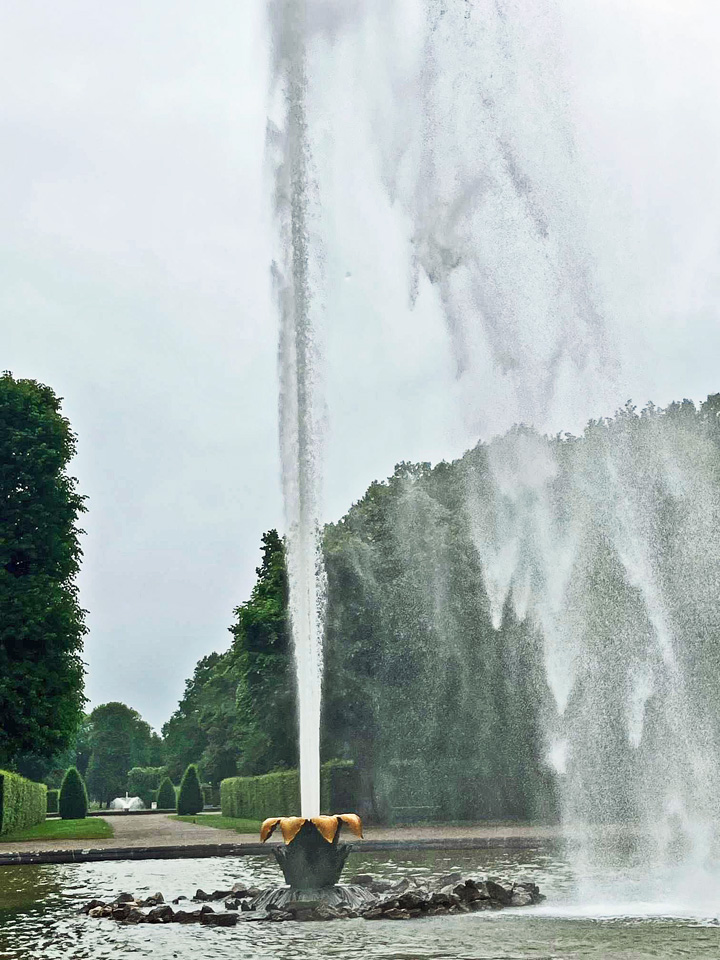
In Hanover, we met with a city guide Maj-Britt Buchholz who gave me a detailed introduction to the Herrenhausen Gardens—a 17th century marvel of landscape architecture mixing Baroque and English garden elements, abundant statuary and intricate water features. First, we rushed to the Great Fountain,since the water flow is timed for ecological reasons, and can be seen in all its glory only in designated time slots. The majestic fountain, first opened in 1719, shoots up 260 feet, and in its heyday was considered the highest fountain in European courts even though at the time it was twice lower than it is today.
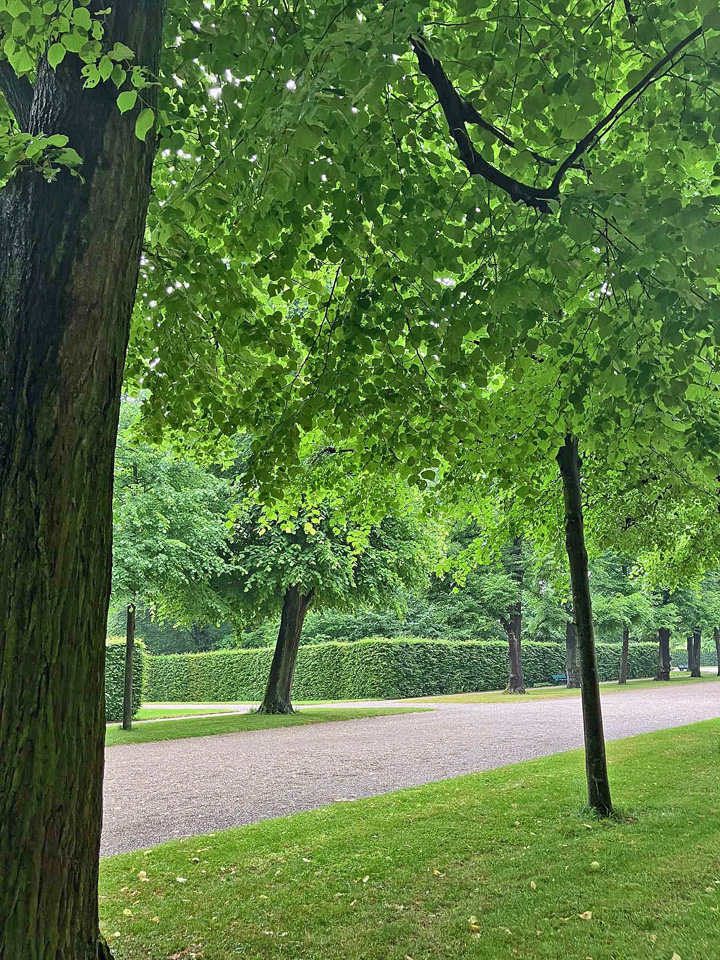
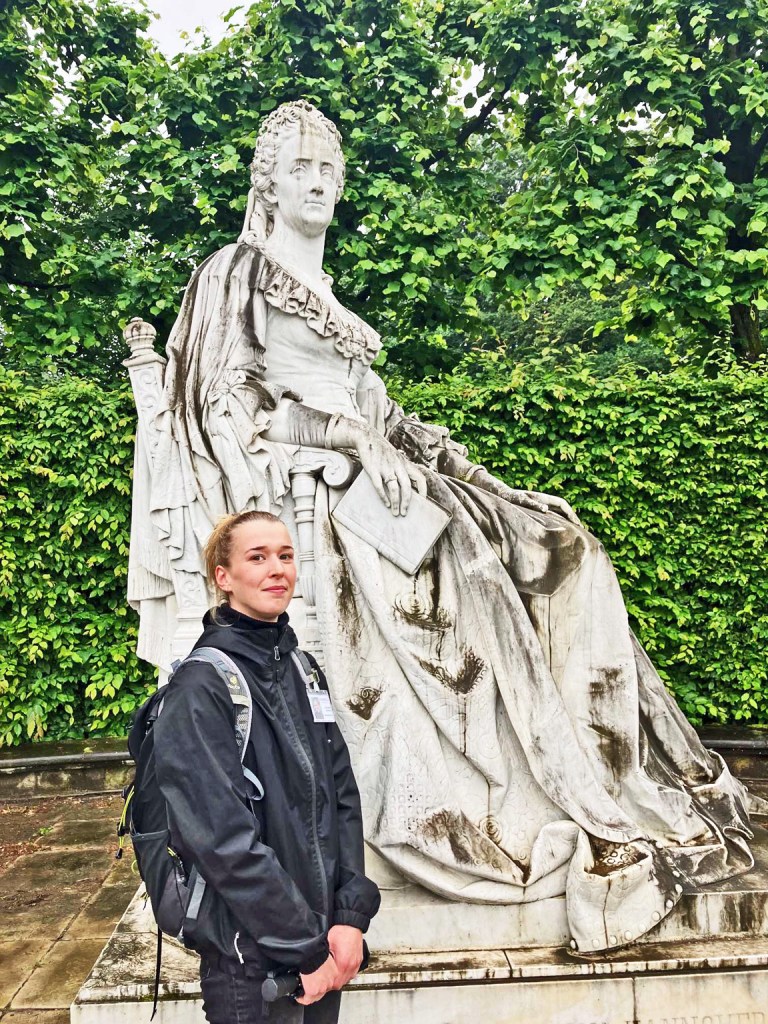
In our meandering within the Great Garden, Maj-Britt and I stopped by the imposing memorial to Electress Sophie of Hanover (1630-1714), who passionately loved the garden, contributed plenty of time and energy to its enduring layout, and suffered a fatal heart attack here during one of her daily strolls. Sophie, the wife of Duke Ernst August, Elector of Brunswick-Luneburg (1679–1698), had spent her youth in the Netherlands and had the garden designed in the style of Dutch Baroque. She envisioned this beautiful green space (nowadays measuring about 120 acres) with geometrical lawns lined with antique-inspired sculptures, wooded alleys leading to secluded nooks, and abundant flowerbeds, blooming with colorful bursts of seasonal plants. Looking the Carrara marble figure of Electress Sophie, reclining in a chair, carved by Friedrich Wilhelm Engelhard at the end of the 19th century, I couldn’t help but notice the uncanny resemblance of my guide’s facial features to those of the noble sitter, so I had to ask Maj-Britt to pose for a photo.
Next, we proceeded to the Garden Theatre, currently used for open-air musical and theatrical performances, and surrounded with multiple gilded sculptures of dancers and musicians, some looking rather strangely disfigured. As Maj-Britt explained, some of the 17th century sculptures, cast of lead and gold plated, partially lost their form over time due to the pliability of the soft metal. The most damaged ones were replaced with bronze copies in the 19th century.
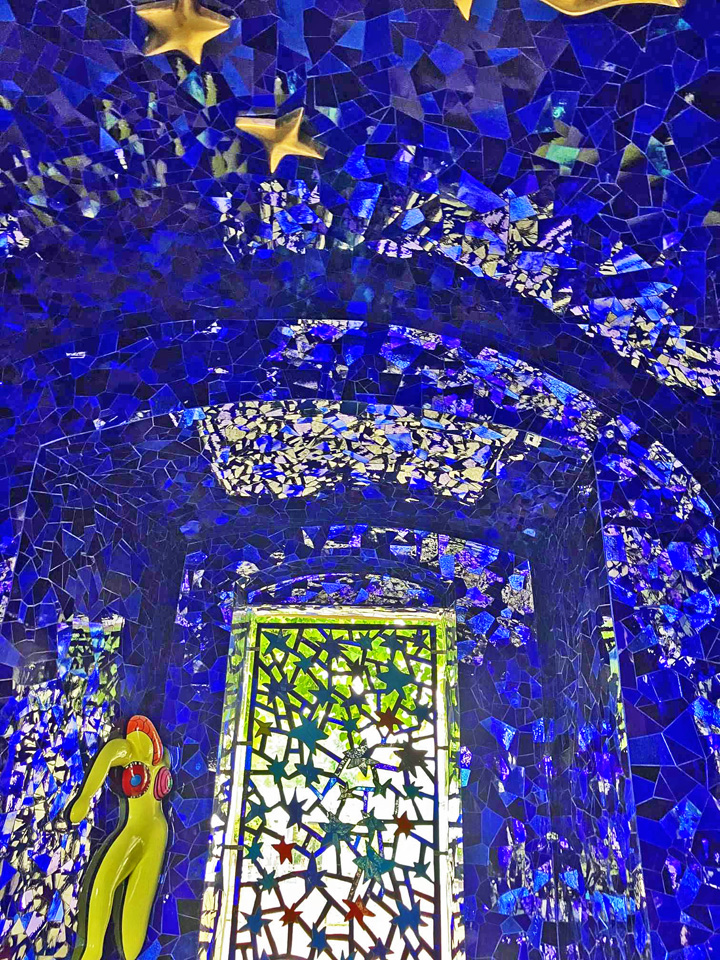

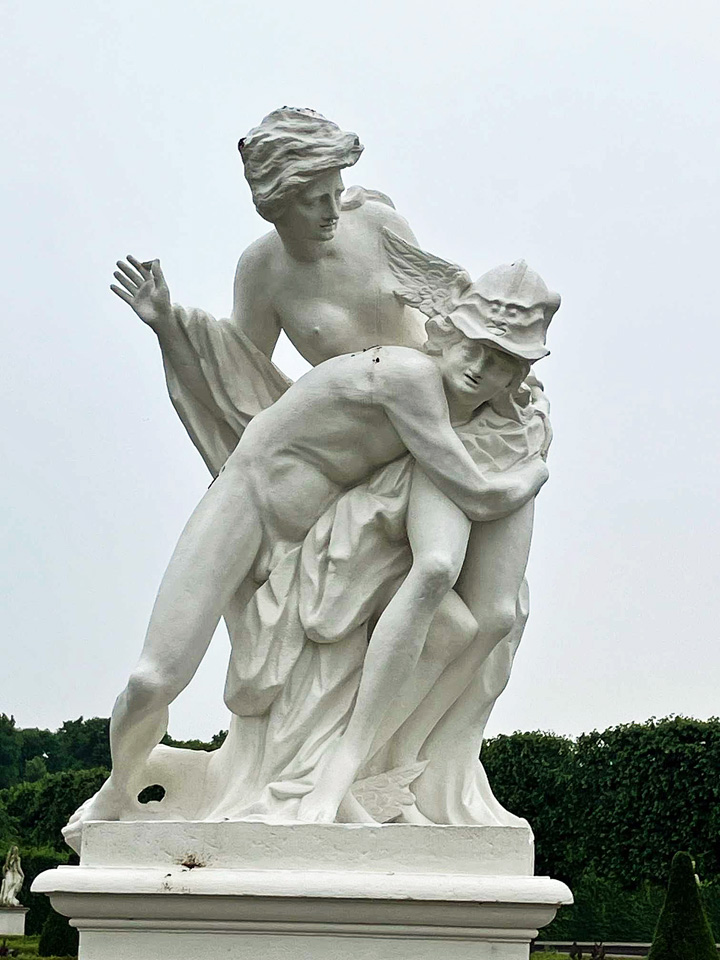
The main area of the Great Garden also features much larger sculptural depictions of the typical Baroque pantheon of characters—Greek gods and goddesses, Norse spirits, allegories of forces of nature and the then known continents. The Great Cascade, practically unchanged since the 17th century, and the Grotto at the edge of the sculpture garden work together as a bridge across centuries. Due to impossibility of proper restoration, the three-chamber Grotto was completely reimagined at the beginning of the 21st century, and reemerged in its new role as home to the artwork of a contemporary artist Niki de Saint Phalle from San Diego, California. Her three-dimensional collages made of mirror shards, colored glass, pebbles and seashells, along with small and large glass statuettes of the brightest colors, cover the entire surface of the rooms, adding an element of magic and sheer joy to the whimsical cavernous facility.
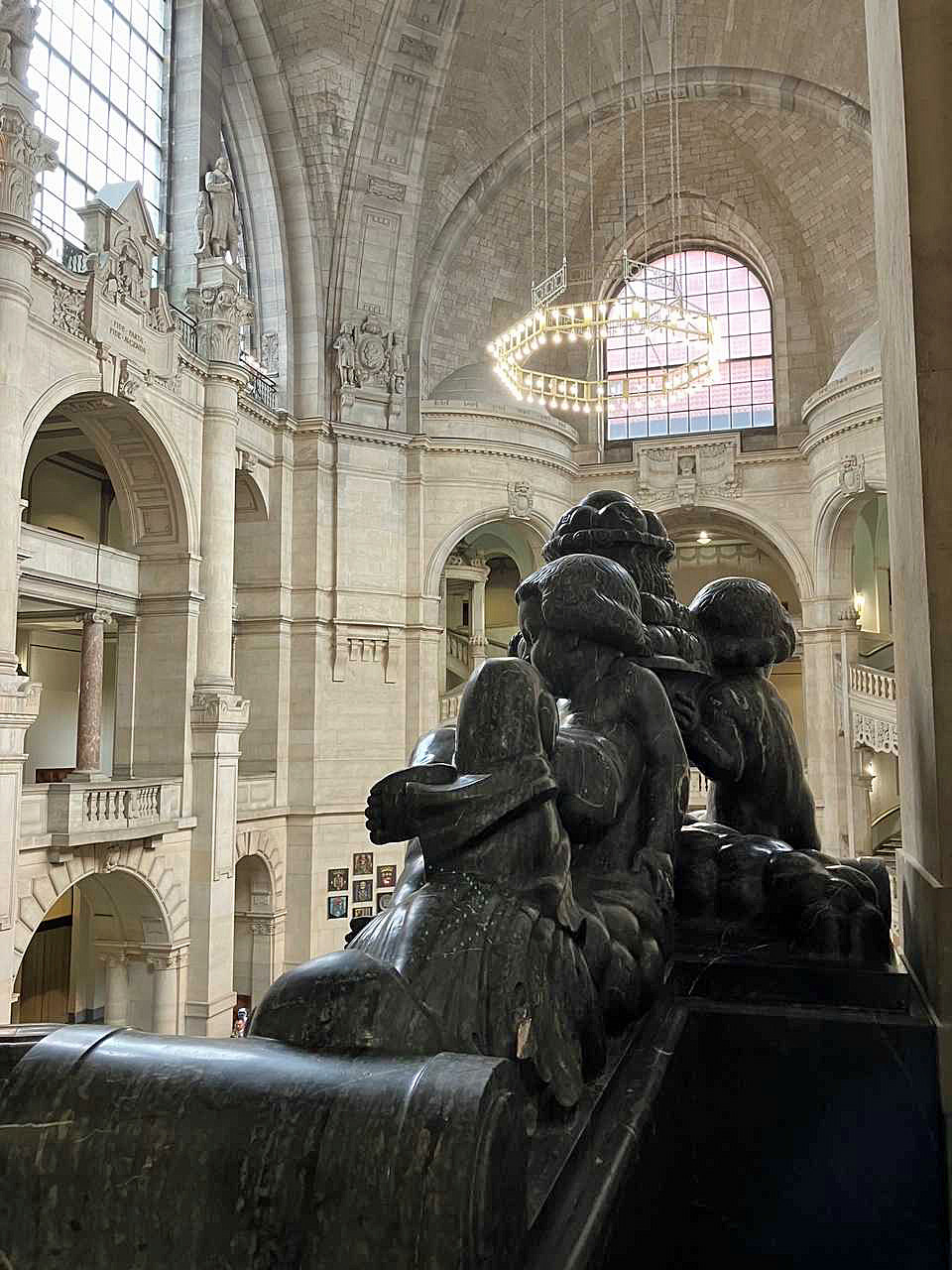

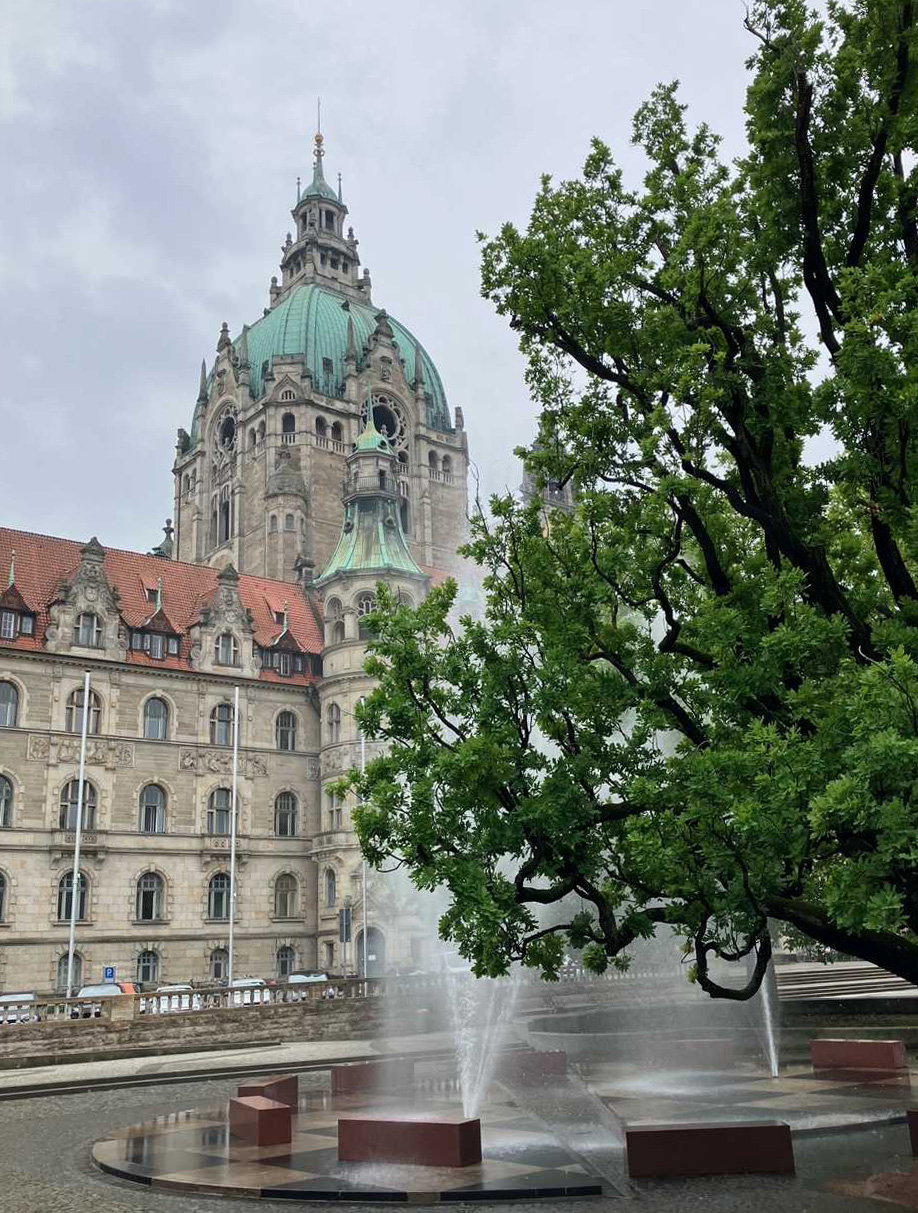
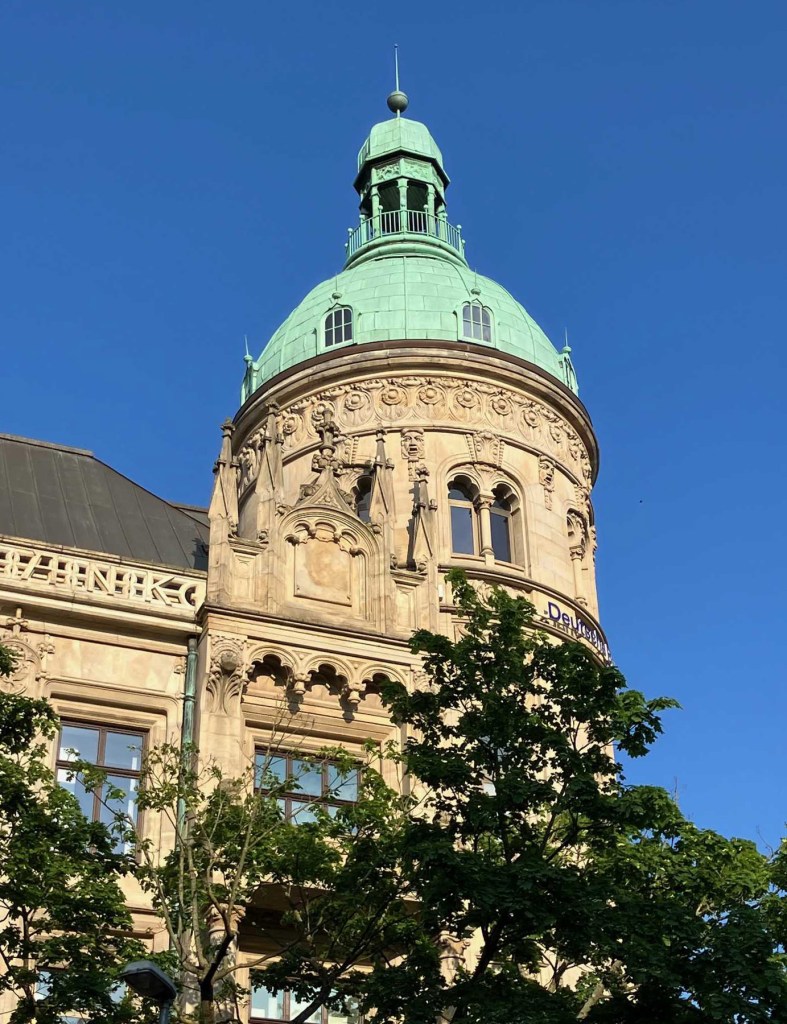
On my own I explored the most magnificent domed New Town Hall built in Hanover in 1913. To get to the very top of the dome—more than 320 feet high, I took a rickety elevator, unique in the world in that its shaft curves along with dome’s silhouette.
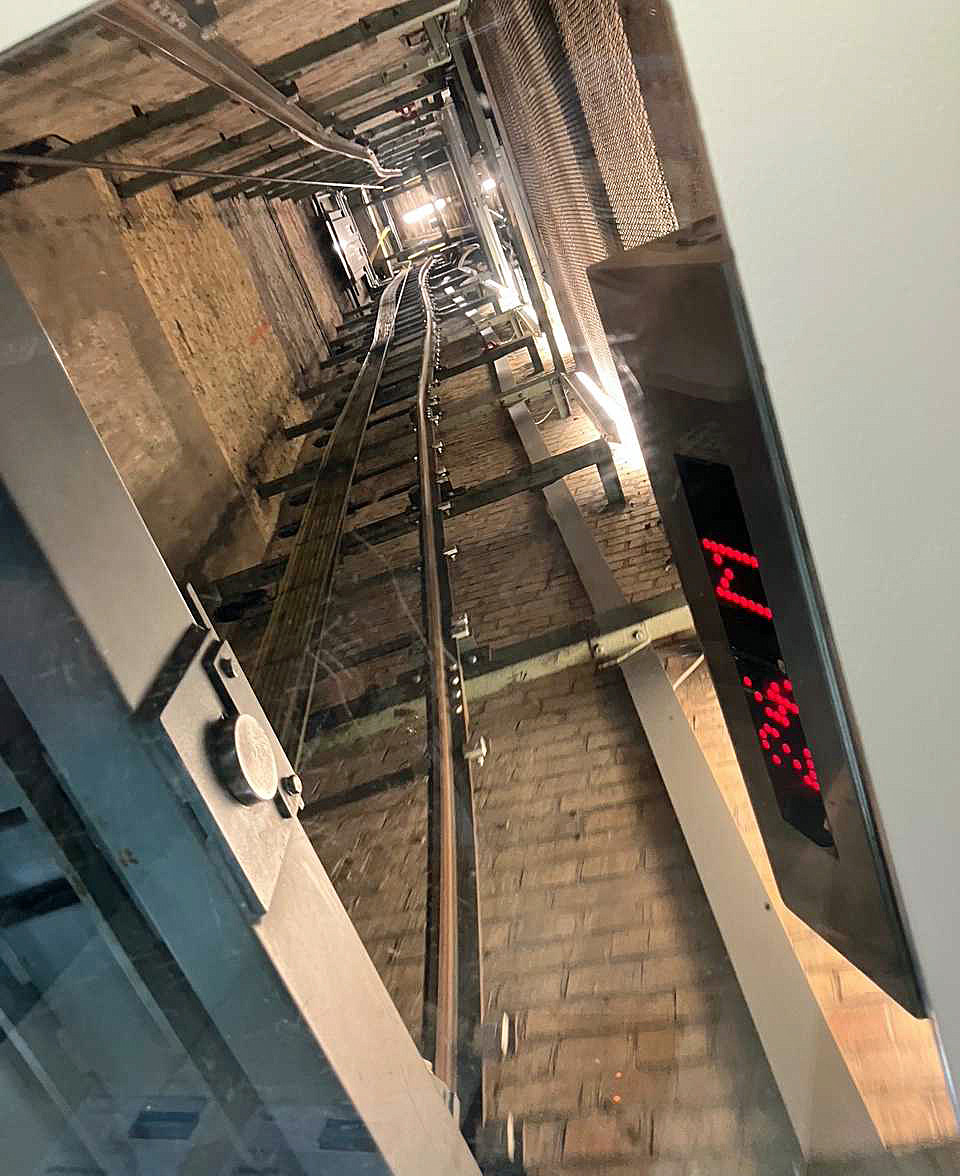
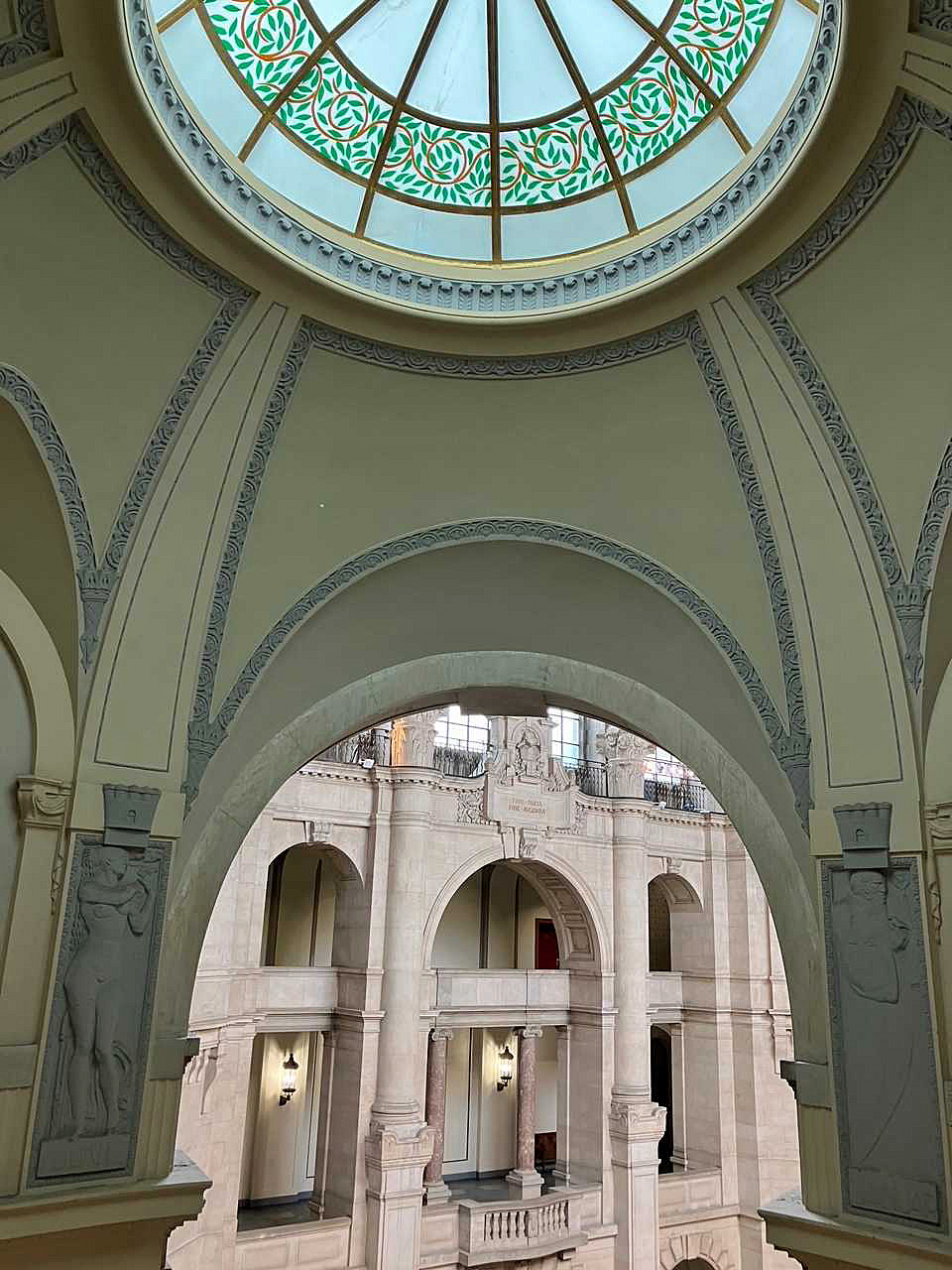

As I learned later on, curious about this unusual structure, “The lift climbs the 160 feet shaft at an angle of up to 17° to the gallery of the dome, where the Harz mountain range can be seen when visibility is good. In the process, the lift moves 33 feet horizontally. During the trip, the two weight-bearing cables wind up on three double rolls in the wall of the shaft.” The view of the city from the observation platform of the dome was, indeed, spectacular!

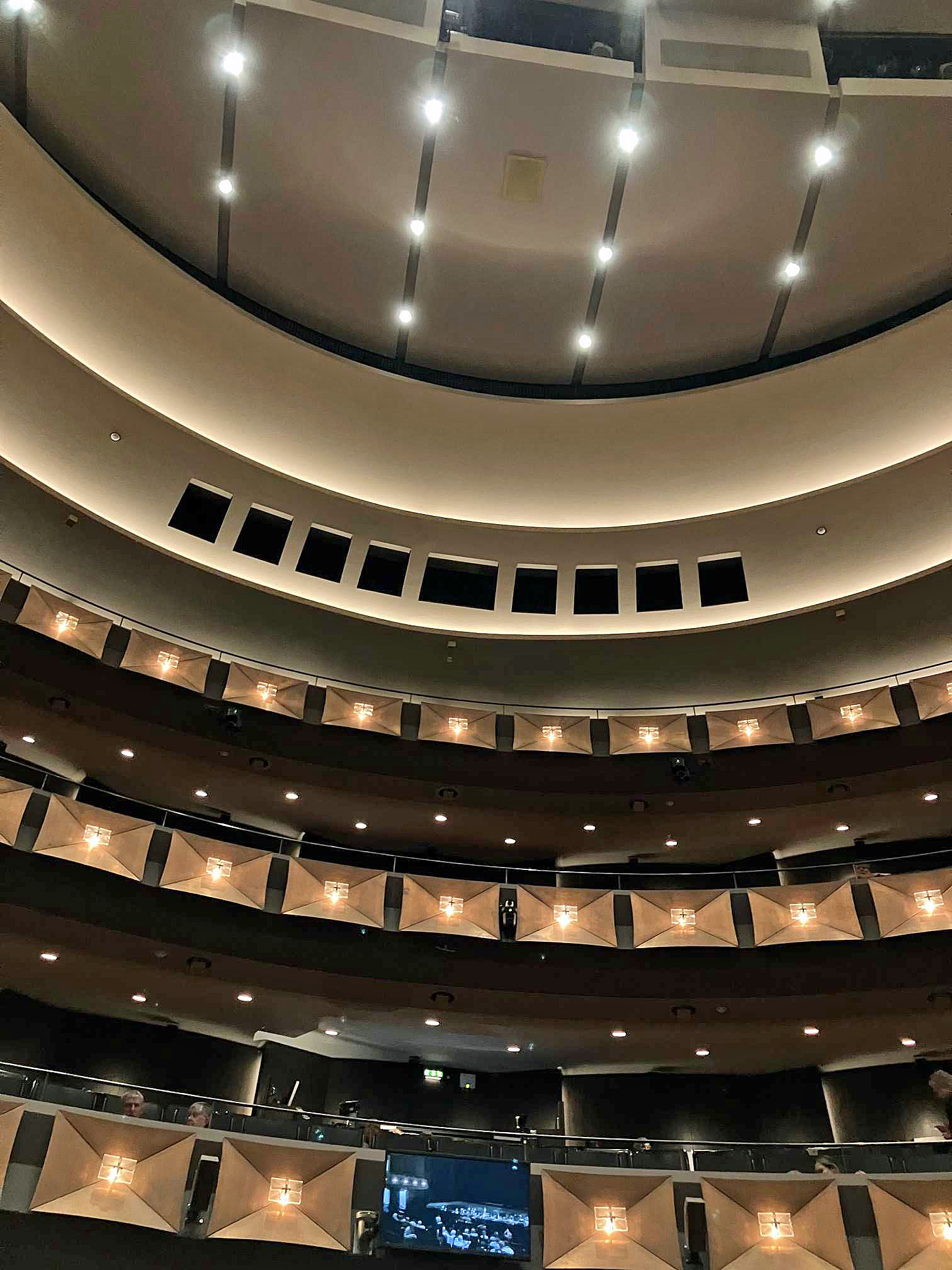
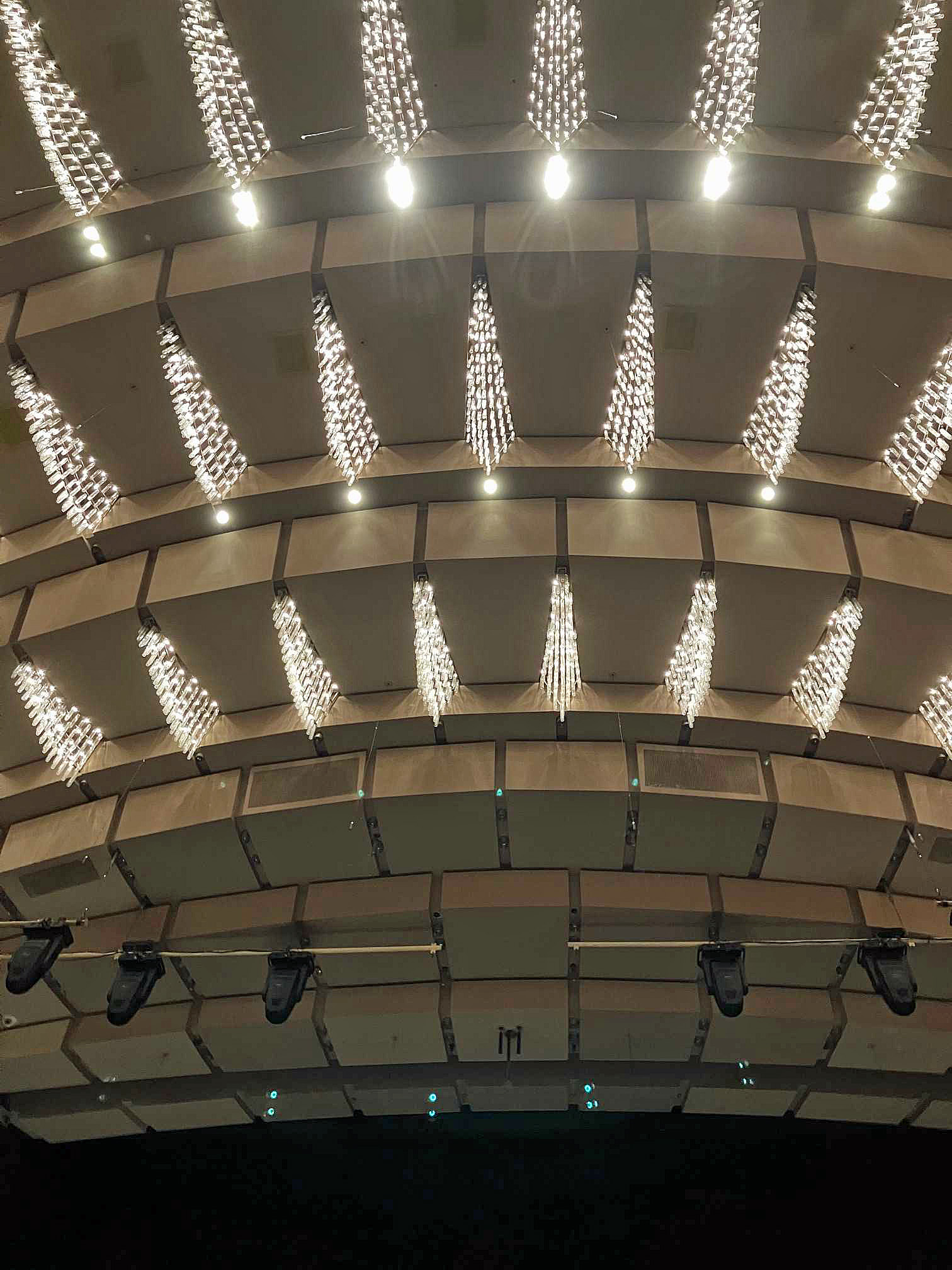
At the end of the day, I headed to Hanover Staatstheater to enjoy a contemporary ballet, “Hokus & Pokus,” telling a story about two magicians, brother and sister, plagued by sibling rivalry and falling prey to envy, malice, and dishonesty, only to prove that no imitation is ever as good as the original, and that plagiarism doesn’t pay. The exquisite choreography by Jeroen Verbruggen, musical direction by Piotr Jaworski, staging by Jürgen Franz Kirner, the most astonishing costumes by Emmanuel Maria, lighting by Fabiana Piccioli, and dramaturgy by Leira Marie Leese brought to perfection by the State Ballet Hanover and Lower Saxony State Orchestra Hanover created an unforgettable celebration of performing arts, always impressively rich and highly sophisticated in Europe.

Göttingen
To help me learn about Göttingen, my private tour guide, Hilmar Stemmler, took me on a walking tour along the lively picturesque streets of the university campus, which is practically the entire town. Founded in the 12th century, the affluent medieval Göttingen eventually became a well-known university town with the opening of Georg-August-Universität in 1734, housing many great-name scientists and their devoted students. Among the University of Göttingen’s professorship there was Georg Christoph Lichtenberg, known for his research in electricity and discovery of electrical discharge branching patterns, now called Lichtenberg figures. Among the alumni were the Brothers Grimm and Wilhelm Eduard Weber, the inventor of electromagnetic telegraph. German Chancellors Otto von Bismarck and Gerhard Schröder attended law school here.
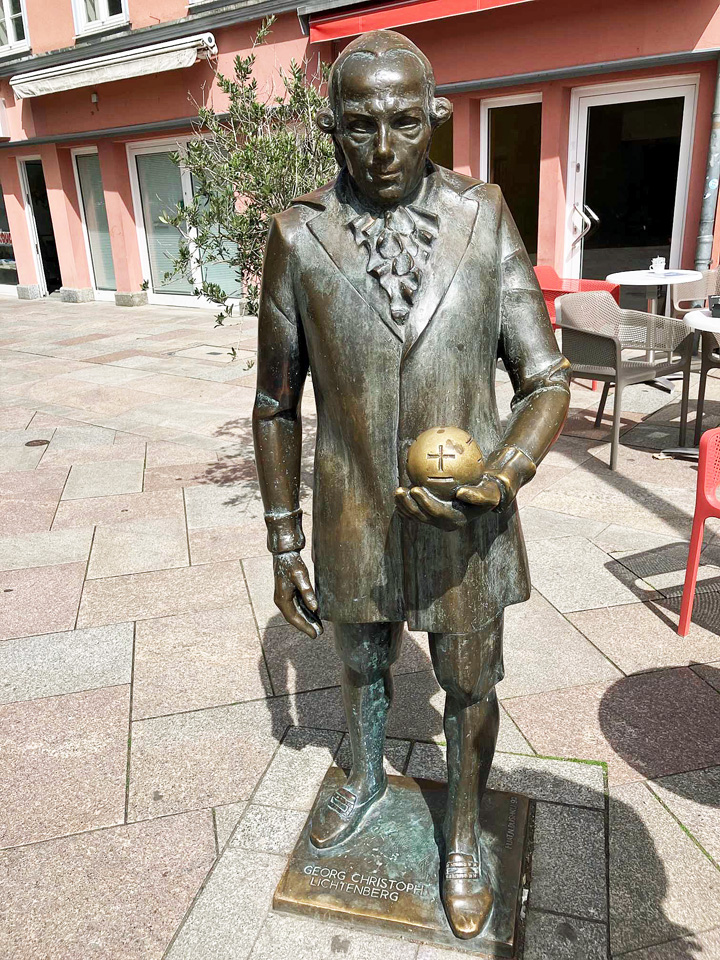
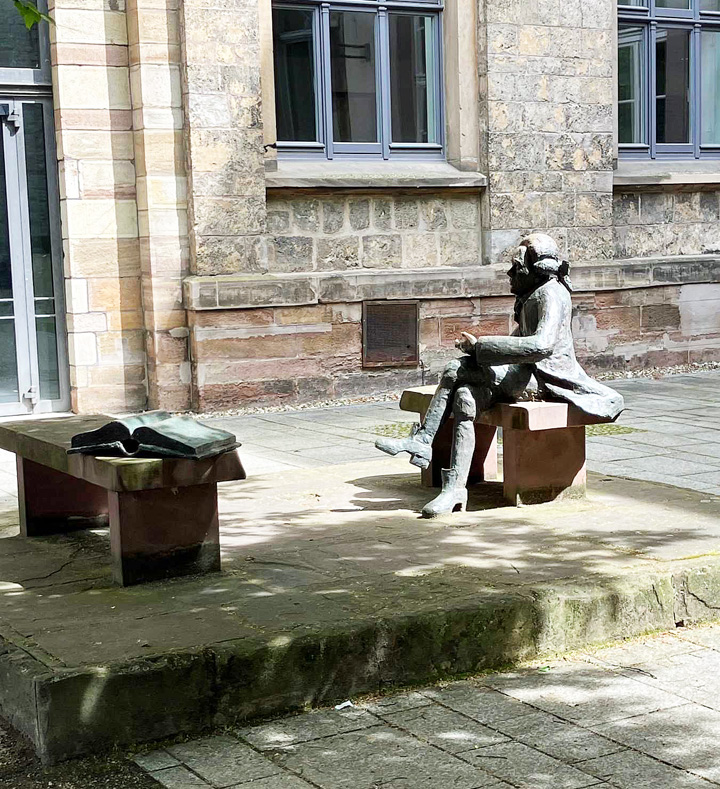
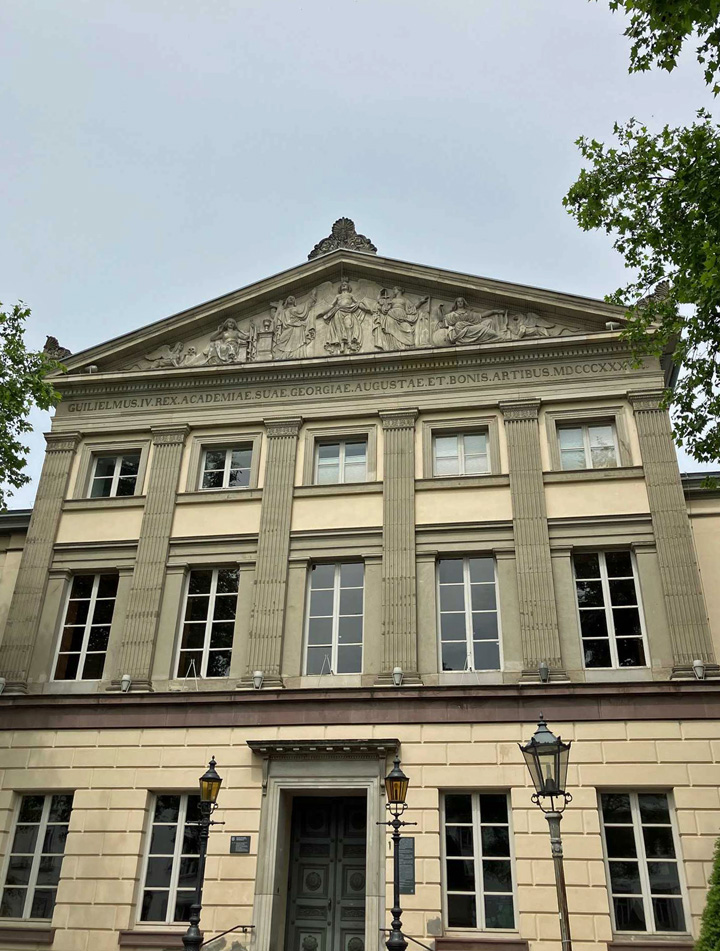
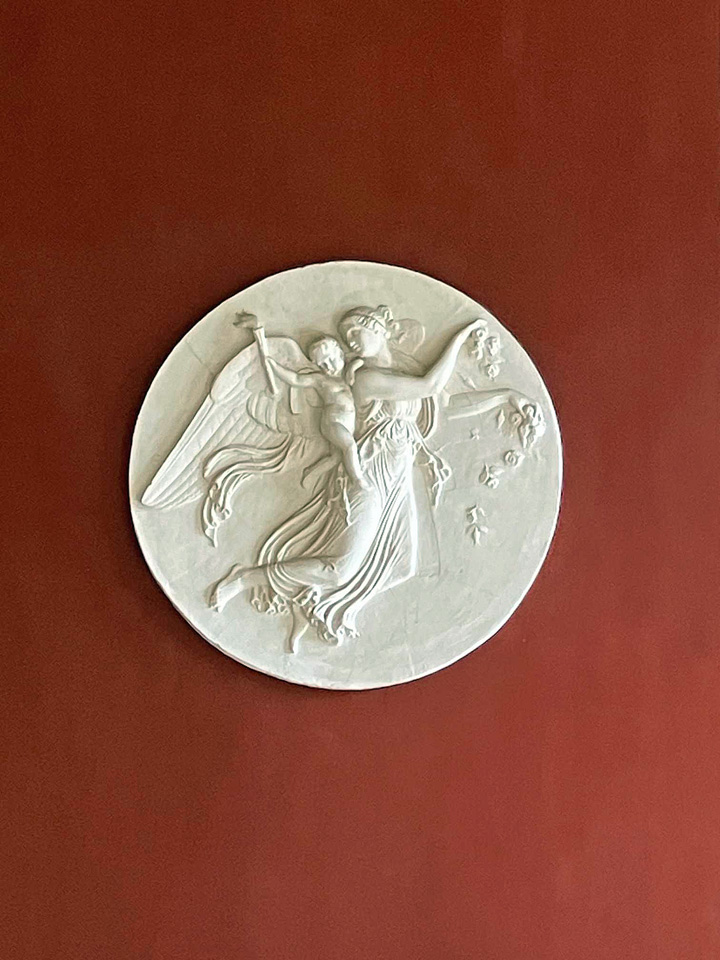
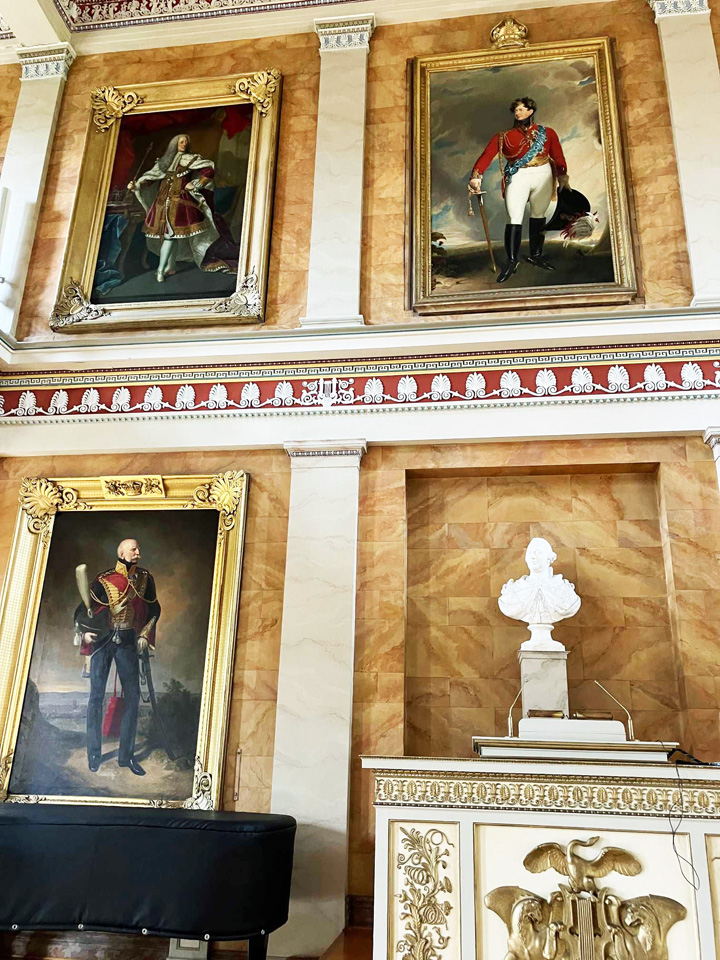
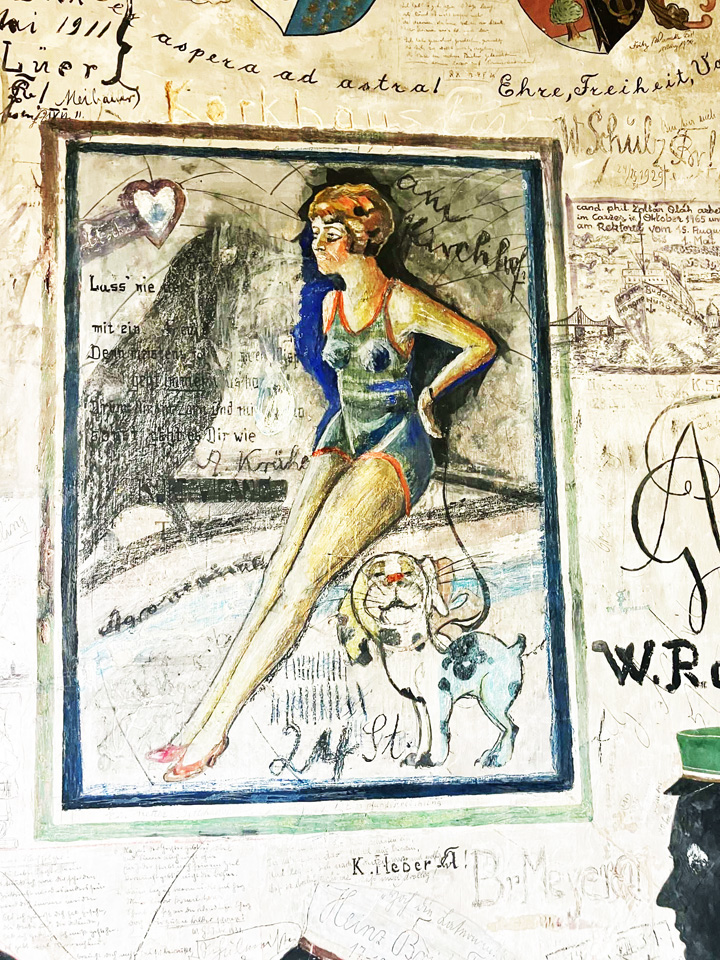
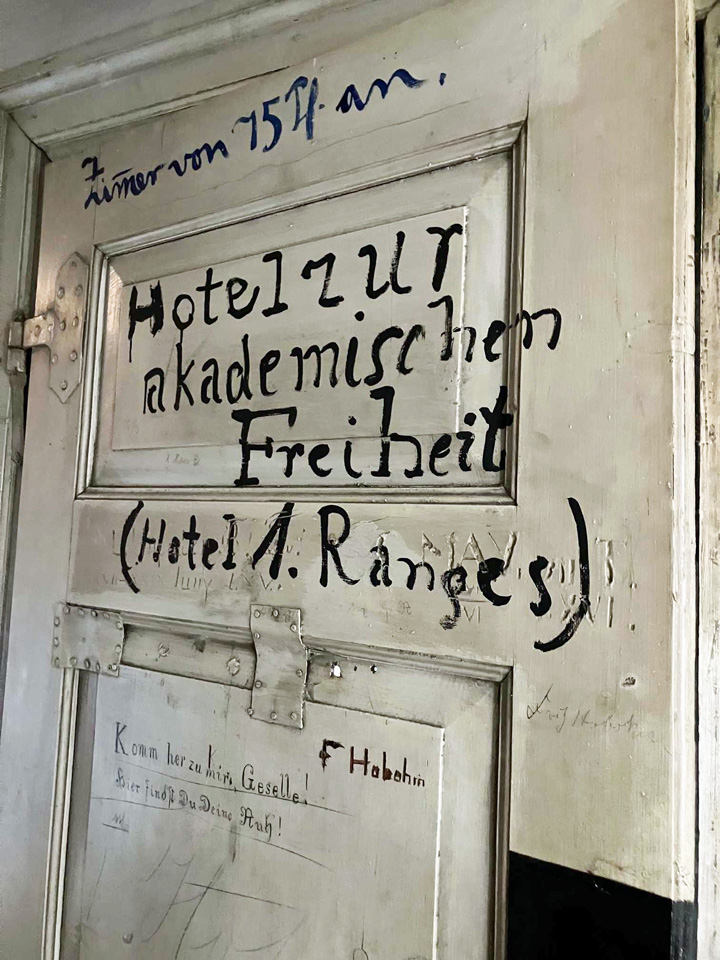
A university of this magnitude, almost a city-state in its own right, had a set of strict rules that regulated the students’ behavior, and even a student “prison,” intended for the violators of sobriety, decent public conduct, or no-smoking rules. Located on the upper floor of the main building, this penitentiary still bears multiple marks of student rebellion with various graffiti depictions of self-portraits, half-naked ladies, cats, dogs, doodles, and slogans, like “What we lack here: beer, women, our studies, good food” etc.
According to Wikipedia, “During the 1930s, Göttingen housed the top math-physics faculty in the world, led by eight men, almost all Jews, who became known as the Göttingen eight. Their members included Leó Szilárd and Edward Teller. This faculty was not tolerable to the Reich, however, and the University of Göttingen suffered greatly as a result. The Göttingen eight were expelled, and these men were forced to emigrate to the West in 1938. Szilárd and Teller went on to become key members of the Manhattan Project team. Ironically, the Nazi insistence on “German physics” prevented German scientists from applying Albert Einstein’s breakthrough insights to physics, a policy which stifled the further development of physics in Germany. After the end of World War II, the famous university had to be reorganized almost from scratch, especially in the physics, mathematics and chemistry departments, a process which has continued into the 21st century.”
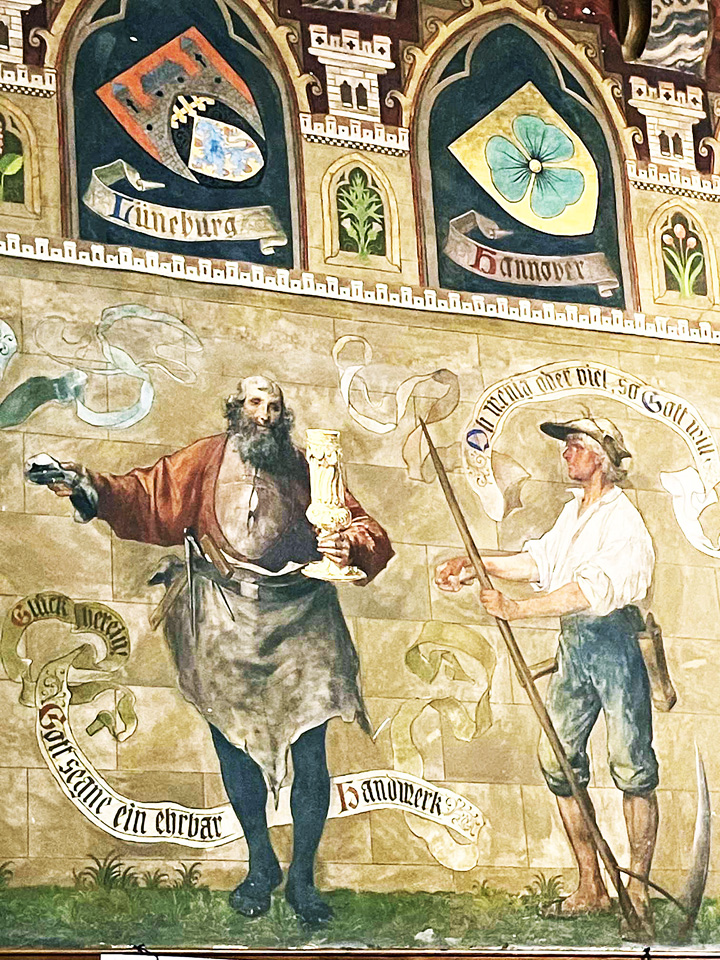
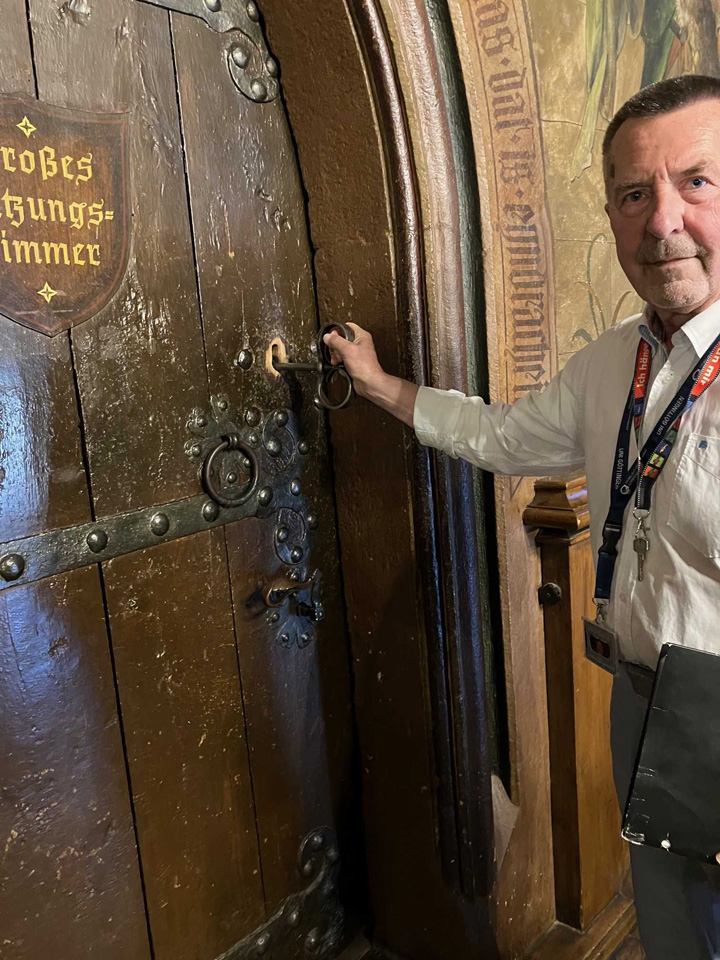
In our tour of the city, Hilmar—an experienced tour guide who knows how to wow his audience, led me to the Old Town Hall, built in 1886 and lavishly decorated with gorgeous murals depicting the town folks of various occupations. There, with a humongous iron key he opened the inner doors to the assembly room, where there was a doubly secured wall safe for the town’s treasury, and multiple floor outings of the ancient heating system that used hot coals burning at the basement to heat up the upper level.
Right outside the Old Town Hall there’s a symbol of Göttingen—a famous fountain statue of a girl holding geese under a beautiful cast iron gazebo entwined with leafy vines and flowers. The “Goose Girl” landmark is central to the University’s doctorate students’ tradition of climbing up the statue and kissing the girl upon graduation from their studies. Even though the practice is now forbidden, it continues to happen and attracts quite a crowd of spectators to “the most kissed girl in the world.”
Kassel
A town of Kassel in northern Hesse, central Germany, also holds bragging rights concerning the Brothers Grimm legacy. The classic storytellers for children of the 19th century, still famous today, even though in edited, much lighter versions, suitable for the guarded and unspooked contemporary youth, lived and worked on their fairy tales amid Kassel’s dark forests and grassy river banks.
I joined my private tour guide, Helga Kasprowicz, at the main entrance to the imposing Wilhelmshöhe Palace, a gateway to the UNESCO World Heritage Site, a 590-acre landscape park, Bergpark Wilhelmshöhe.
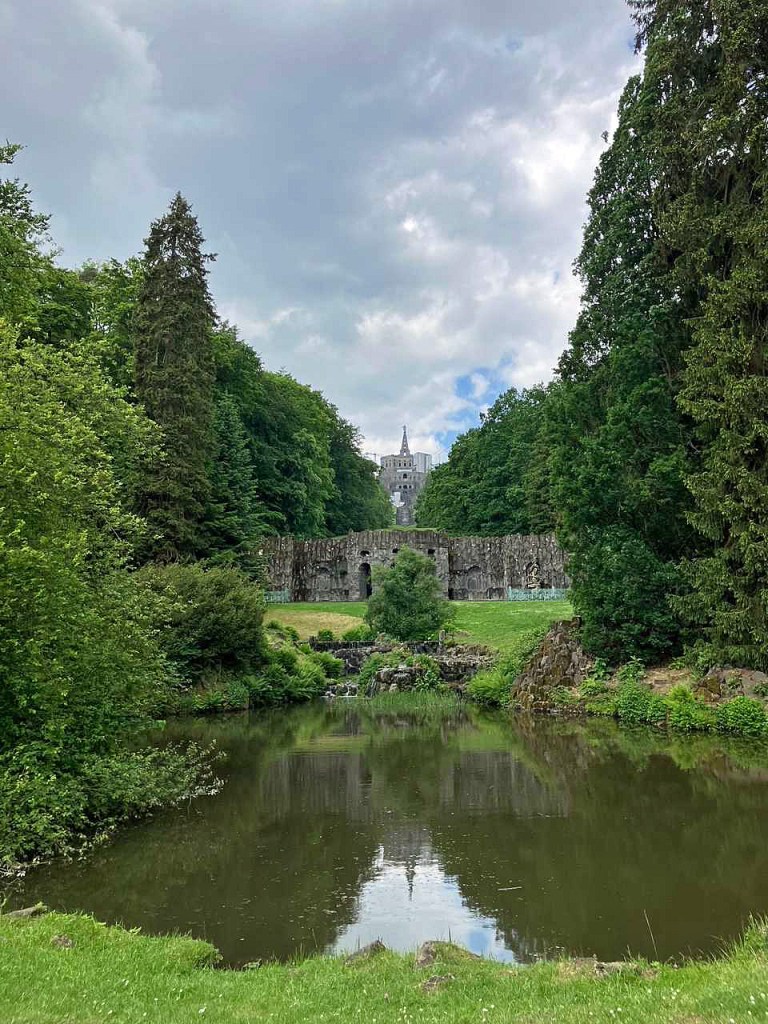
The largest hillside park in Europe, no less than 150 years in development since its inception in 1689, today it is a UNESCO World Heritage Site with monumental Baroque architecture, unique water features, mountainous bridges and sculptures, the most impressive of which is a 28-feet bronze Hercules created by Johann Jacob Anthoni, atop a 130-feet pyramid.
From here, the water flows through a system of channels and streams to the park fountains, grottos, and waterfalls, and eventually gathers in a pond with a 160-feet Great Fountain created in 1767.
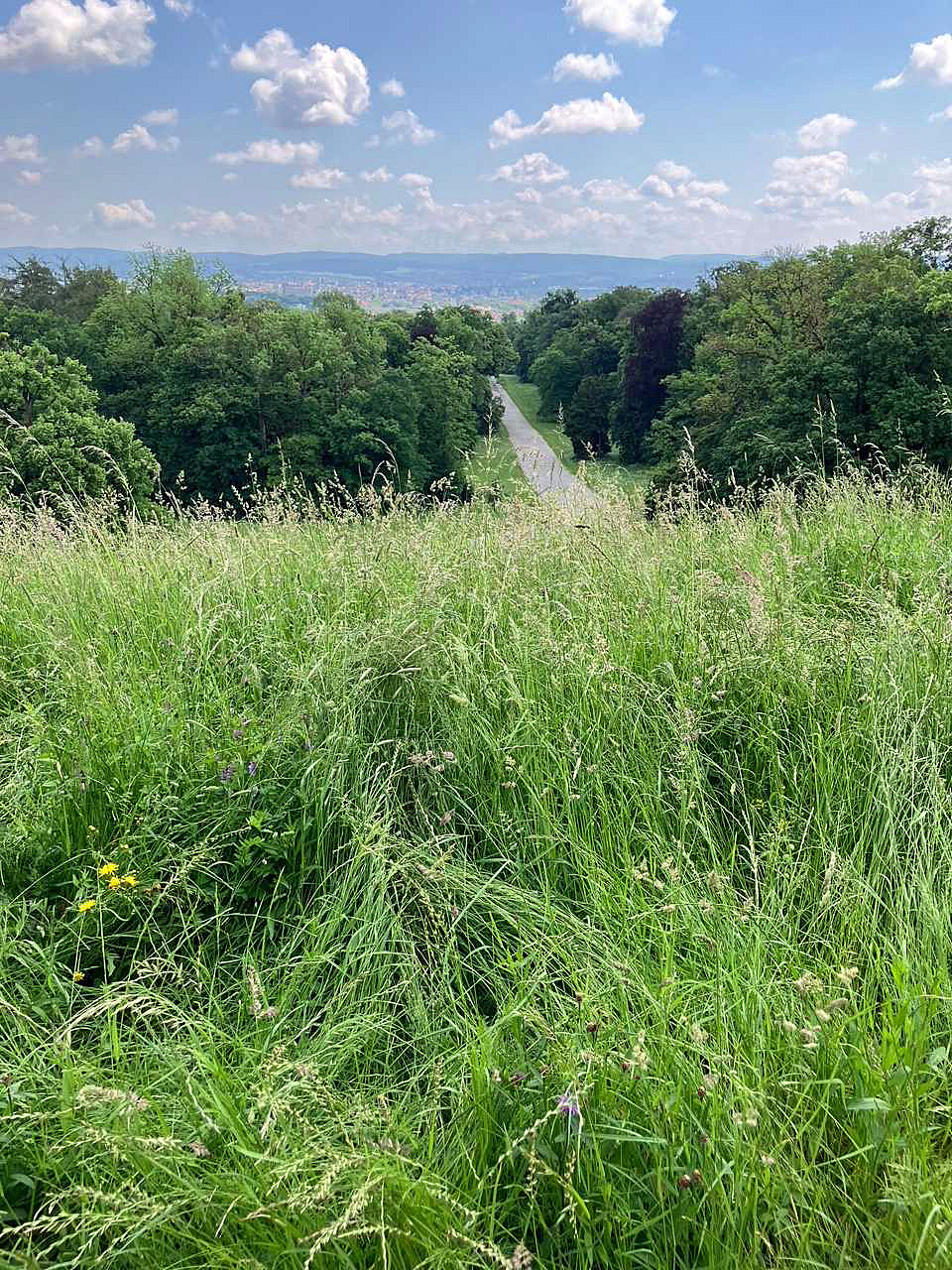

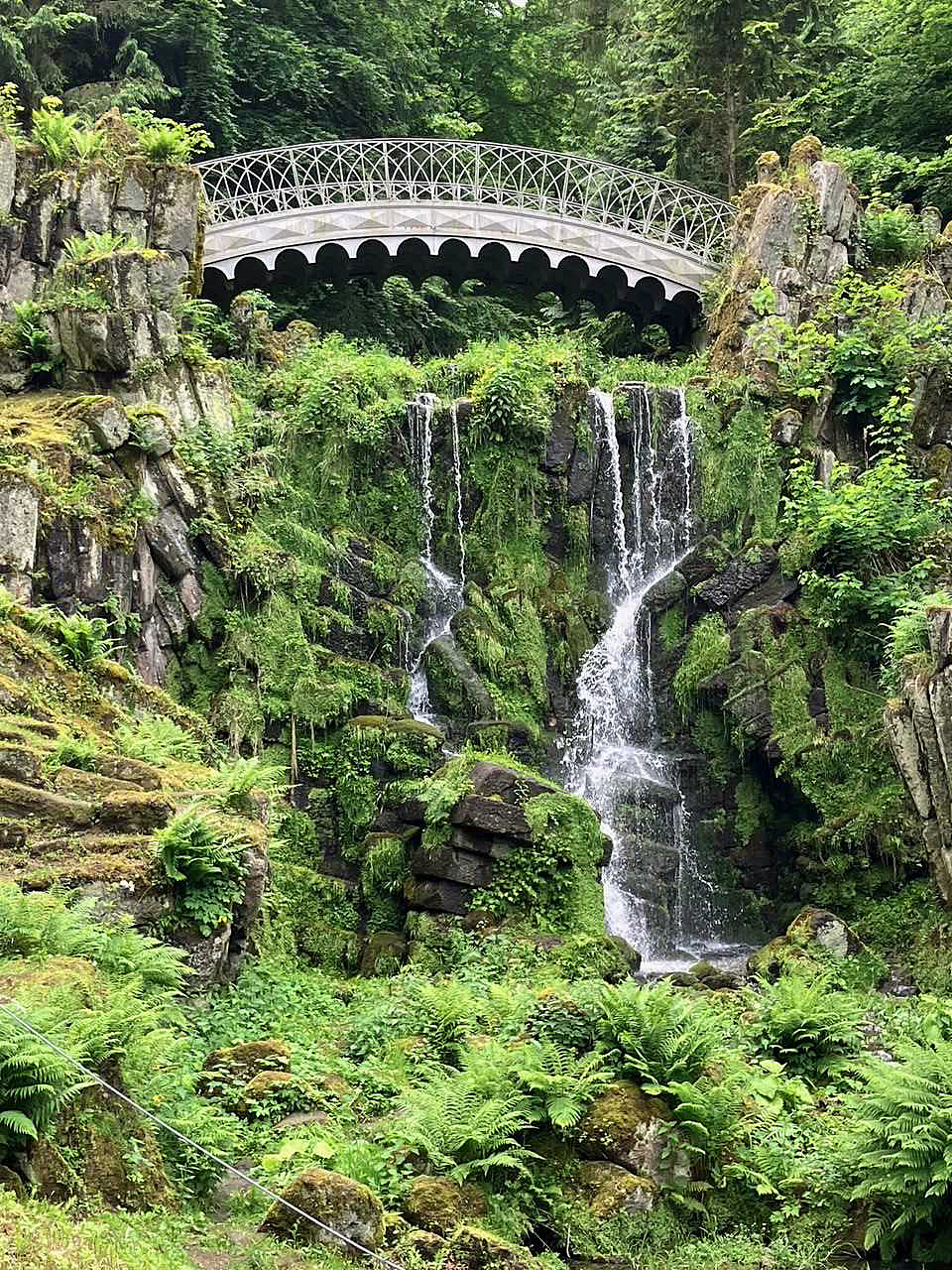
While the park’s beginning dates to 1701, during the reign of Landgrave Charles I of Hesse-Kassel, its significant extension and enhancement was implemented by Wilhelm IX, Landgrave of Hesse-Kassel, in 1785. The Neoclassical Wilhelmshöhe Palace, designed by the architect Simon Louis du Ry, was built the following year.
According to Helga, the Landgrave liked to play practical jokes on his wife and her companion ladies. He used to turn on hidden sprinkler faucets when the unsuspecting ladies approached flowering meadows in their gorgeous summer dresses and with their elaborate hairstyles and hats just to be suddenly drenched in water from head to toe.
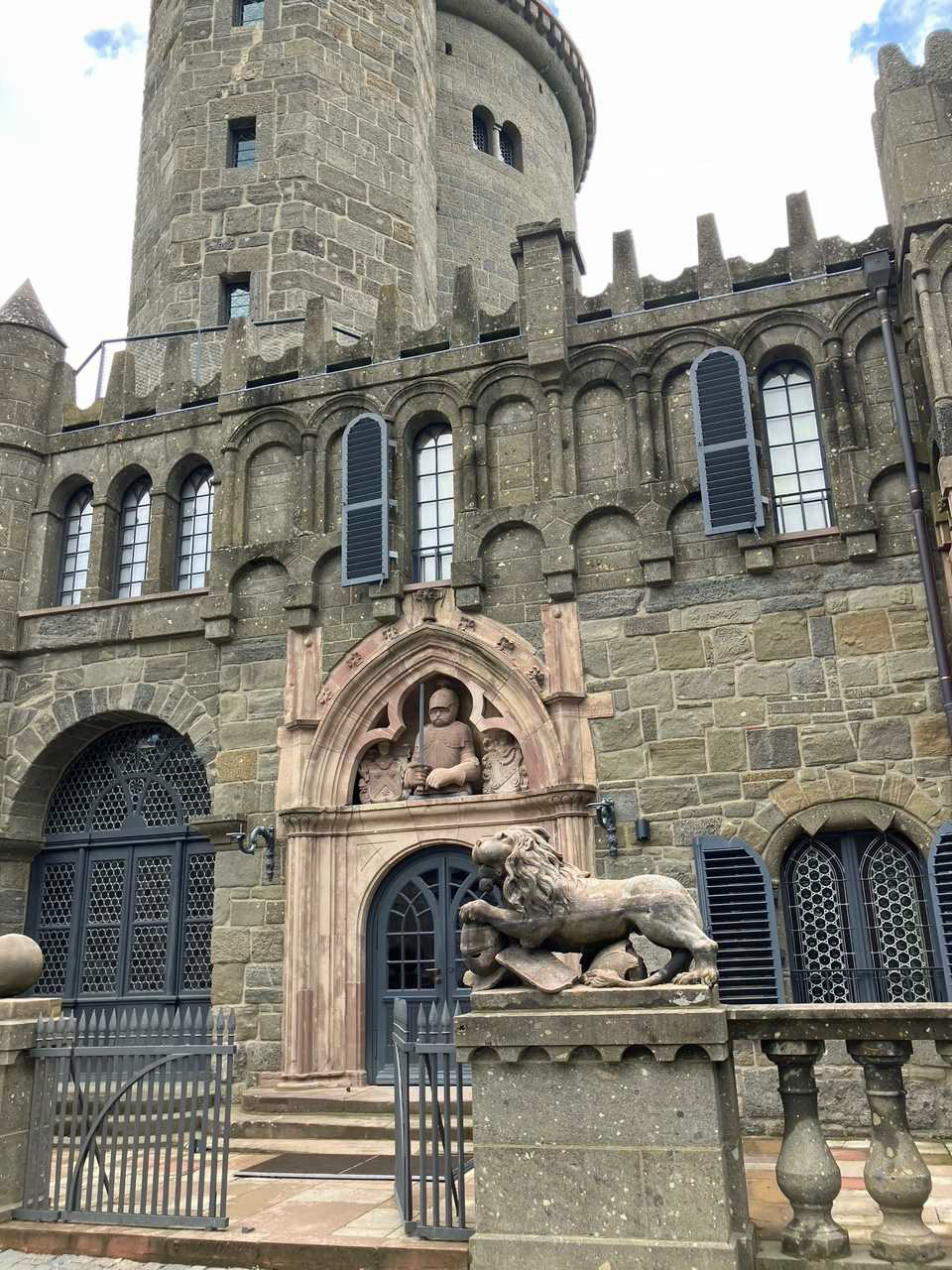
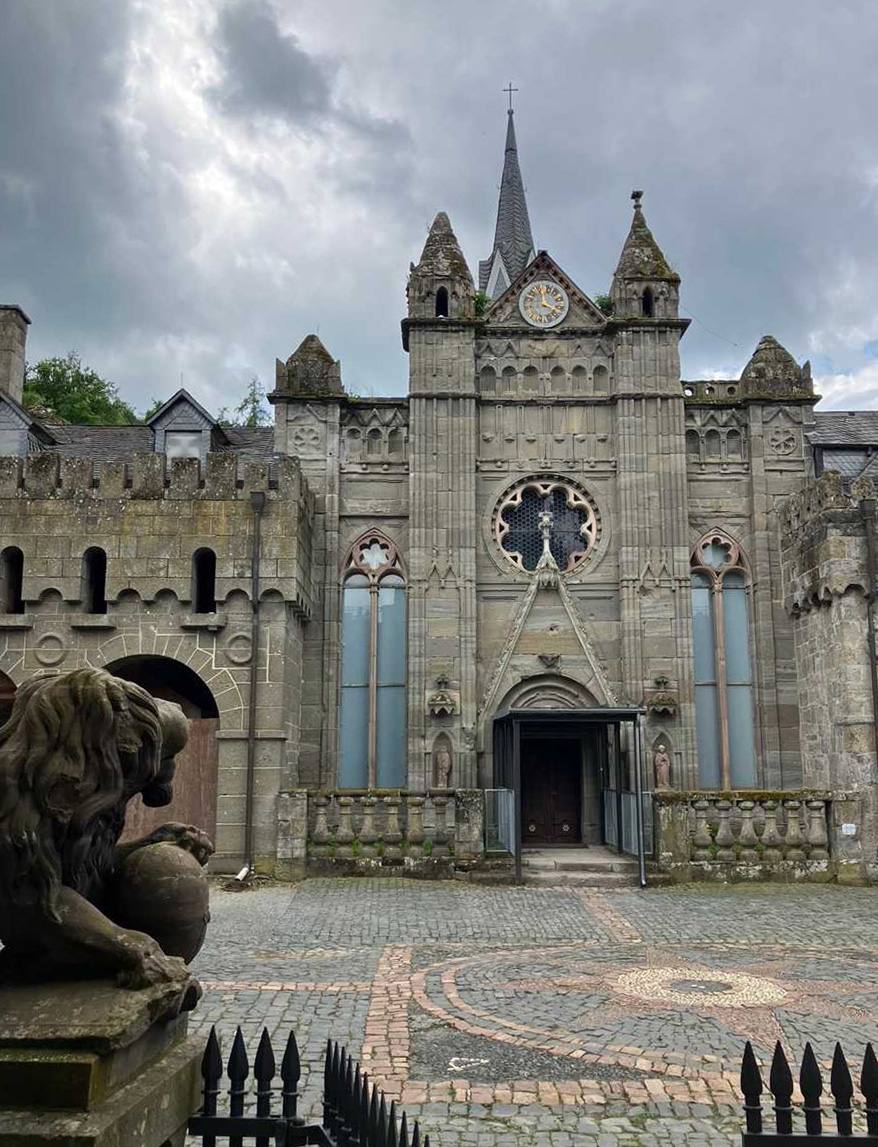
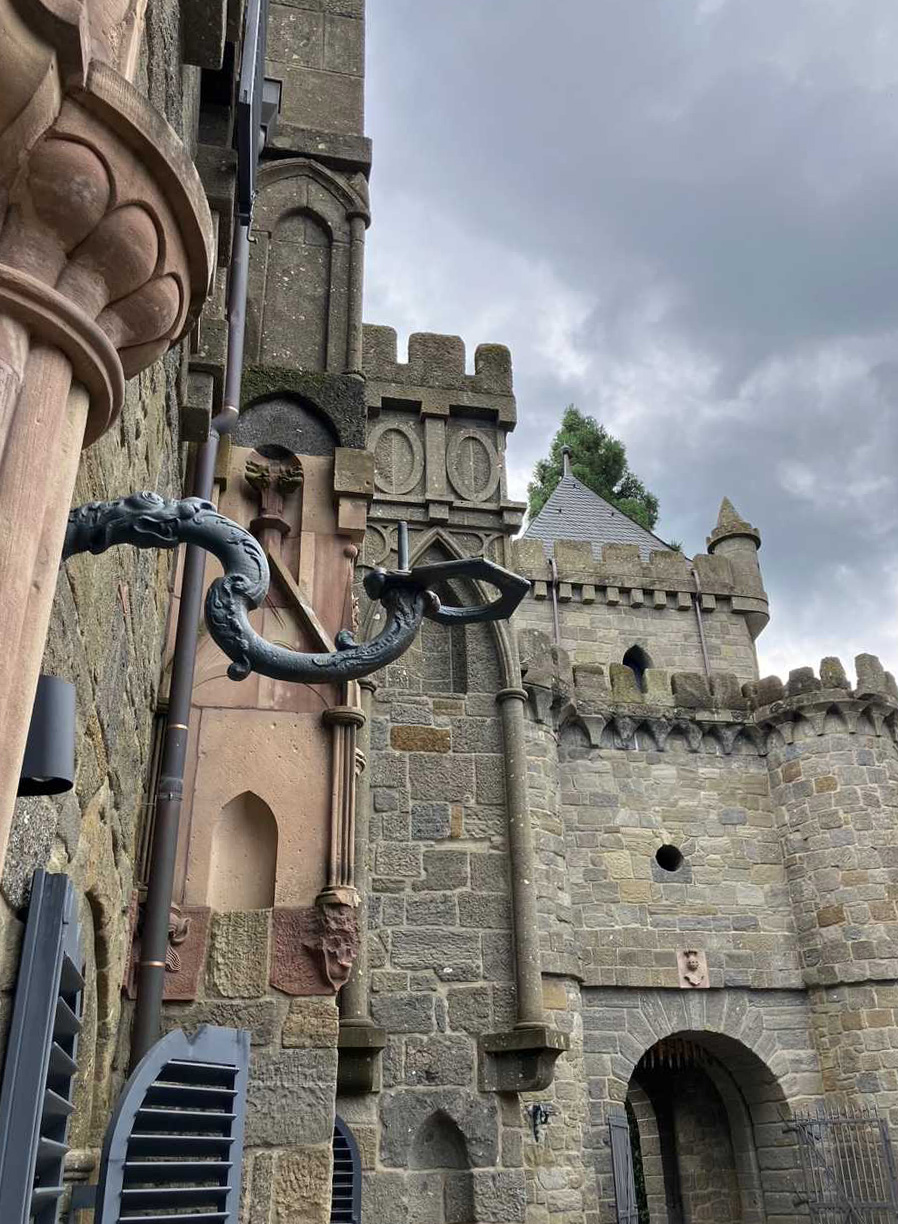
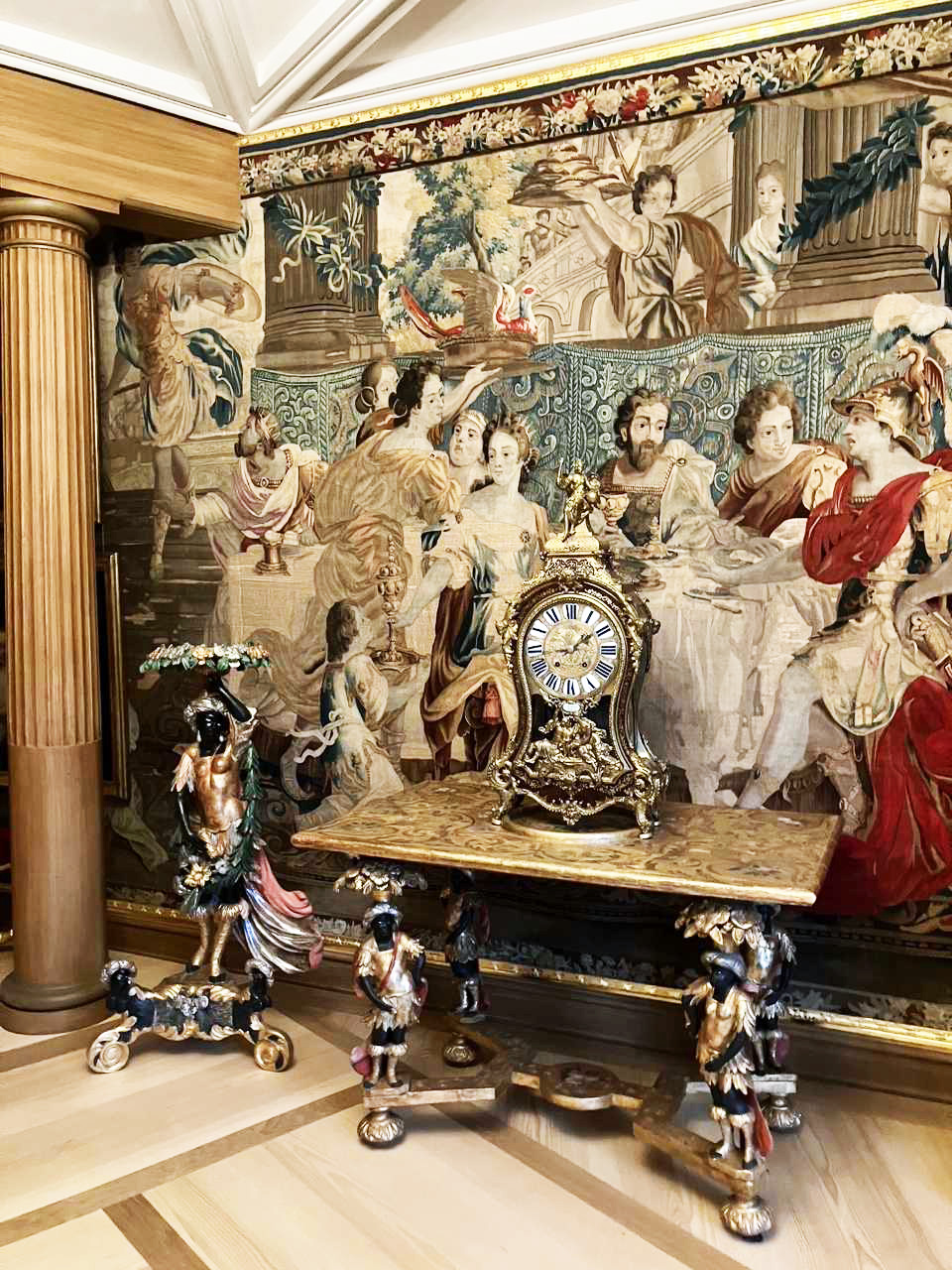
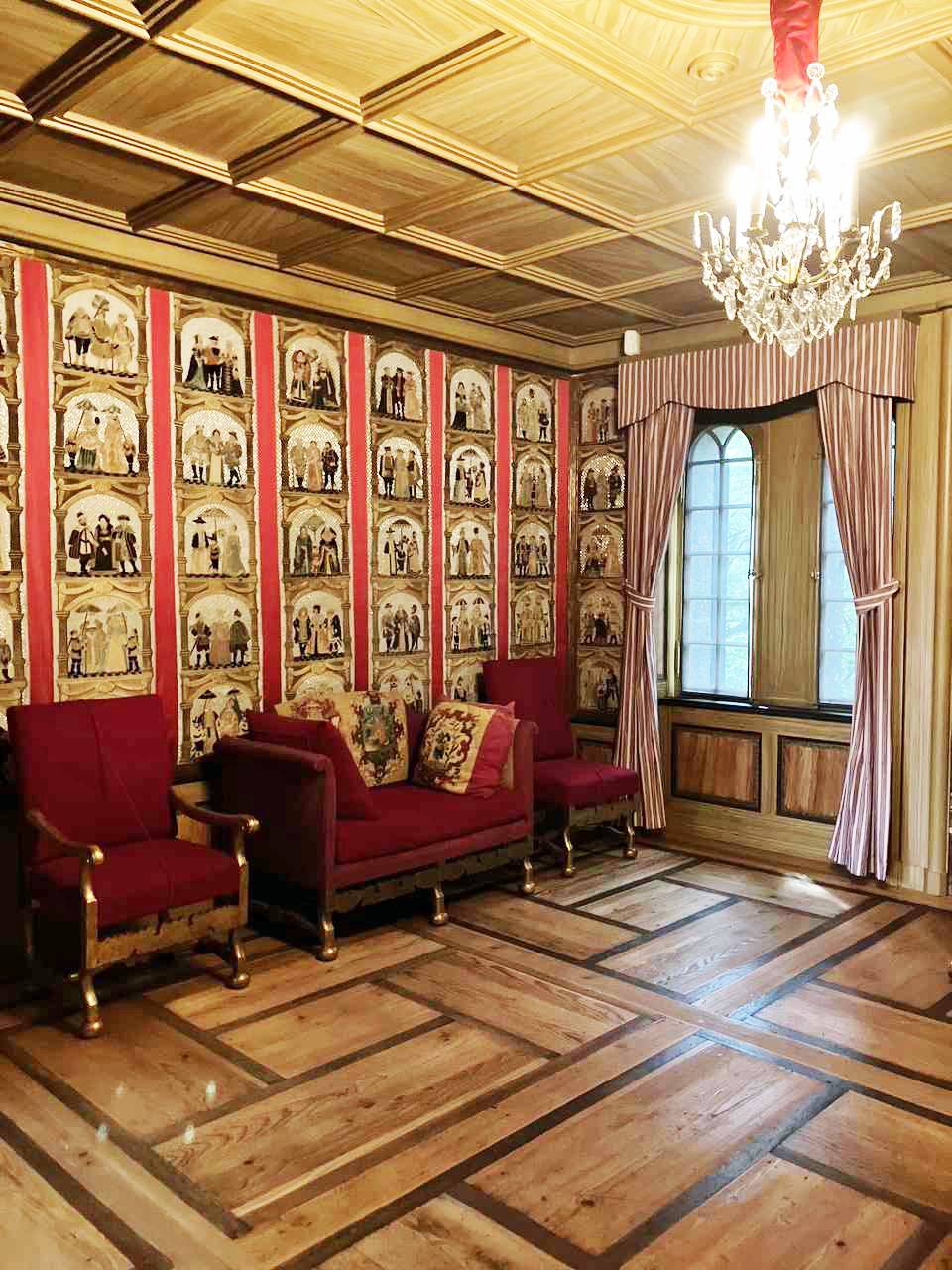
My energetic private guide also took me to Löwenburg deep inside the park. A picturesque artificial “ruin” was built between 1793 and 1801 according to the Baroque fashion of the time to resemble a medieval knight’s castle, lost in a dense thicket. This pseudo-ancestral castle of Landgrave Wilhelm IX of Hesse-Kassel (later Elector Wilhelm I) by the court architect Heinrich Christoph Jussow, was very much suitable for living, despite being a designated ruin.
Wilhelm IX never resided in this castle for any significant amount of time. Löwenburg served as a pleasure palace or “hunting lodge,” and was furnished with silk tapestries, velvet drapes, lacquered settees and tables, gilded mirrors, plentiful artworks, and even strewn with mother-of-pearl wallpaper depicting fashionable characters of mysterious China in one of the rooms, intended for the visiting ladies.
An impressive collection of medieval weapons, stained glass windows, and the surrounding grounds with a garden, a vineyard, and a faux tournament square were supposed to deepen the illusion of ancient authenticity. As a testament to his admiration for the fairy tale Löwenburg, Wilhelm was buried in a crypt below the castle chapel.
As a result of a thorough and meticulous restoration process that took years, Löwenburg today looks like it used to be more than two centuries ago.
Find out more about traveling to Germany at https://www.germany.travel/en/home.html.


Historical building and amazing place.
LikeLike