

By Emma Krasov. Photography by Emma and Yuri Krasov
We might be anticipating our usual “June gloom” in San Francisco right now (courtesy of our ubiquitous “Karl the fog”) but there’s plenty of indoor entertainment in the city to counter the overcast weather. Our major museums came up with the hit summer shows you wouldn’t want to miss! These special exhibitions include first-time presentations from ancient to contemporary art; exclusive displays that can’t travel to other venues, and comprehensive art collections that tell fascinating stories. Exquisite artworks are placed in their historical and cultural context with depth and grace. If you happen to travel to San Francisco this summer, you’re in for a treat of a lifetime!
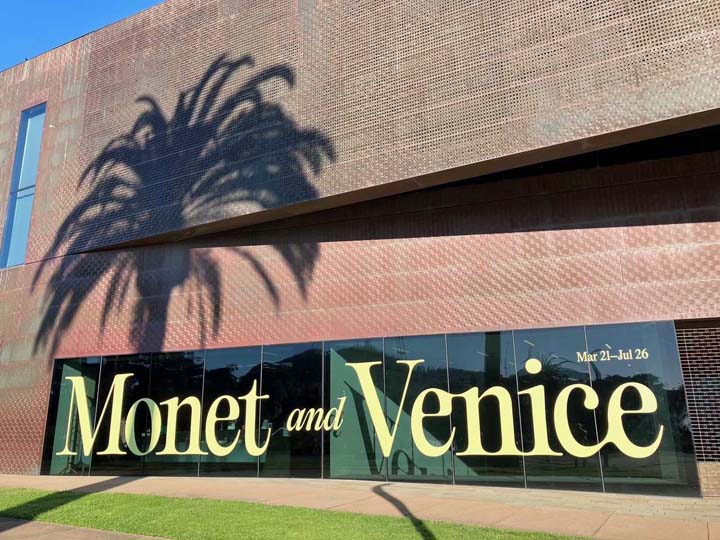
Monet and Venice at the de Young Museum
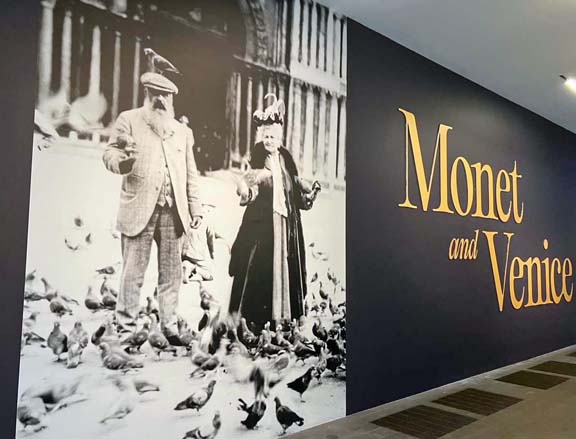
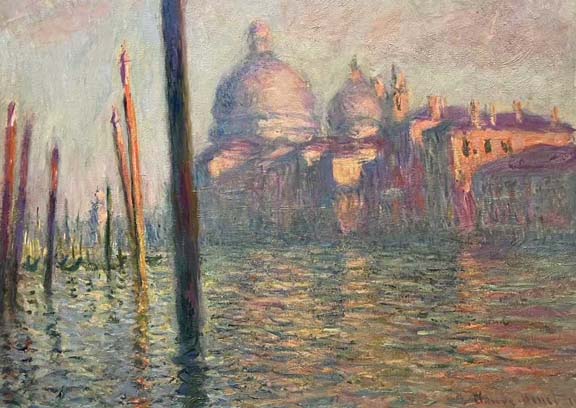
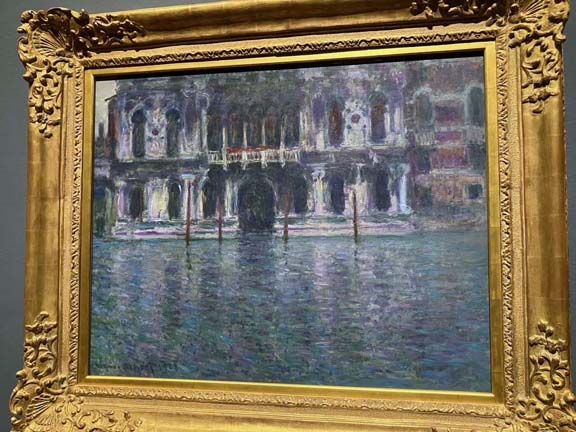
Considering Venice “too beautiful to be painted,” and himself “too old to travel,” a 68-year-old Claude Monet was rather hesitant to embark on his one and only trip to La Serenissima in the fall of 1908, but when he and his second wife, Alice, arrived at the canals, admired by so many artists; explored the narrow winding streets and arched bridges, and were photographed on Piazza San Marco feeding pigeons, his passion for the Floating City with its special light, reflected in omnipresent water, flared up and resulted in dozens of sublime oil painting. Made en plein air, from a gondola, from the same place every morning, to capture the changing, ephemeral qualities of natural light, these paintings, ever so slightly different from each other, were displayed in Paris upon Monet’s return; affirmed his significance as the foremost Impressionist master, and even contributed to the growing popularity of his iconic Water Lilies.
“It is perhaps this very beauty, and the city’s fame, that has obscured the significance and daring nature of his paintings of Venice,” said Melissa E. Buron, Director of Collections and Chief Curator at the Victoria and Albert Museum, London, a former Director of Curatorial Affairs of the Fine Arts Museums, and a co-curator of the show. “His Venetian paintings are among the most luminous and poetic of his career, yet they are often overshadowed by his depictions of the French landscape, as well as by his late works that are linked to the rise of 20th-century abstraction. His time in Venice was a critical period of creative renewal that has not previously been explored in-depth before this exhibition.”
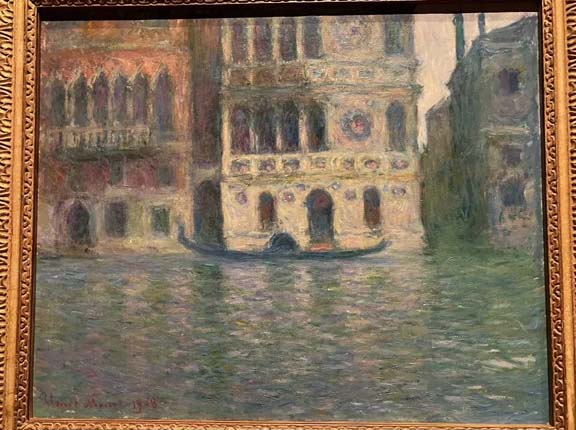
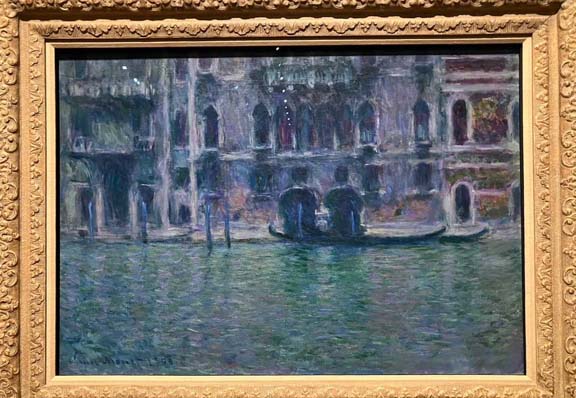
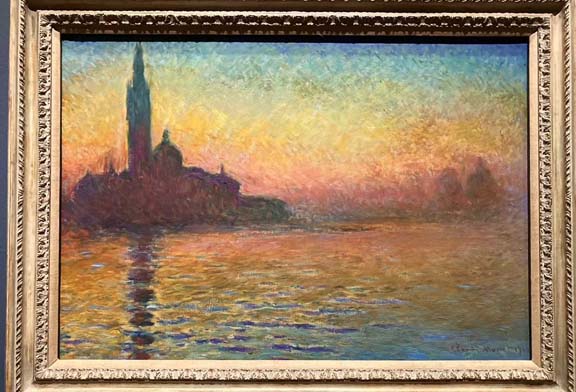
The first show of Monet’s Venetian paintings since their debut in Paris in 1912, the de Young exhibition is co-organized by the Fine Arts Museums of San Francisco with the Brooklyn Museum, co-curated by Lisa Small, Senior Curator of European Art at the Brooklyn Museum, and Melissa E. Buron, and contains more than 100 artworks, including from other artists who painted Venetian canals and palazzi in all their glory—Canaletto, J.M.W. Turner, Corot, Renoir, Paul Signac, W.B. Scott, John Singer Sargent, R.F. Blum, and James McNeill Whistler.
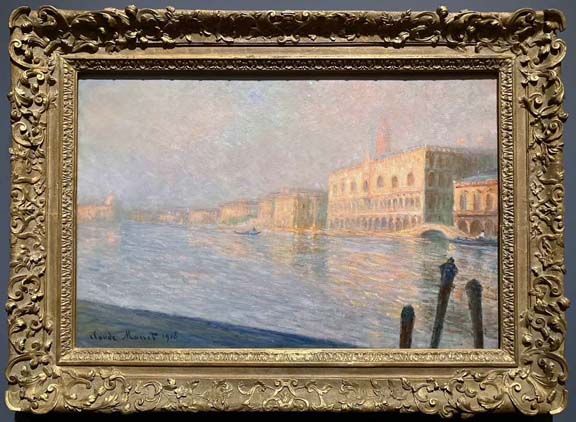
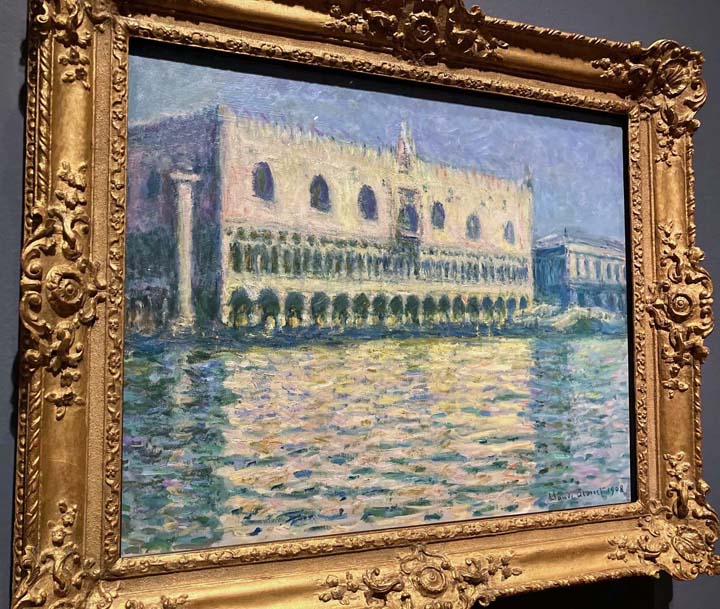
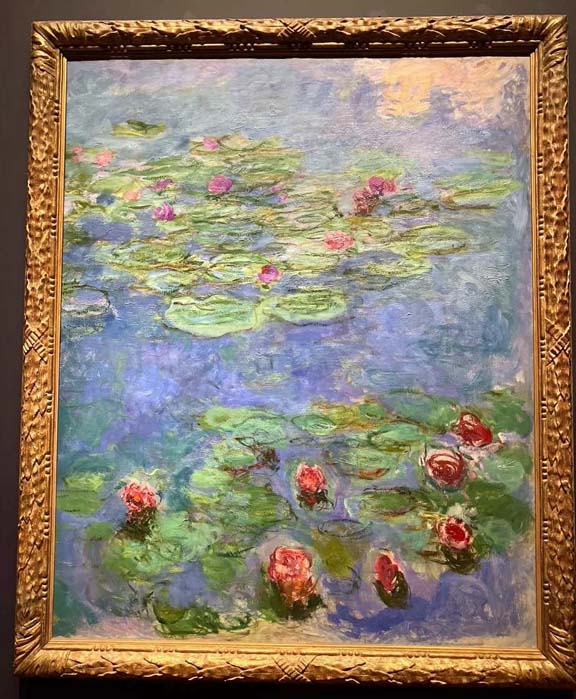
“Although Monet visited Venice only once, his paintings of the city are among his most dazzling,” said Thomas P. Campbell, Director and CEO of the Fine Arts Museums of San Francisco. “Unlike bustling scenes painted by other artists, Monet’s Venice is hauntingly deserted, with its architecture, buildings, and canals dissolving in an atmospheric light. This exhibition offers an opportunity to experience Monet’s sublime vision of the famed Italian city, and for visitors to feel inspired by new perspectives on an artist they may think they know very well.”
Monet and Venice runs through July 26, 2026, at the de Young museum, San Francisco. https://www.famsf.org/visit/de-young.
Matisse’s Femme au chapeau: A Modern Scandal at SFMOMA
Dubbed “a gallery of dangerous madmen,” Gallery VII at the 1905 Parisian Autumn Salon contained 55 artworks from ten young artists—all innovative, controversial, approaching the well-established subjects of landscape, still life, and figure in a landscape with boldness and audacity of irreverent colors and barely discernable silhouettes against busy shimmering backgrounds. Distorted lines, hasty brushstrokes, and bright, unadulterated hues were supposed to express emotions, not “subserviently follow nature” as Henri Matisse, “the chief of the group” put it.
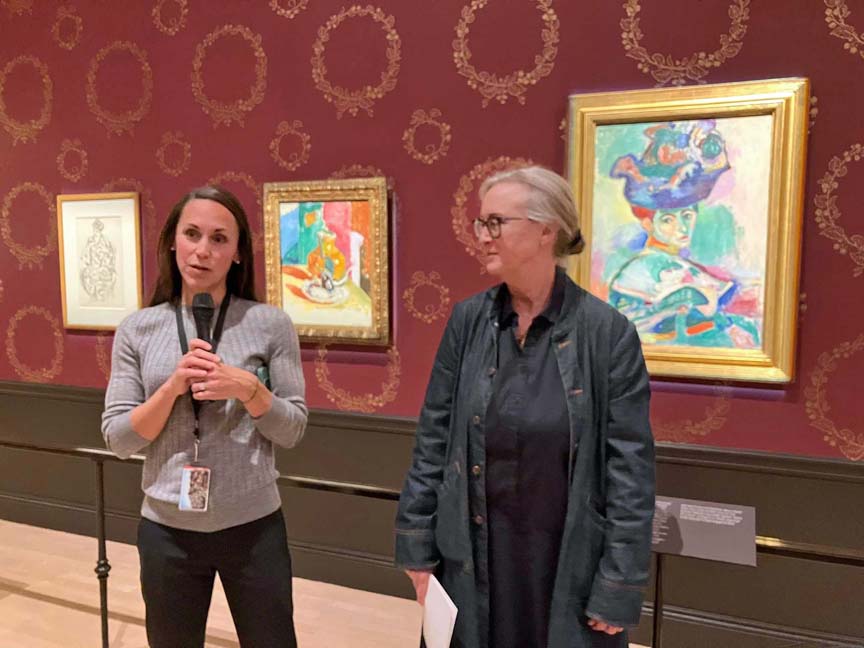
Matisse’s “Femme au chapeau,” (Woman with a Hat) was at the center of the exposition and of the critical and public outrage, becoming the leading image of Fauvism, the first French avant-garde art movement of the 20th century.
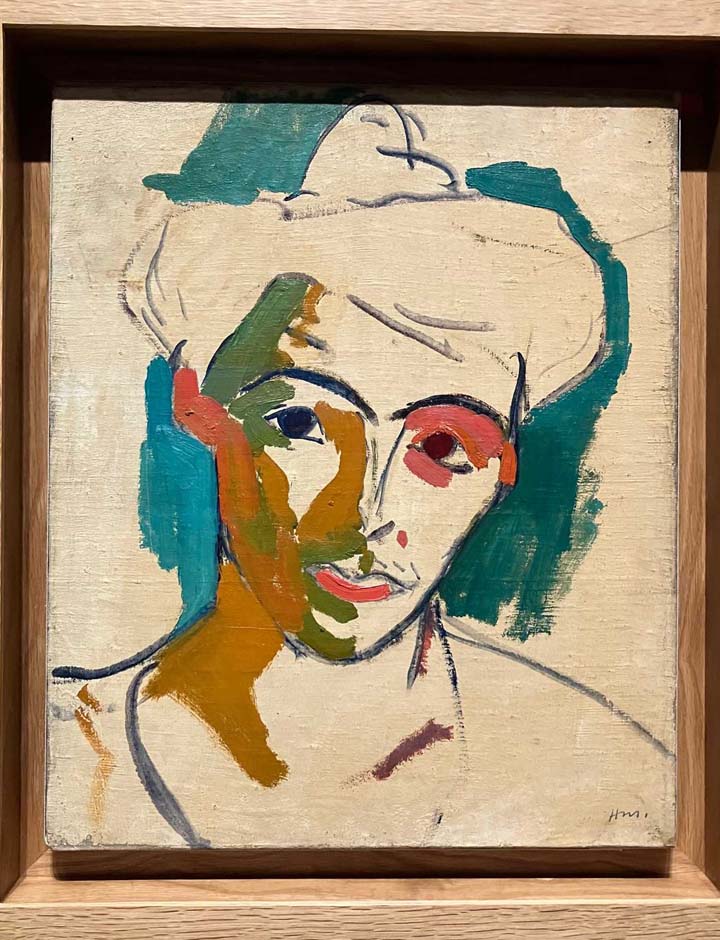
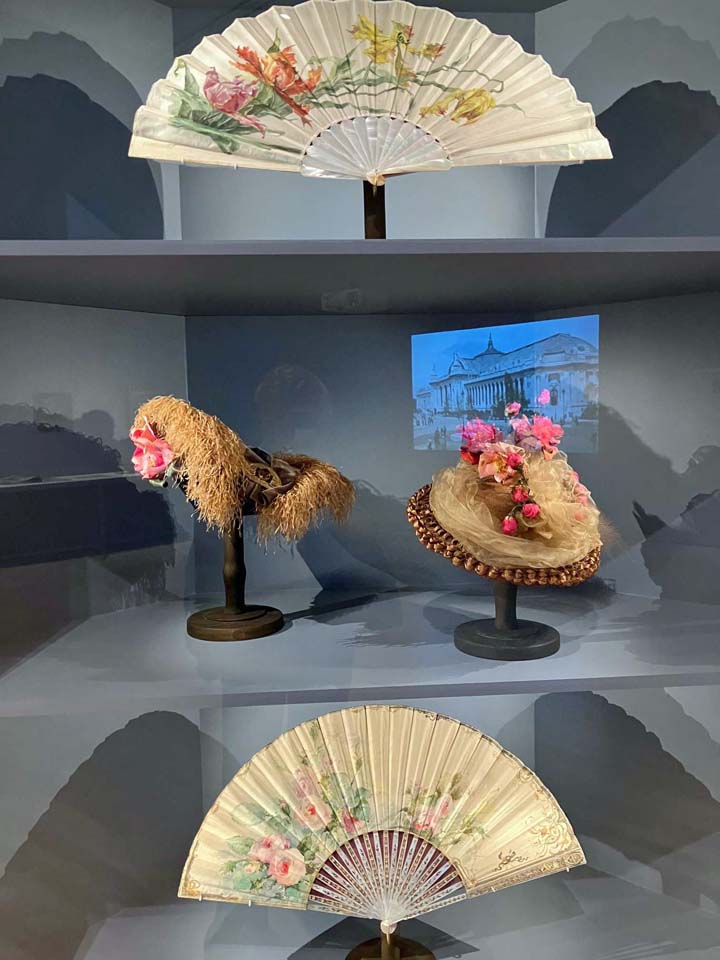
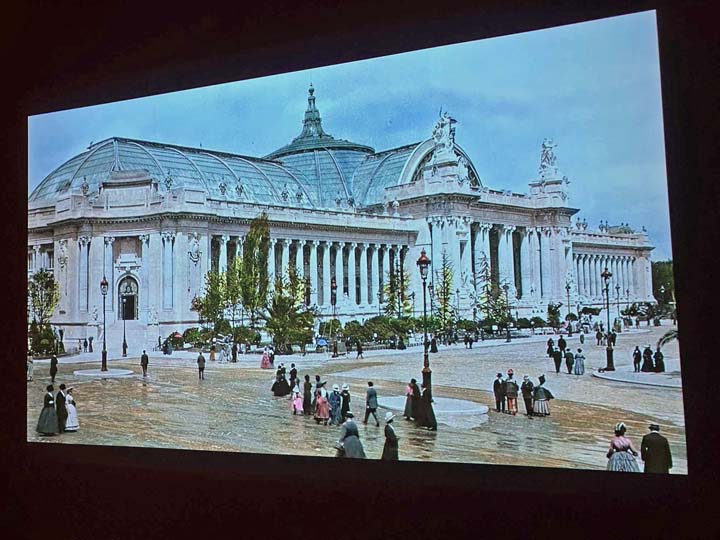
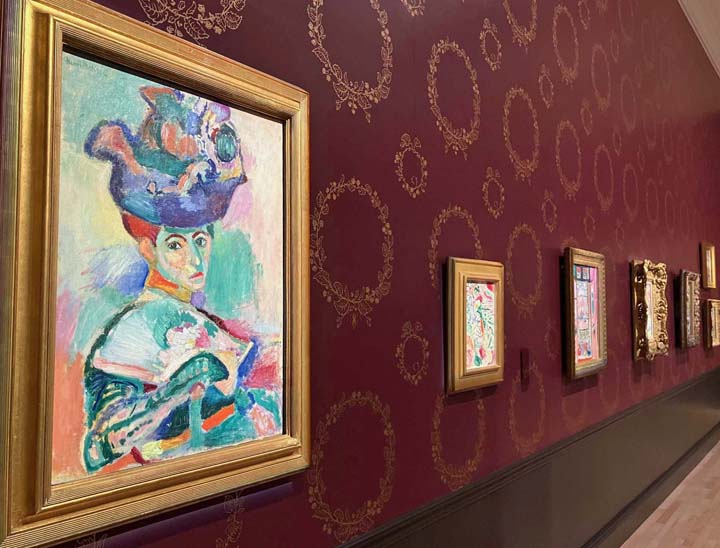
Following the far-reaching story of its creation and long-lasting impact, the exclusive SFMOMA show meticulously groups together photographs, drawings, and paintings of Matisse’s model—his wife, Amelie—a professional modiste (hat designer); characteristic artworks from Matisse’s contemporaries—fellow artists and friends; historical documents and artifacts of the epoch; and video projections of the first real home for the famous painting—Gertrude and Leo Steins’ apartment on rue de Fleurus, 27 in Paris, where the American modernist writer and an international tastemaker presented French modernists’ breakthroughs to wider audiences.
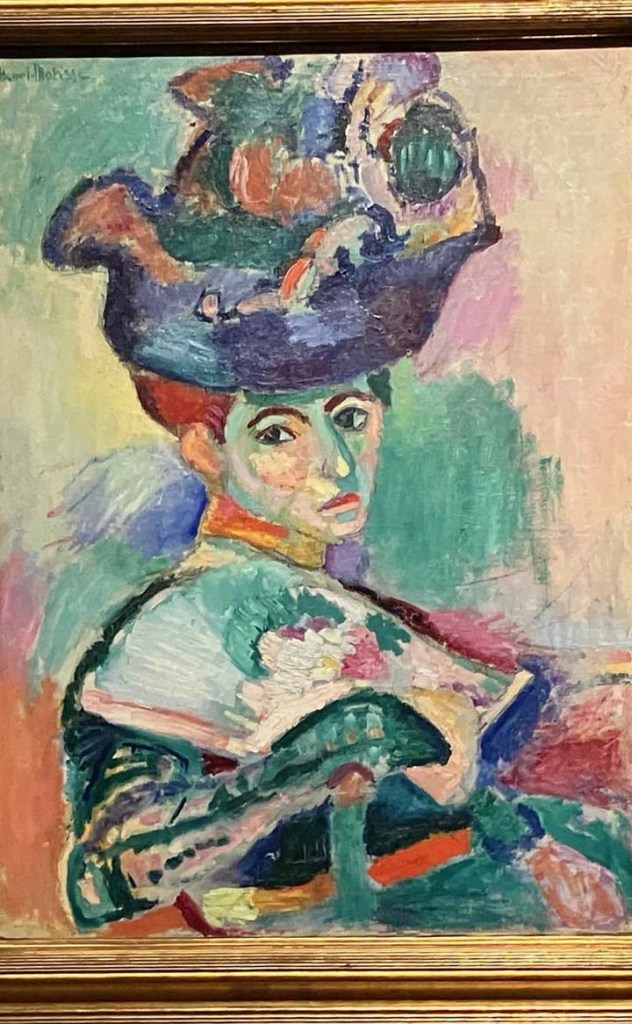
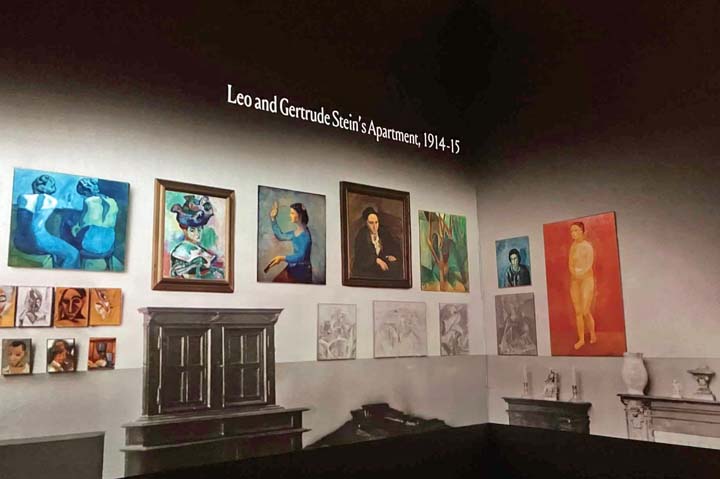
The legendary Grand Palais, constructed in 1900, and dedicated to displays of the bright future of the dawning century, its new technologies, like automobiles and hot air balloons, and its new art, appears in the first exhibition gallery as an AI-generated animation of archival photographs and postcards, created by SFMOMA in collaboration with Google Arts & Culture Lab.
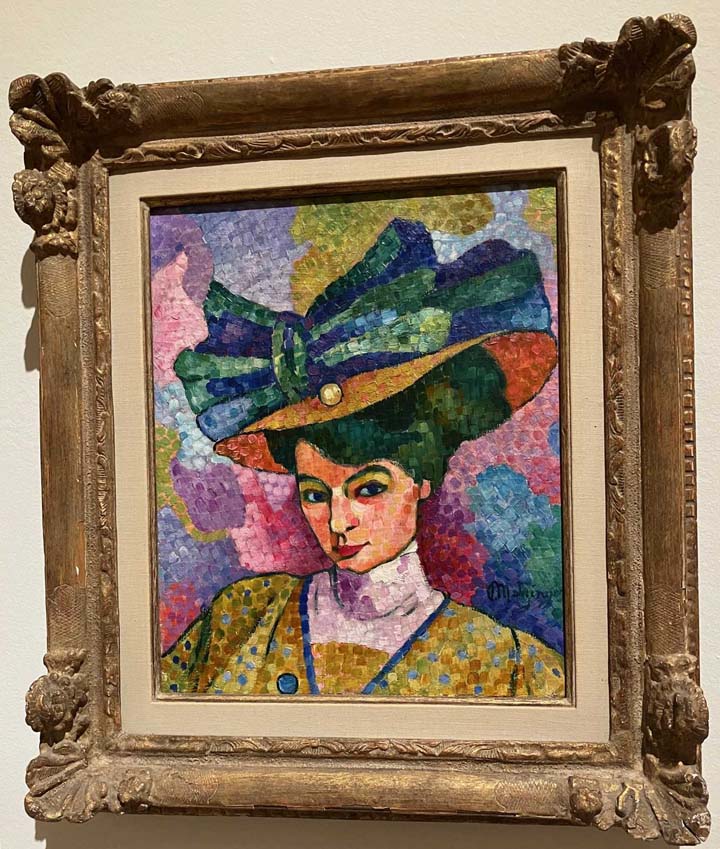
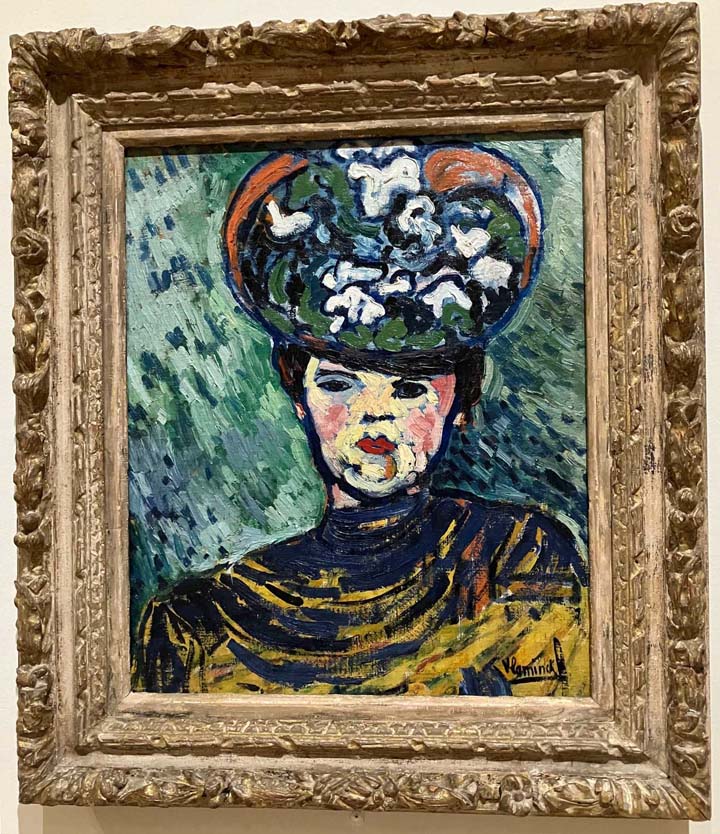
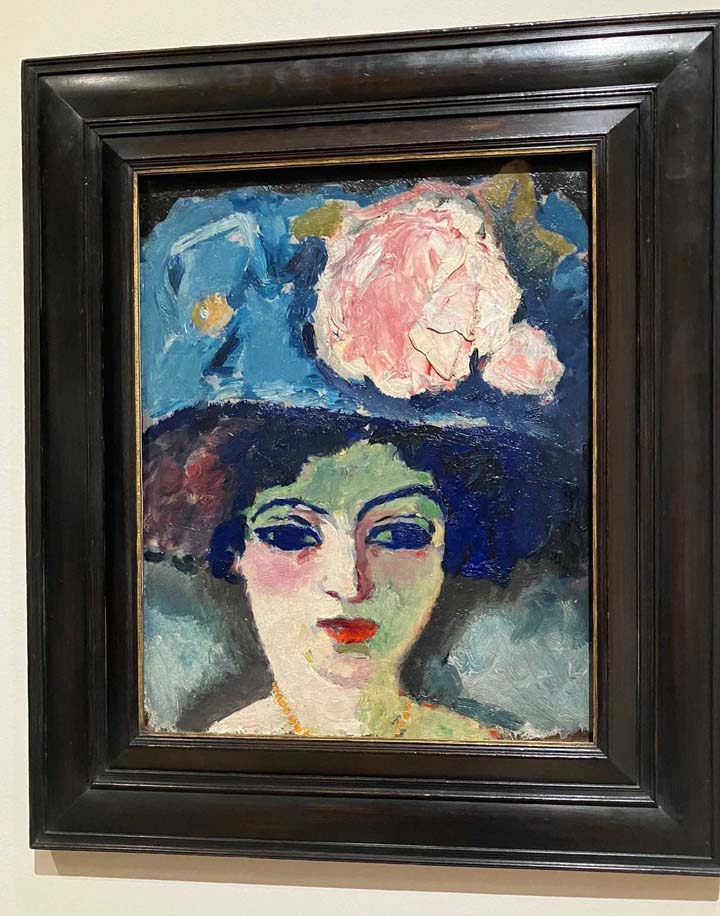
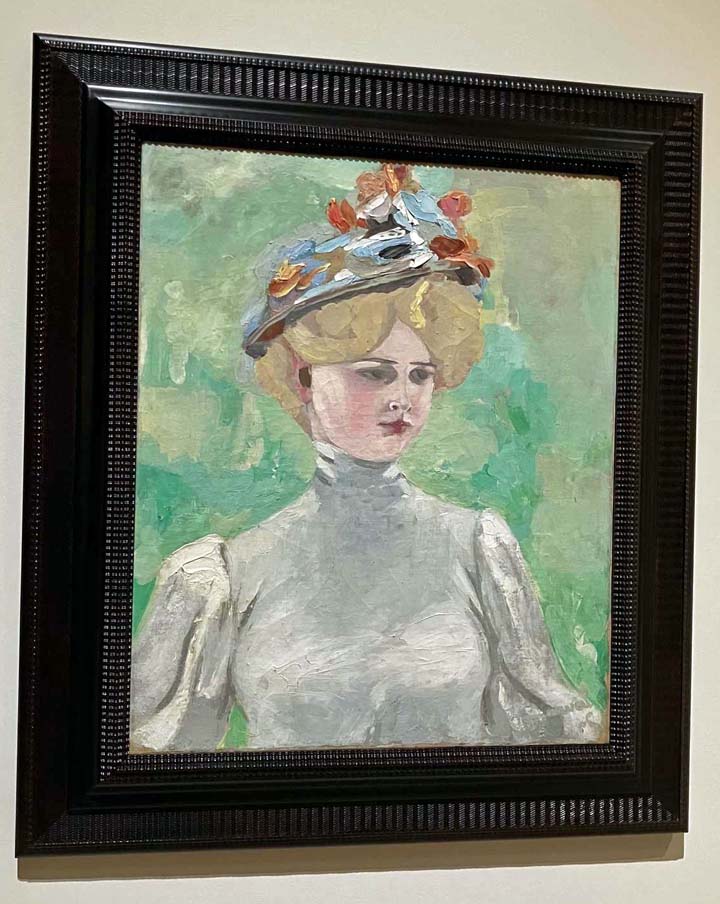
The main gallery displays the modernist works by Camoin, Manguin, Pichot, Derain, Marquet, Girieud, de Vlaminck, and the only female artist, Jelka Rosen, flanking Matisse’s art along the wall, salon-style—the way these works used to be presented at the 1905 Salon d’Automne. They pop against the maroon backdrop of the wallpaper, created by a California artist Ondrea Viklund, who replicated the golden laurels from a historical photo, and a tiny spider underneath each wreath from the Salon’s catalogue cover.
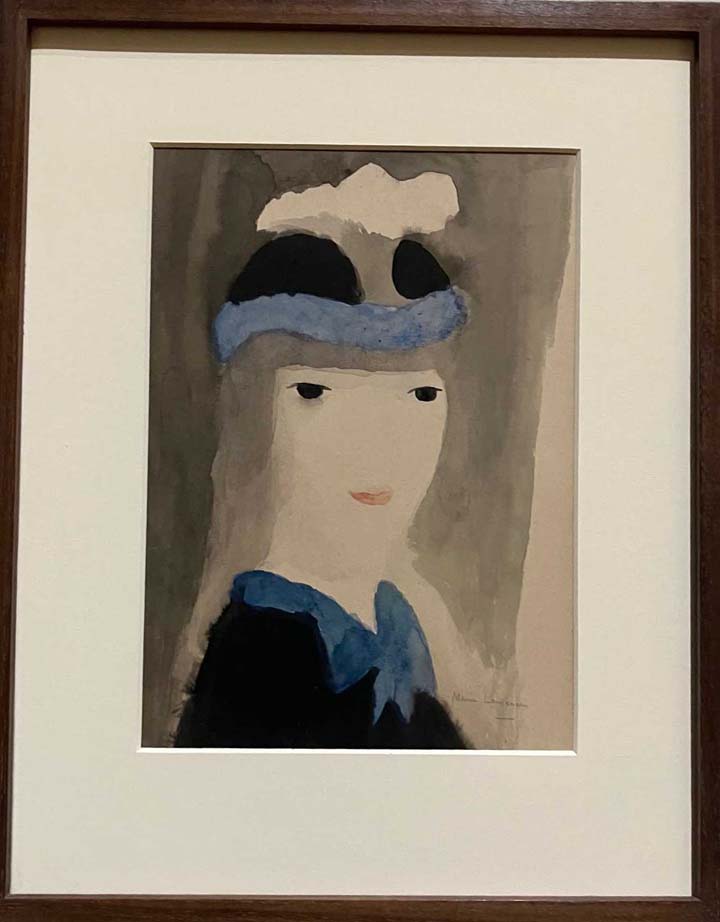
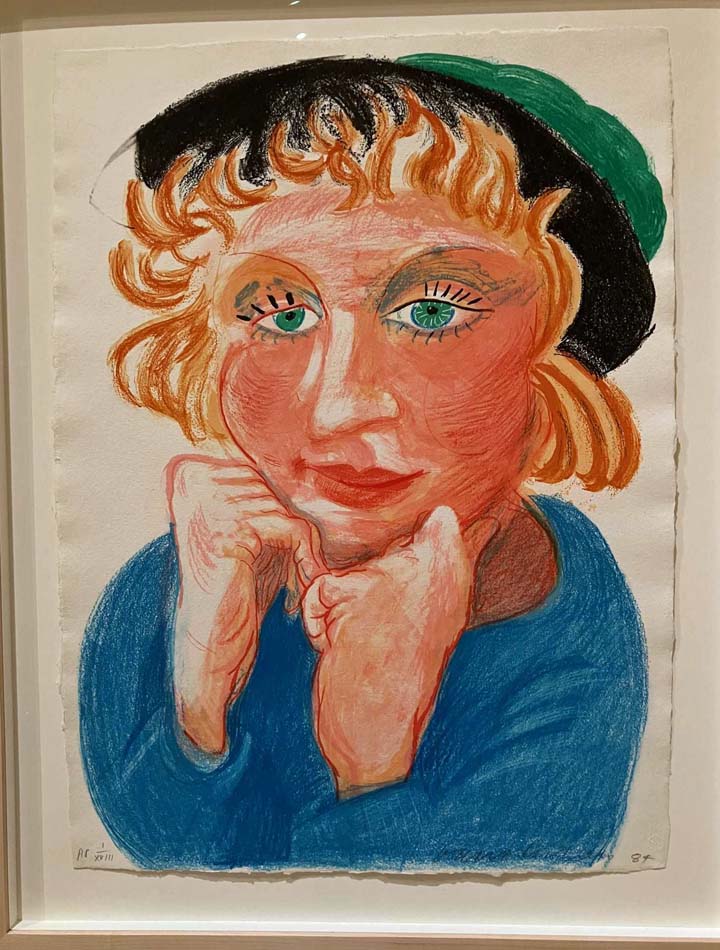
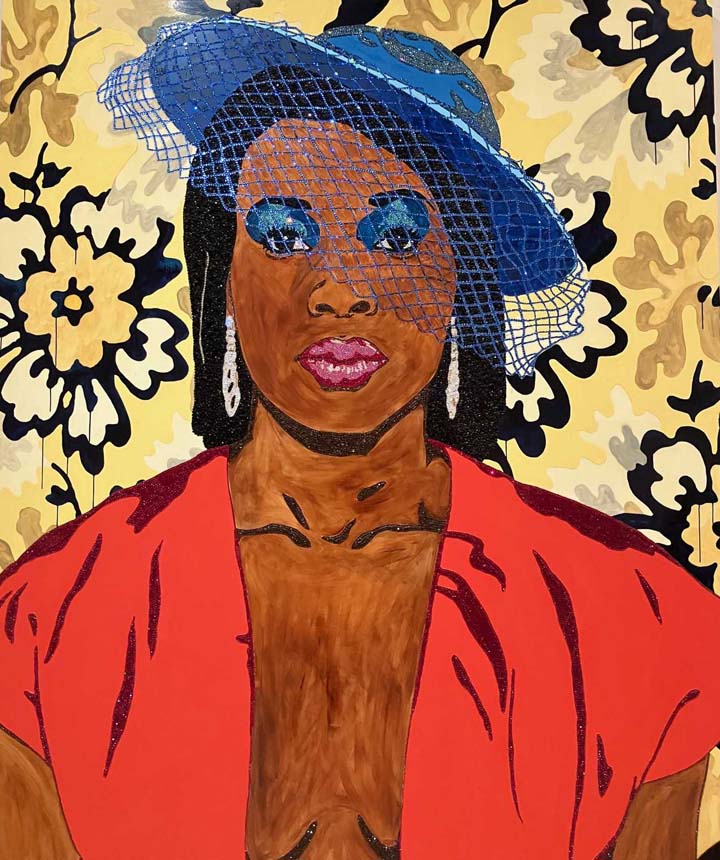
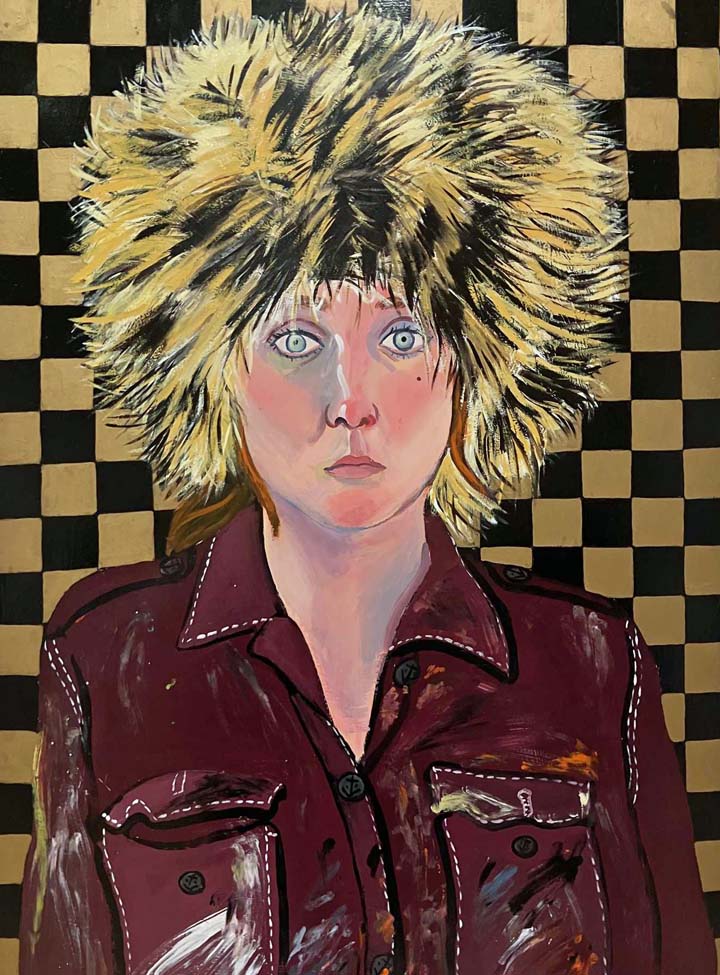
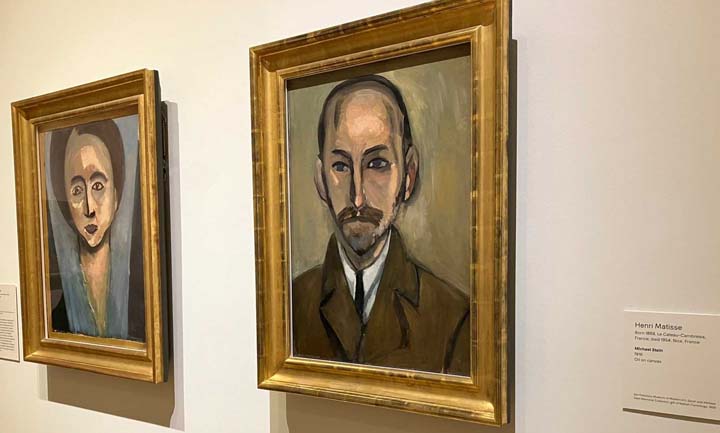
A large part of the show is dedicated to the generations of artists who, from 1906 to our time continued to be fascinated by the Woman with a Hat, and created their own remarkable portraits, inspired by the rebellious Matisse’s masterpiece. His portraits of Sarah and Michael Steins, close friends and benefactors, who eventually brought the Woman with a Hat to the United States in 1935, are shown alongside multiple publications dedicated to the painting and its museum displays in various exhibitions. (The first one being organized at the San Francisco Museum of Art—currently SFMOMA—by its founding director, Grace McCann Morley in January 1936!)
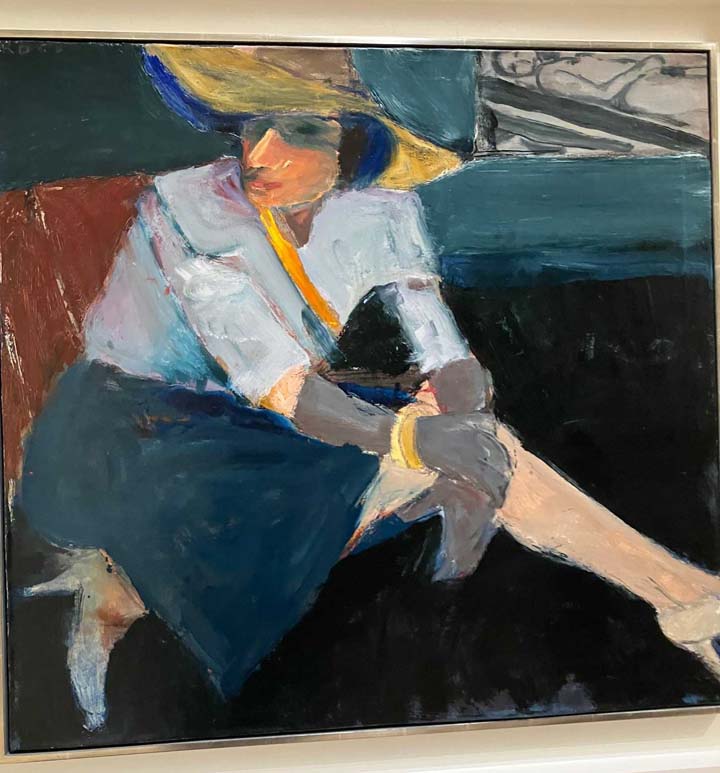
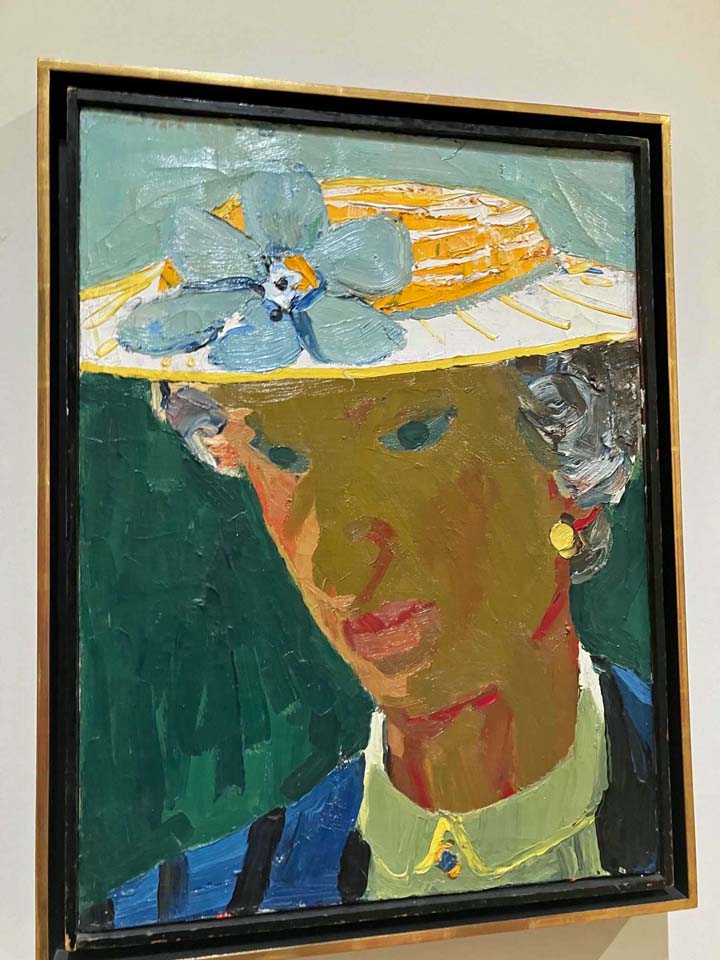
In a separate gallery, a feast for the eyes is provided by a wonderful selection of paintings and sculptures from the Elise S. Haas collection, bequeathed to SFMOMA in 1991 by the last individual owner of the Woman with a Hat.
Then a parade of contemporary artwork follows, deeply influenced by Matisse and other giants of modernism.
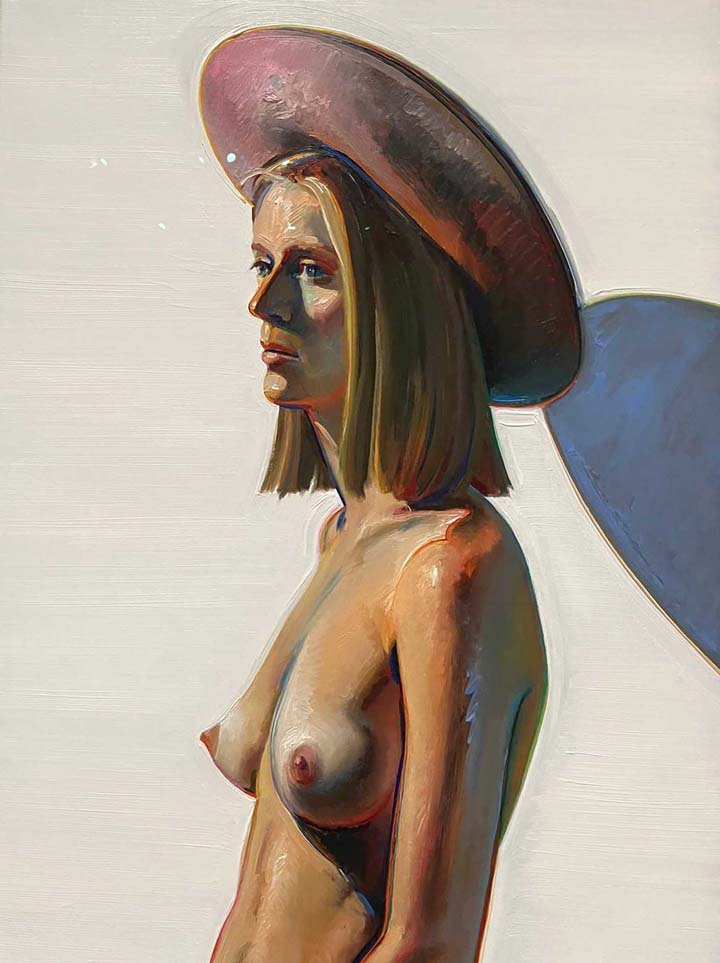
From the Bay Area Figurative stars, like David Park, Wayne Thiebaud, Joan Brown, and Richard Diebenkorn the story line trails to David Hockney, and the next generation of contemporary artists, like Hilary Harkness, Rachel Harrison, and Mickalene Thomas.
“We are thrilled to have this opportunity to share the full story of Matisse’s Femme au chapeau—a painting that is emblematic of the artist’s radical break from convention in the early years of his career,” said Janet Bishop, SFMOMA’s Thomas Weisel Family Chief Curator. “Arguably SFMOMA’s most art-historically significant work of art, Femme au chapeau began sending shockwaves through the art world as soon as it left Matisse’s studio and has captivated viewers ever since. The exhibition will shed light on the painting in more detail than ever before, from its public debut in Paris in 1905, to its years as a must-see painting in Leo and Gertrude Stein’s Left Bank apartment, and, eventually to the walls of SFMOMA.”
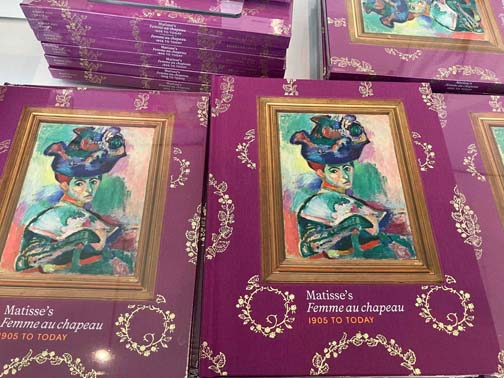
Matisse’s Femme au chapeau: A Modern Scandal runs through September 13, 2026, at the San Francisco Museum of Modern Art (SFMOMA). https://www.sfmoma.org/.
The Etruscans: From the Heart of Ancient Italy at the Legion of Honor Museum
Looking at the masterful bronze figurines with incredible detailing, and the tiniest pieces of gold jewelry covered with microscopic patterns of filigree and granulation, it’s hard to imagine that their production dates back thousands of years. Exquisite metalwork, sophisticated pottery, stone sarcophagi and replicas of elaborate tomb murals are now shown—many for the first time—at the Legion of Honor Museum’s large and comprehensive exhibition dedicated to the Etruscans who populated the Tuscan region of Italy from the ninth to the second centuries BC.
By preceding the Roman Empire, and being eventually absorbed by it, Etruria provided a solid cultural foundation for the many things we now consider Roman, like technological advances in architecture and engineering, and art concepts that survived millennia.
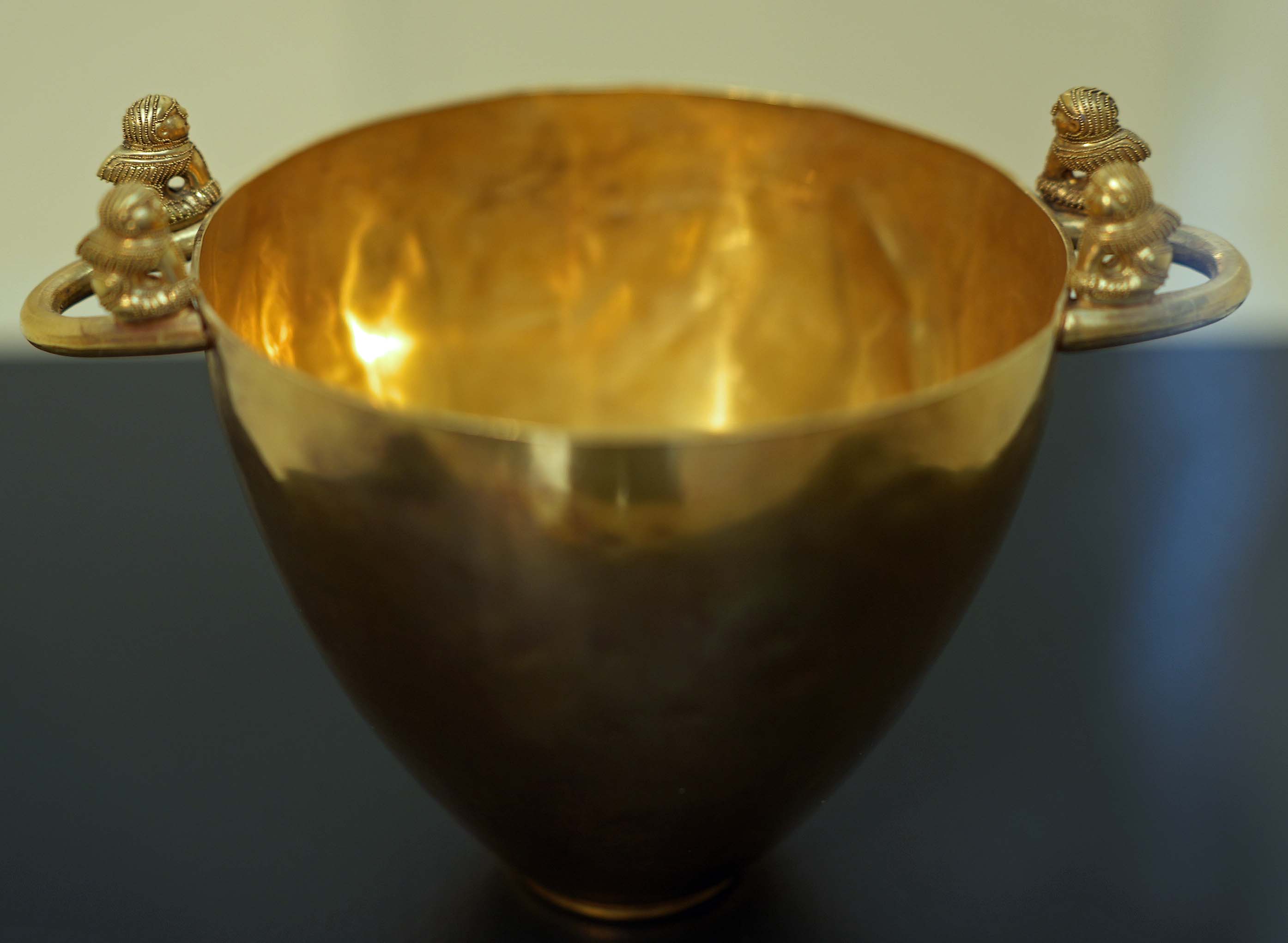
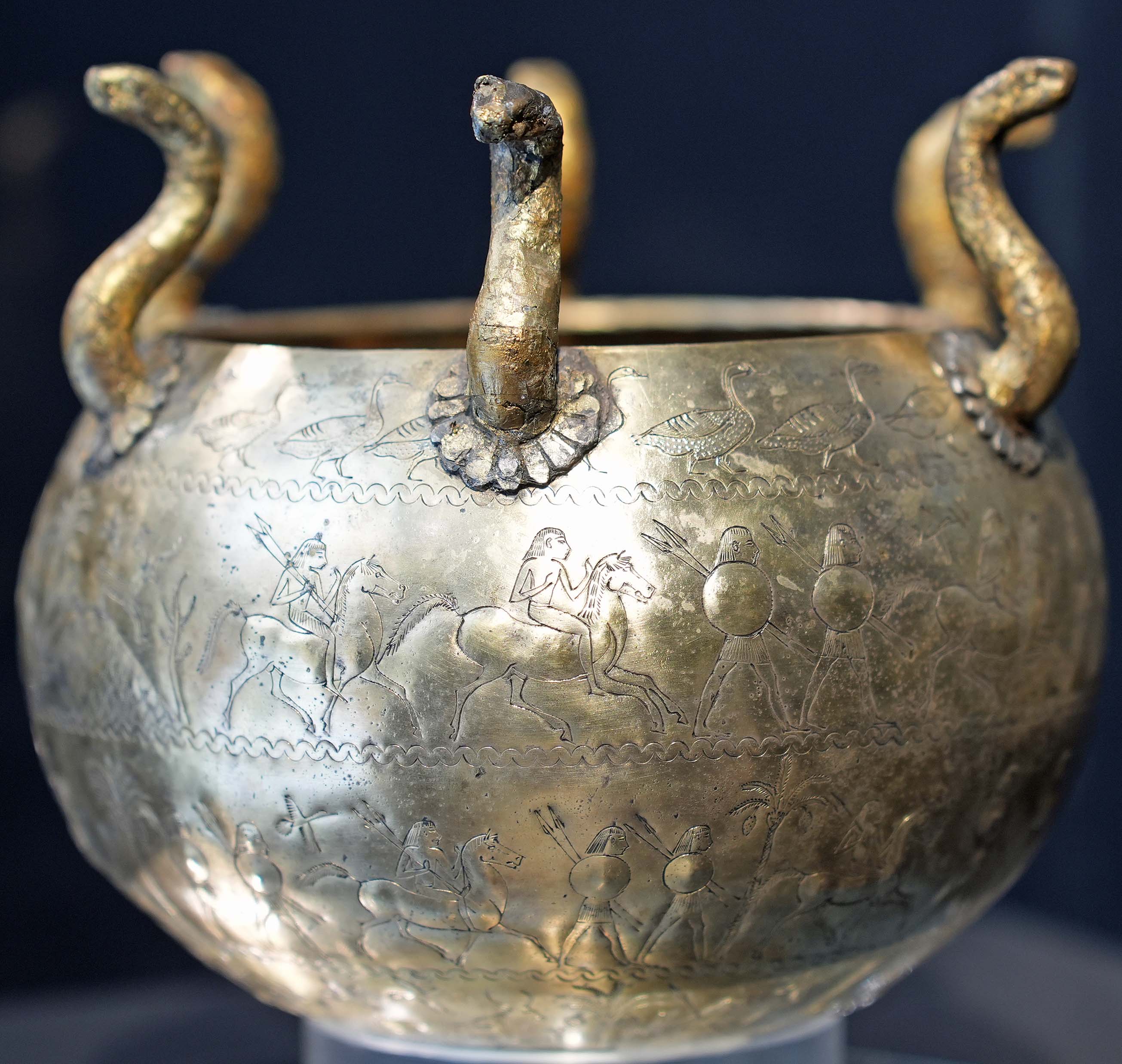
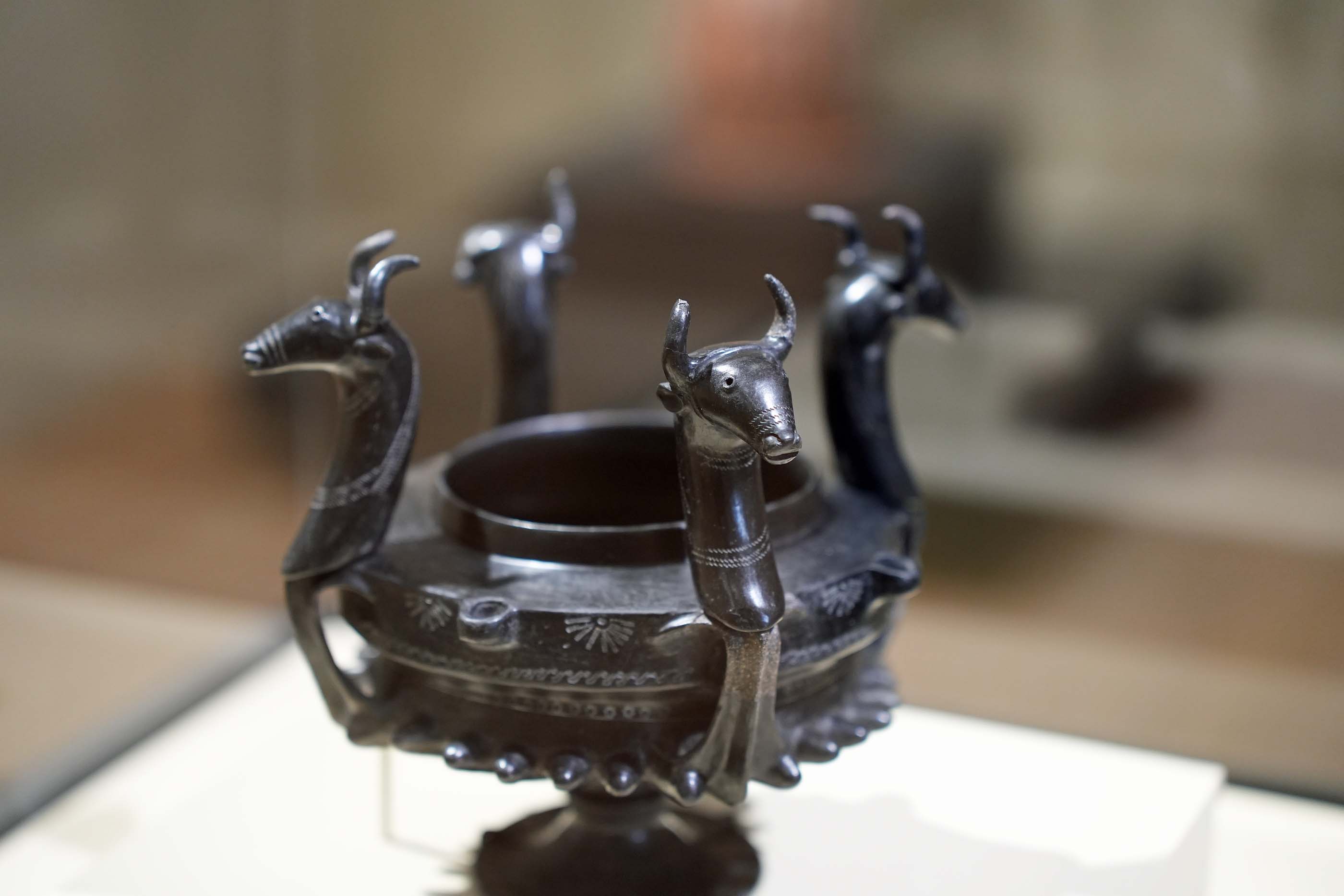
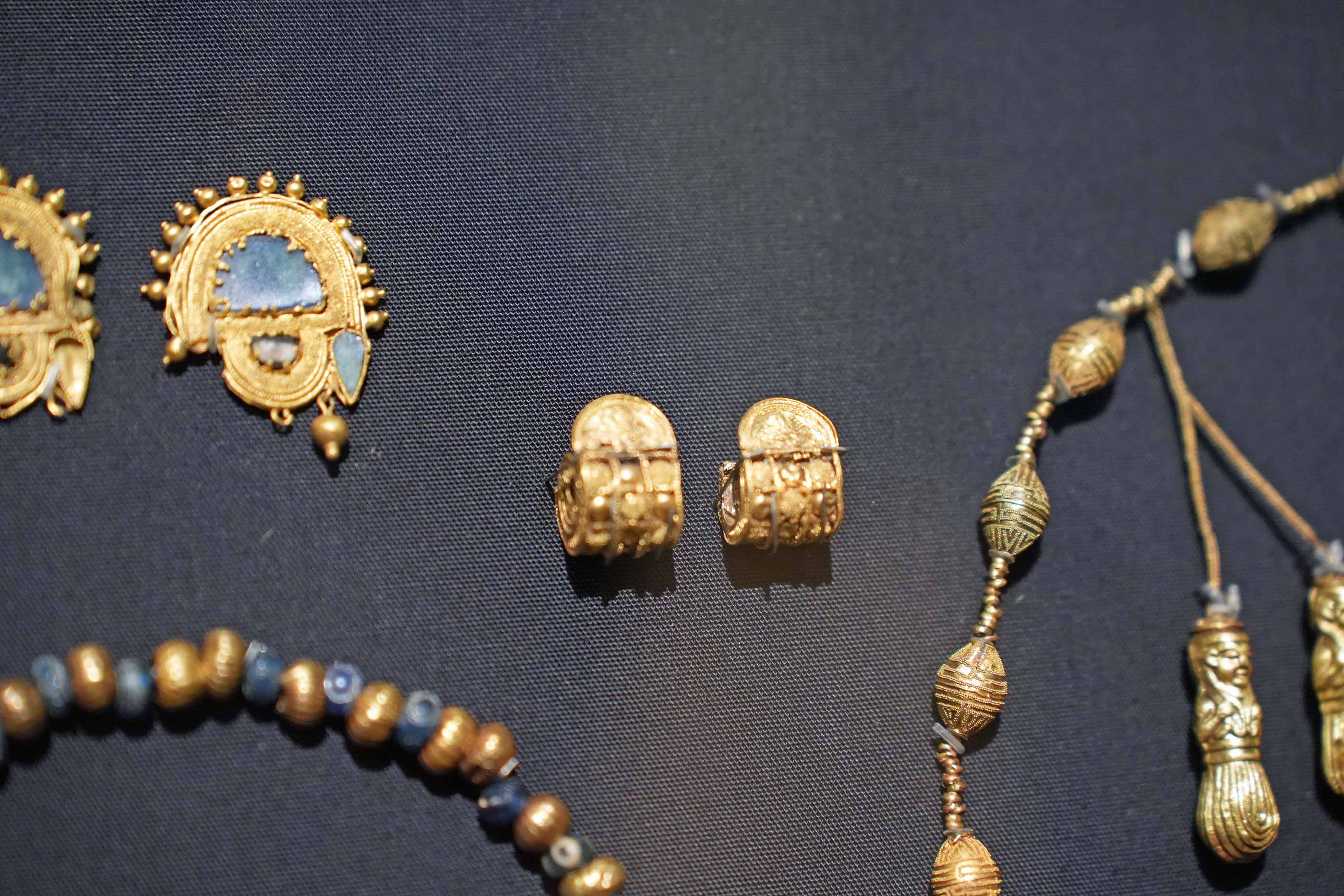
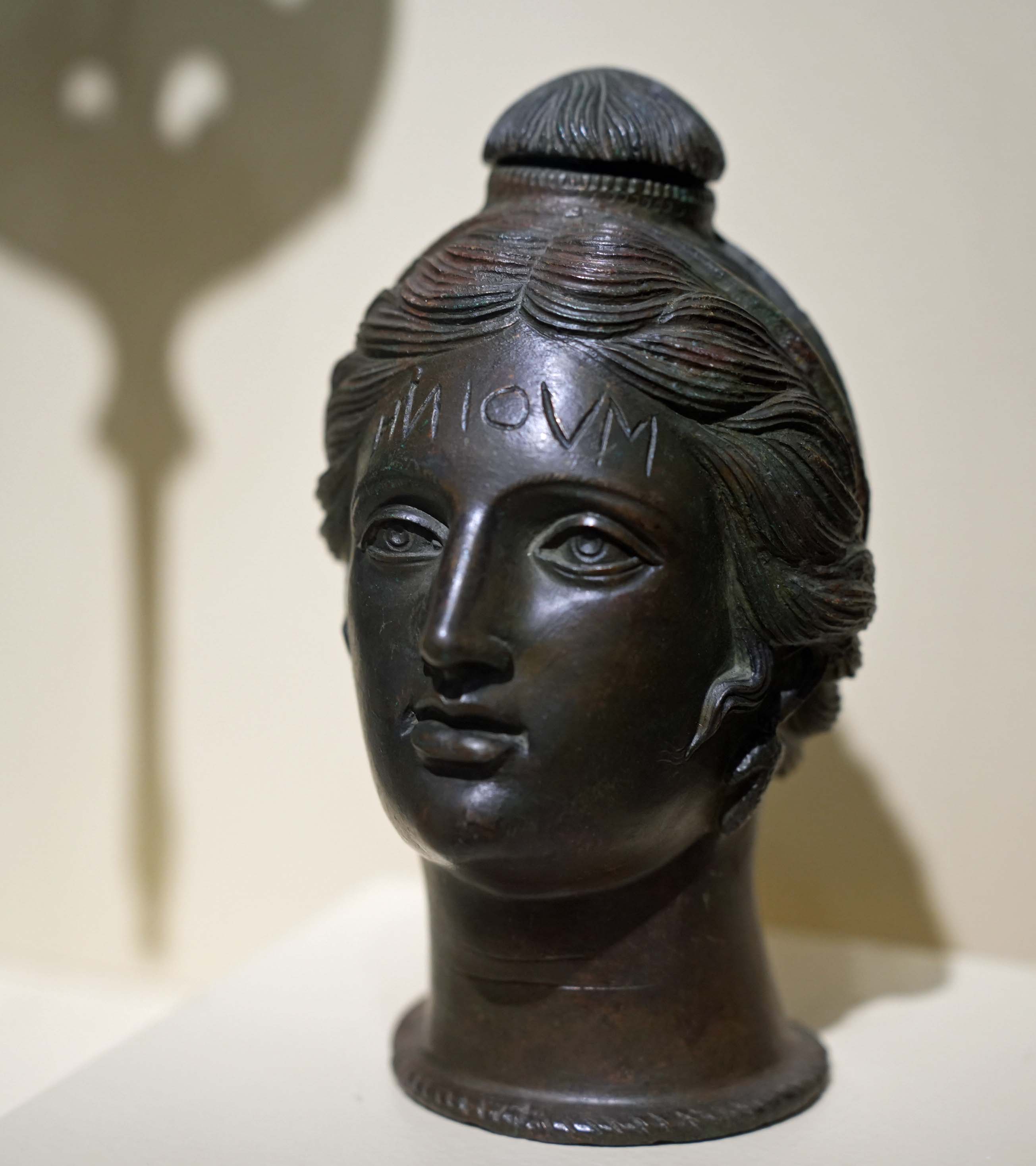
The exhibition, organized by the Fine Arts Museums of San Francisco, contains about 200 objects from the extensive archeological research of the ancient civilization, demonstrating its unbelievable advancements in all spheres of societal life—from women’s rights to written language, and from winemaking to burial rituals.
“I have wanted to bring the Etruscans to the forefront for many years,” shared Renée Dreyfus, exhibition curator and George and Judy Marcus Distinguished Curator and Curator in Charge of Ancient Art at the Fine Arts Museums of San Francisco. “This exhibition tells the story of this overlooked culture, featuring icons of Etruscan art surrounded by equally stunning and fascinating works that are little known or even unknown. Many of these works have never been seen in the United States before.”
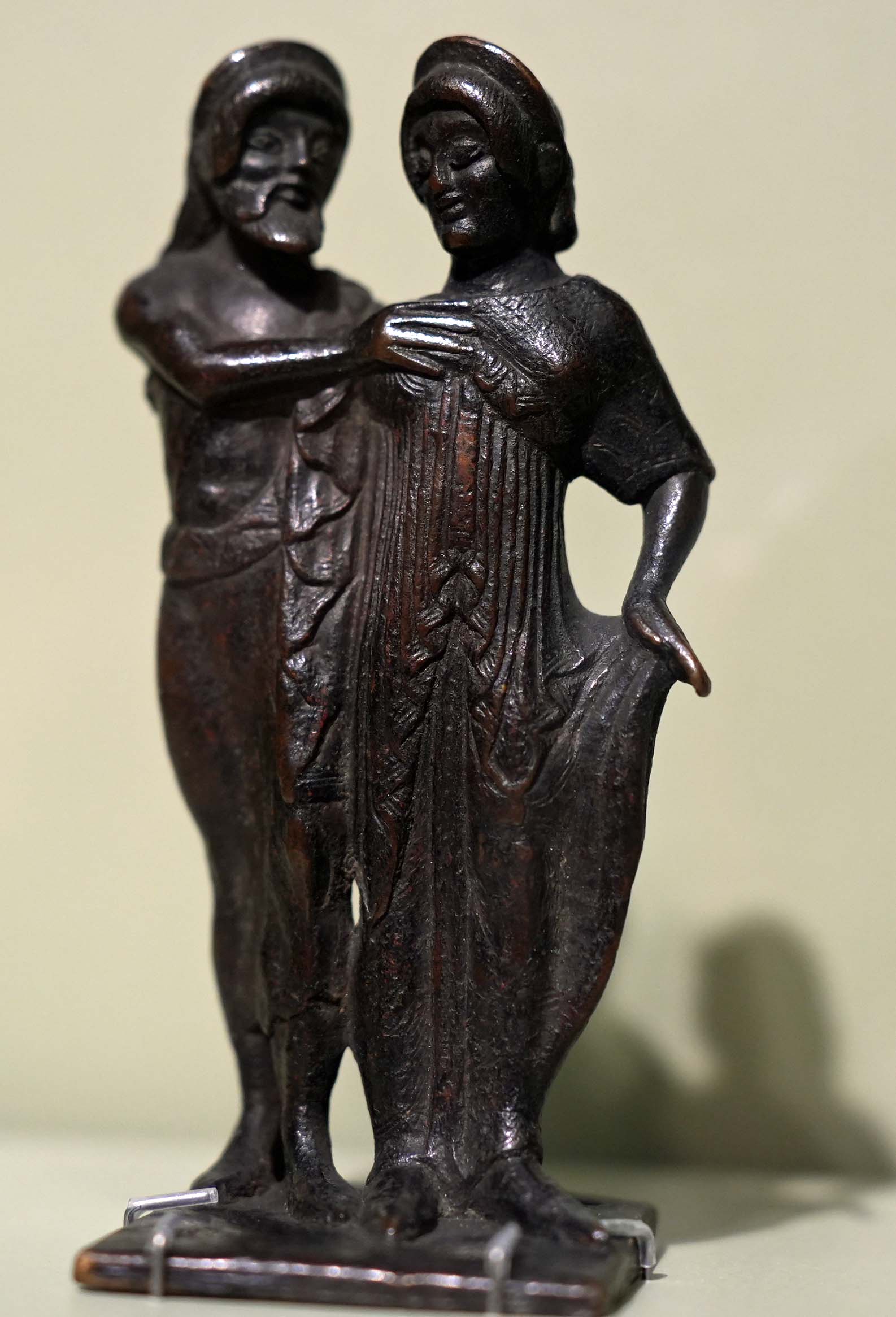
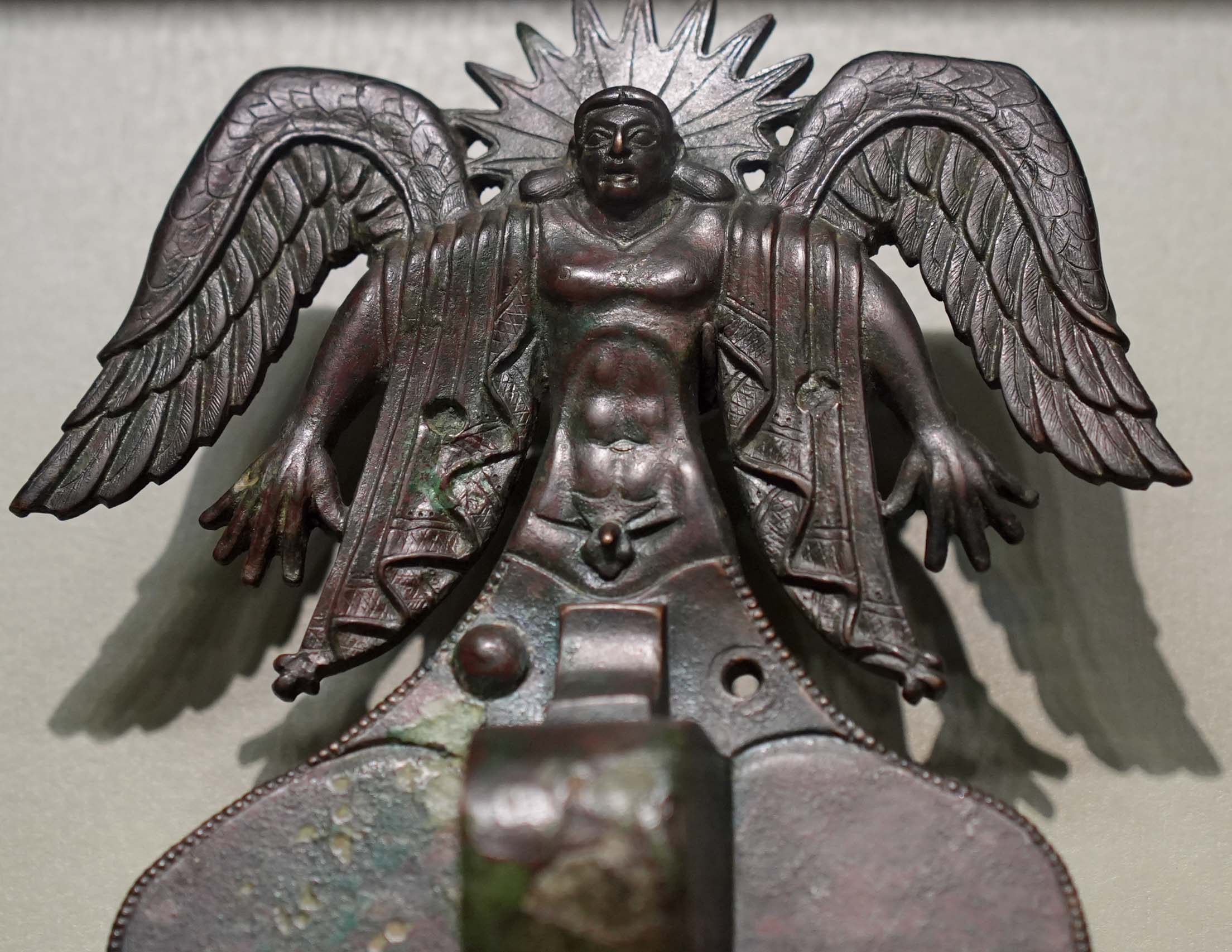
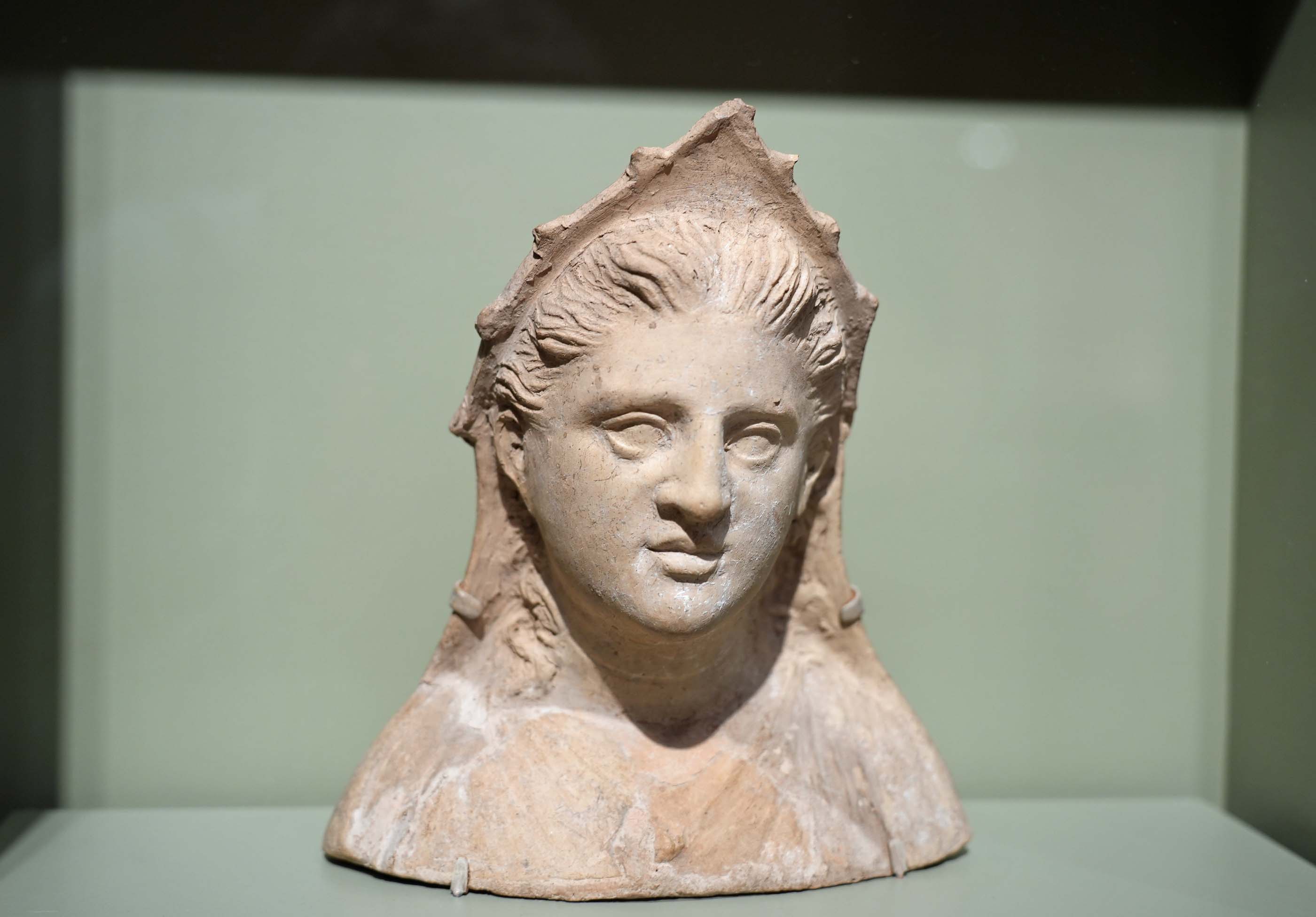
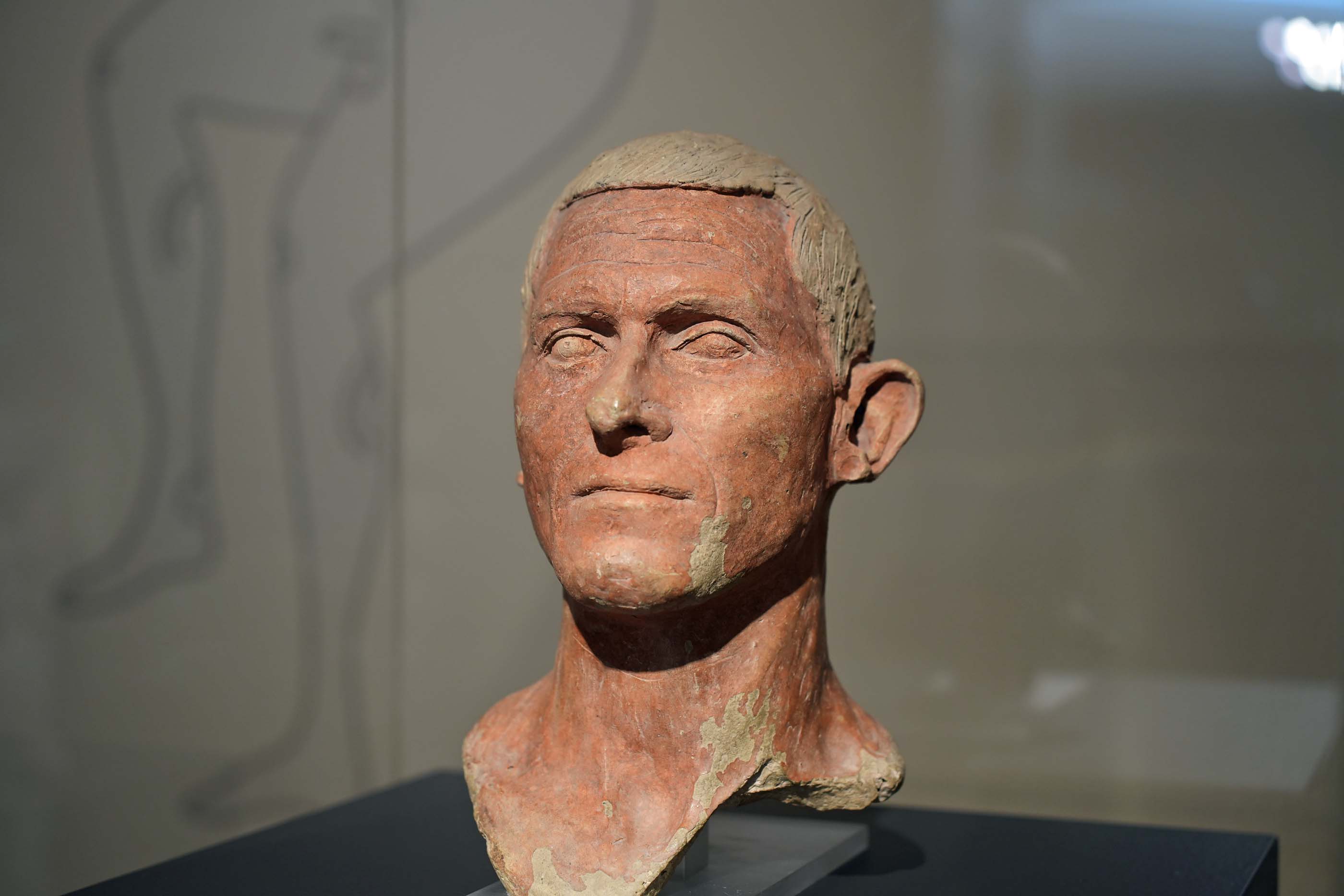
The most fascinating facts of the rich and powerful civilization, gone with hardly a mention in contemporary understanding of history, are conveyed in this meaningful and vital exhibition through countless artifacts unearthed from the Etruscan tombs, temples, sanctuaries, and homes. These archaeological discoveries, touching upon the hidden layer of humankind’s shared past, bring to light the many awe-inspiring tangible proofs of the greatness—long gone, but not disappearing in the darkness of passing time.
“Though lesser known than their Roman counterparts, the Etruscans left behind a legacy of outstanding gold and bronze craftsmanship, creating objects of unparalleled beauty,” said Thomas P. Campbell, Director and CEO of the Fine Arts Museums of San Francisco. “After 10 years of careful research and planning, we’re delighted to bring this exhibition to US audiences and hope guests leave with a deep appreciation and understanding of Etruscan artistic achievements and inventions.”
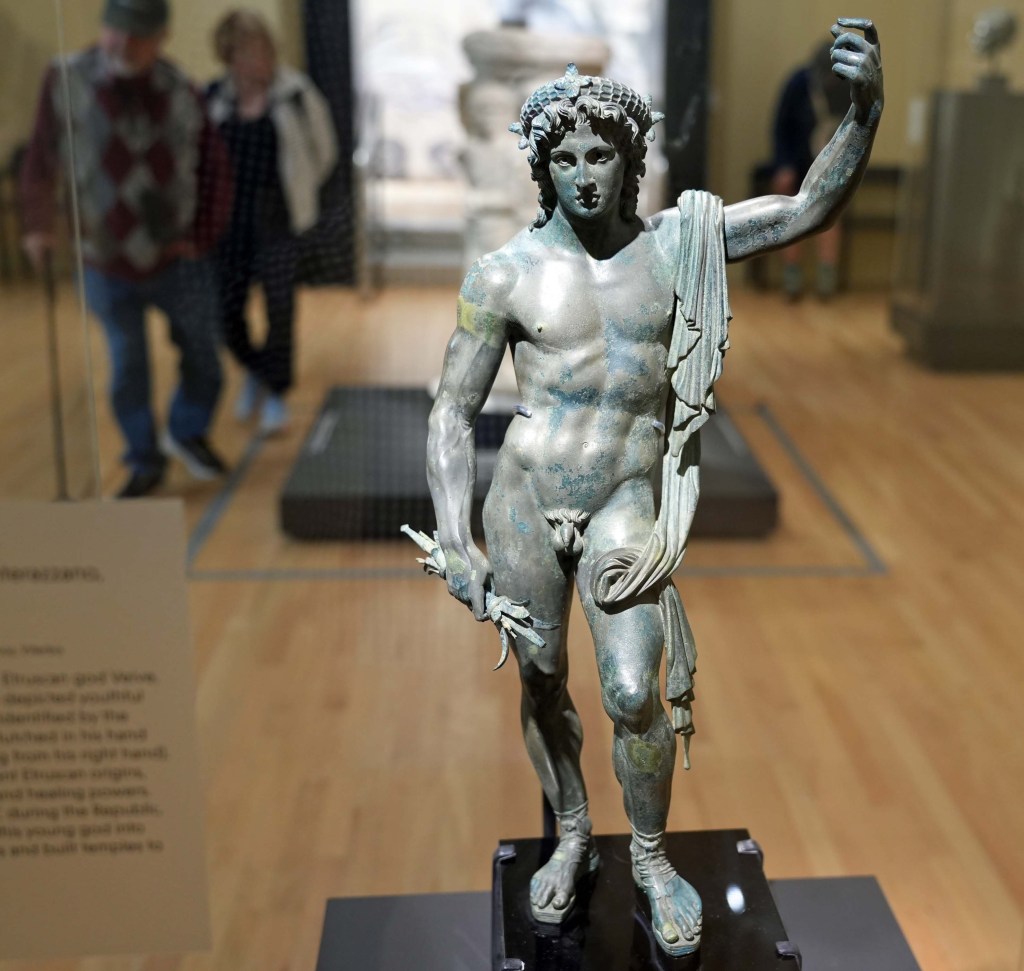
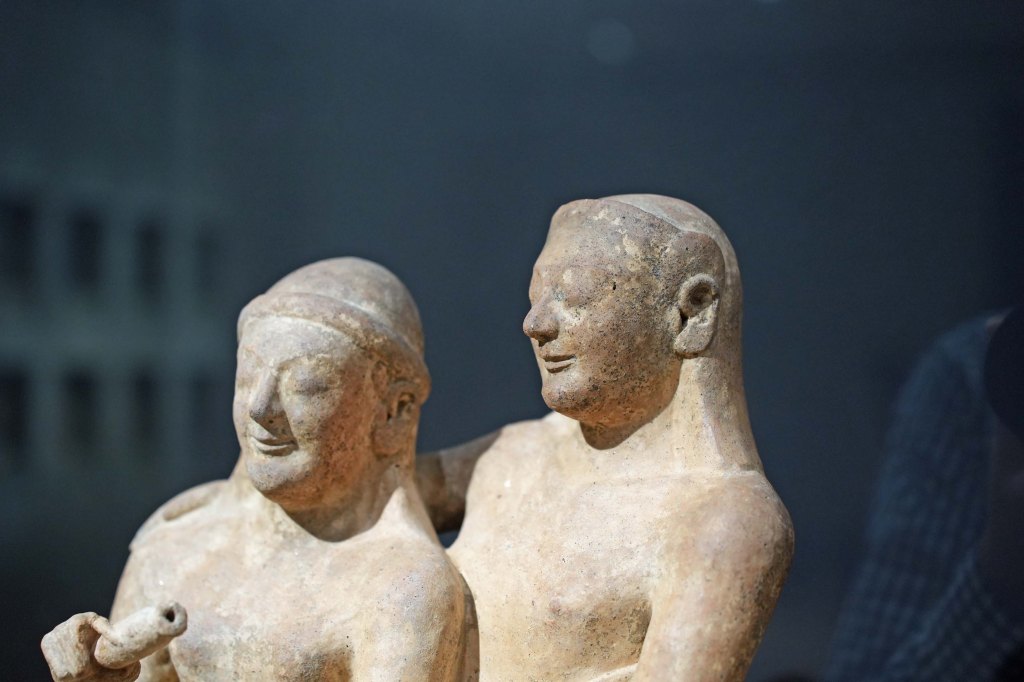
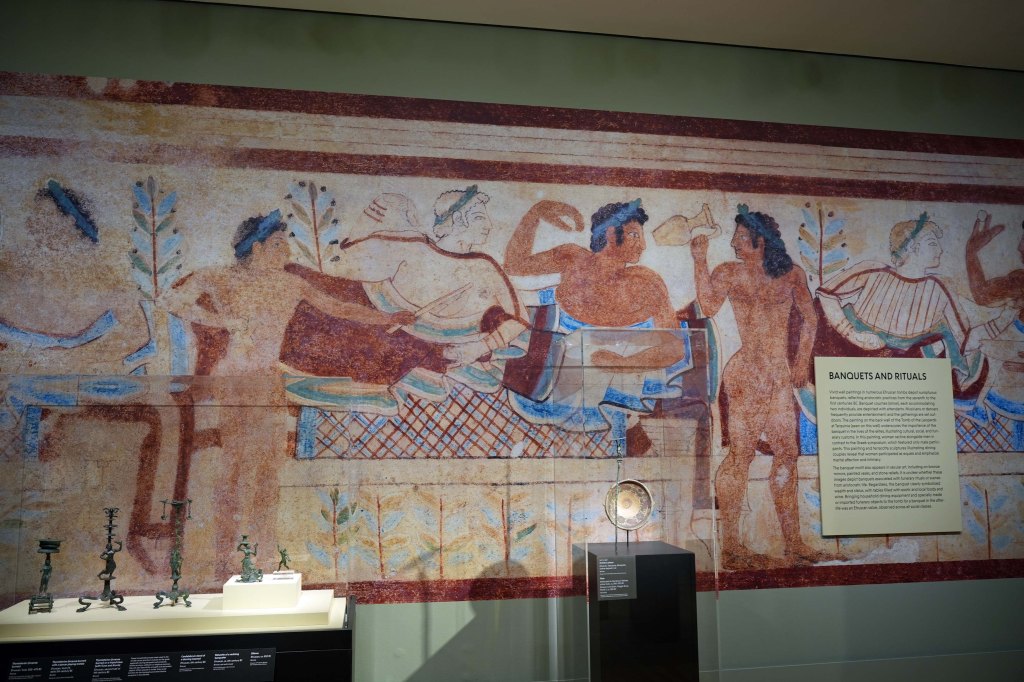
Among the most poignant artifacts are a terracotta cinerary urn of the loving spouses reclining together on a banquet couch and projecting to the viewer what Dreyfus calls, “Etruscan smiles;” bronze mirrors intended for the dead, and therefore punctured with holes; and funerary banquets depicted on the walls a tomb, so the joy of life wouldn’t subside for the dearly departed even in their passing (Tomb of the Leopards, Necropolis of Monterozzi, ca. 480–450 BCE).
The Etruscans: From the Heart of Ancient Italy is on display through September 20, 2026 at the Legion of Honor Museum, San Francisco. https://www.famsf.org/visit/legion-of-honor.

Chiharu Shiota: Two Home Countries at the Asian Art Museum
Find yourself surrounded by the reddest of the color red at the Chiharu Shiota solo show currently on view at the San Francisco Asian Art Museum. Red tread is the main material device for the artist, engaged in creating large-scale installations, drawings, paintings, sculpture, and videos, dedicated to her inner world, where the color red symbolizes blood, pain, disease, memory, mortality, and everything that’s emotional and visceral.
By bringing her artwork to San Francisco for the first time, the Japanese artist, born in Osaka, and residing in Berlin, shares with her audiences the all-too-familiar for many SF Bay Area residents notion of having not one, but two home countries, which often comes with feelings of impermanence and insecurity, contemplations on belonging, and a constant search for meaning.
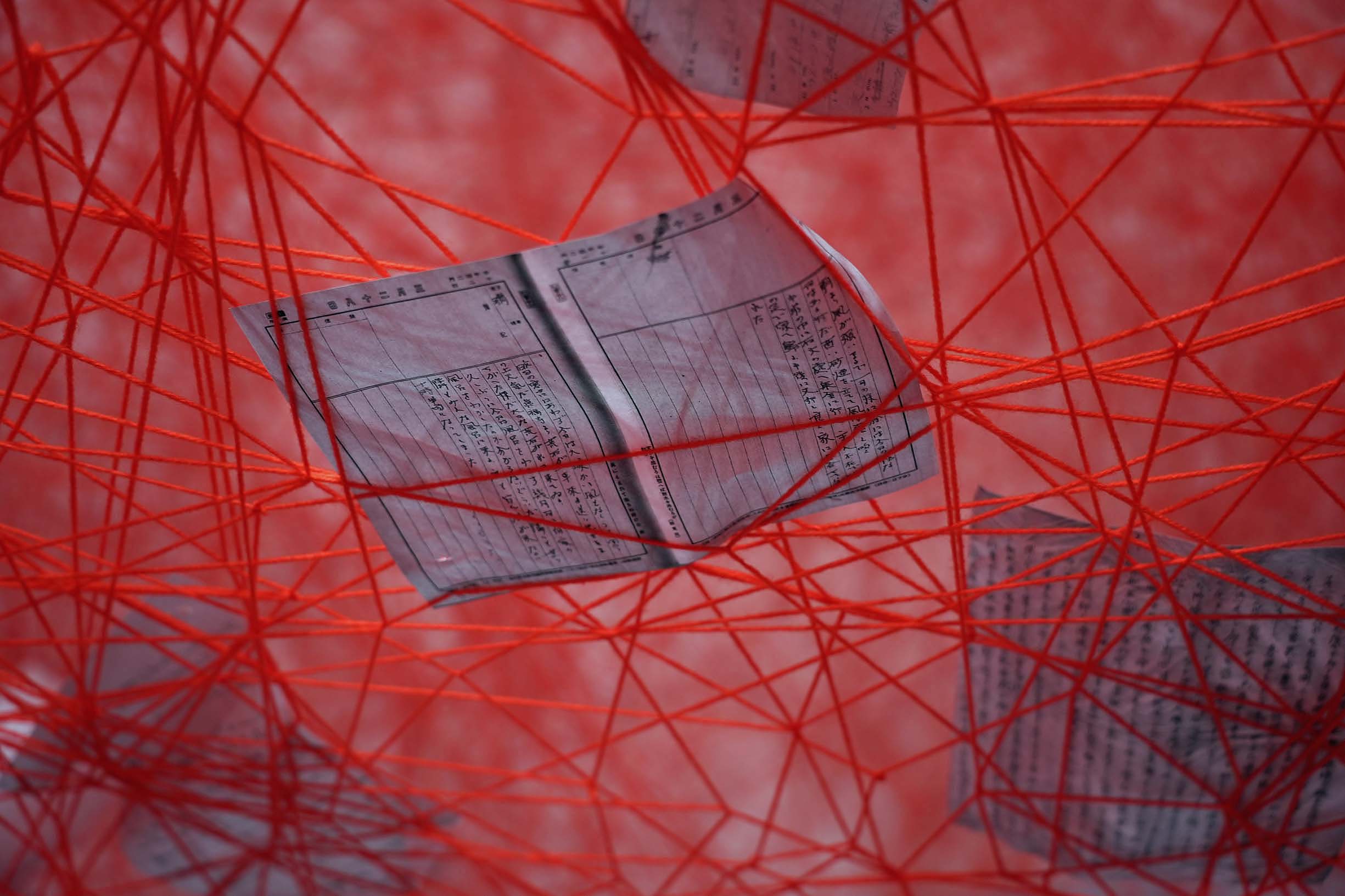
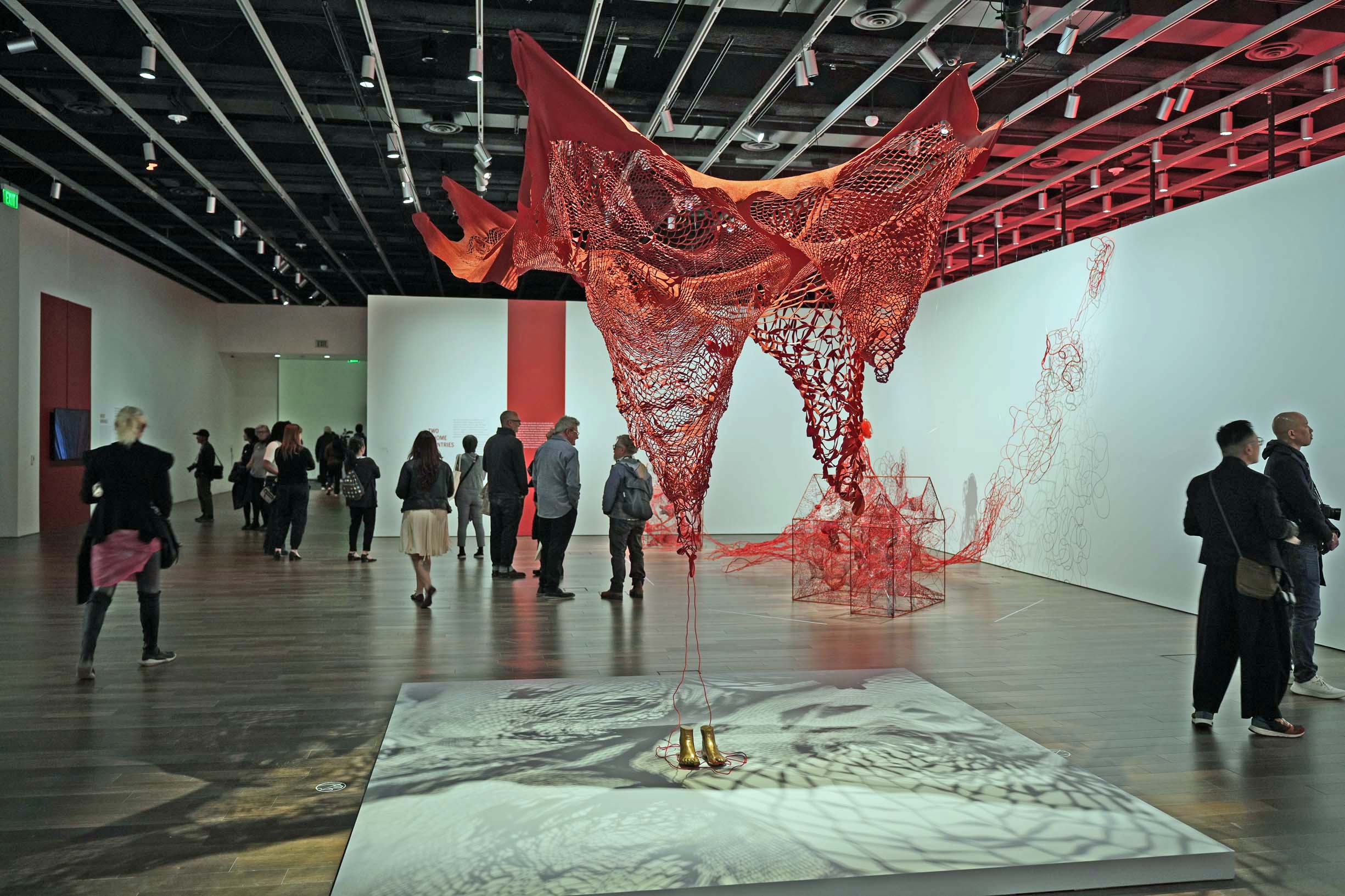
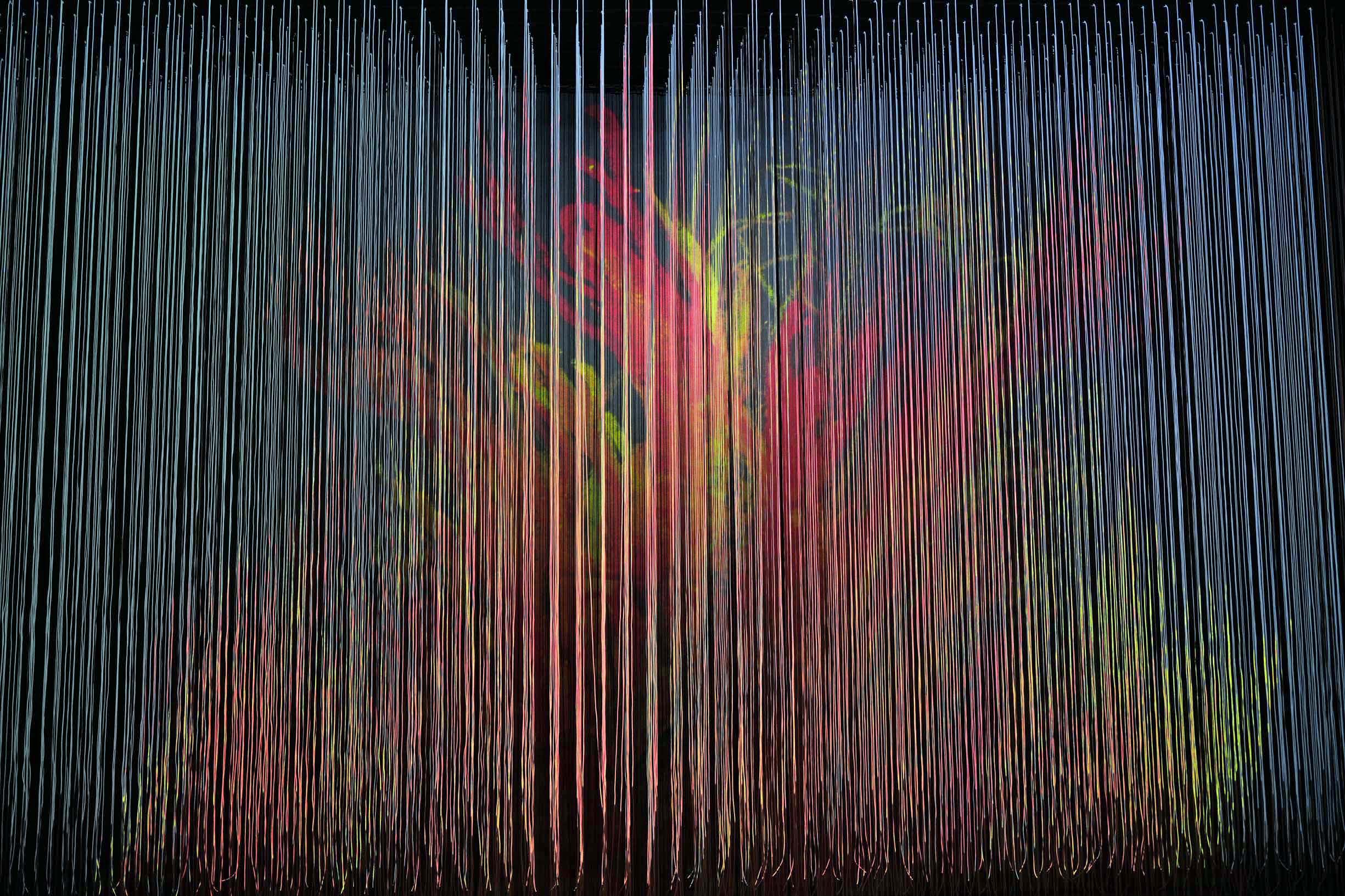
The show opens with a gigantic installation, titled, “Diary,” and constructed as an enormous tightly woven web, made up from bright-red string. The composition creates a kind of a yarn tunnel through which the visitors must walk to enter the following galleries. Suspended within the red net, between the interwoven strands, there are multiple handwritten pages, presumably torn from the diaries of WWII Japanese soldiers as well as those found by the artist in Germany, her adopted country, and written by the Germans of the same historical period. This work might be interpreted as an artistic testament to the ignominious end of the Axis Powers, or as a generalized contemplation on wartime mortality, conveyed from the artist’s present time and geopolitical context, safely removed from the horrors of the past, but the curatorial thought seems concerned with the otherworldly meeting of comrades-in-arms who fought on the same side. As Dr. Robert Mintz, Chief Curator at the Asian Art Museum explains it, “Shiota is interested in what remains after a person is gone. In Diary, the voices of individuals who never met are brought into conversation. The installation makes history feel personal, fragmented, and profoundly present.”

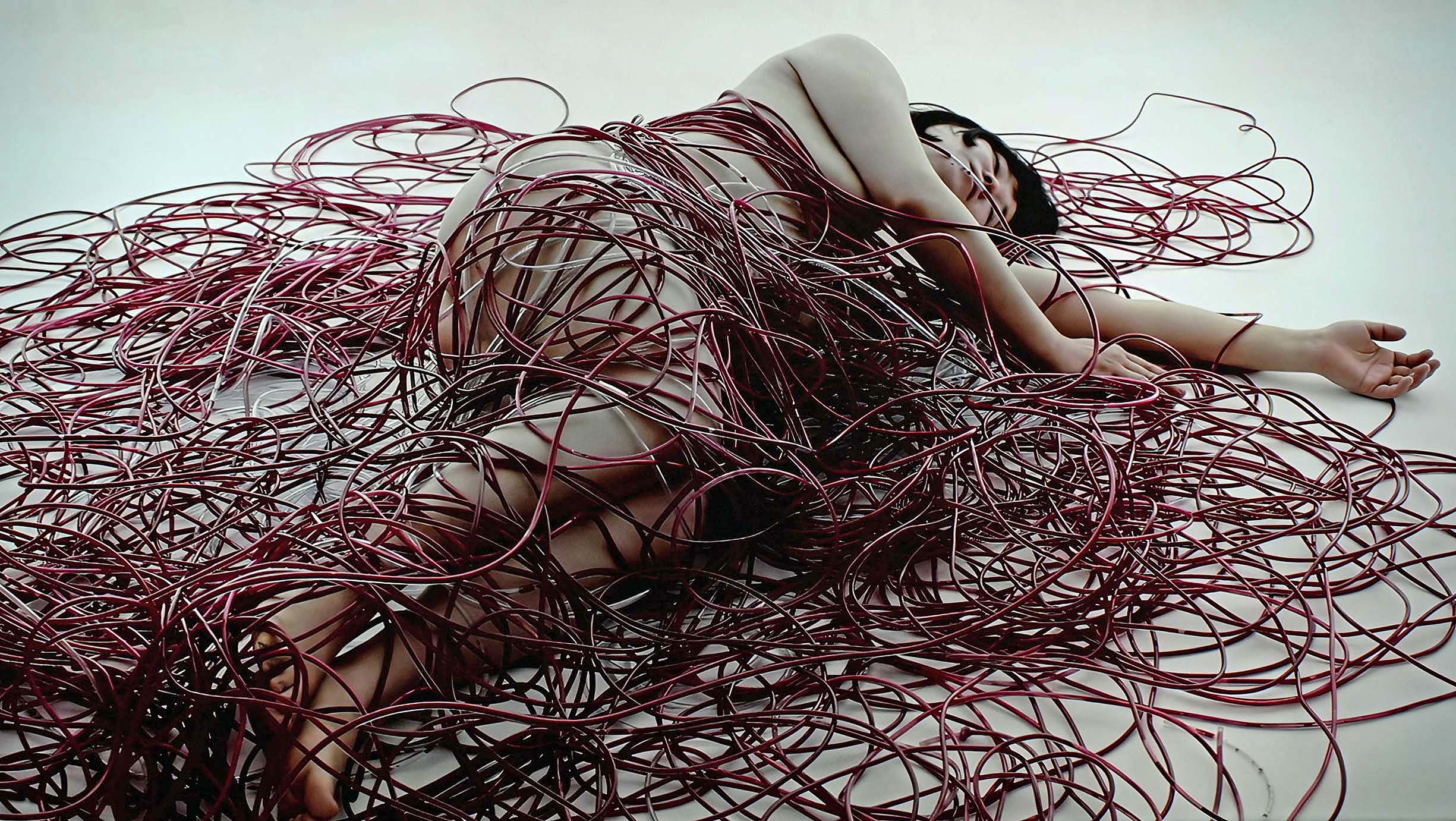
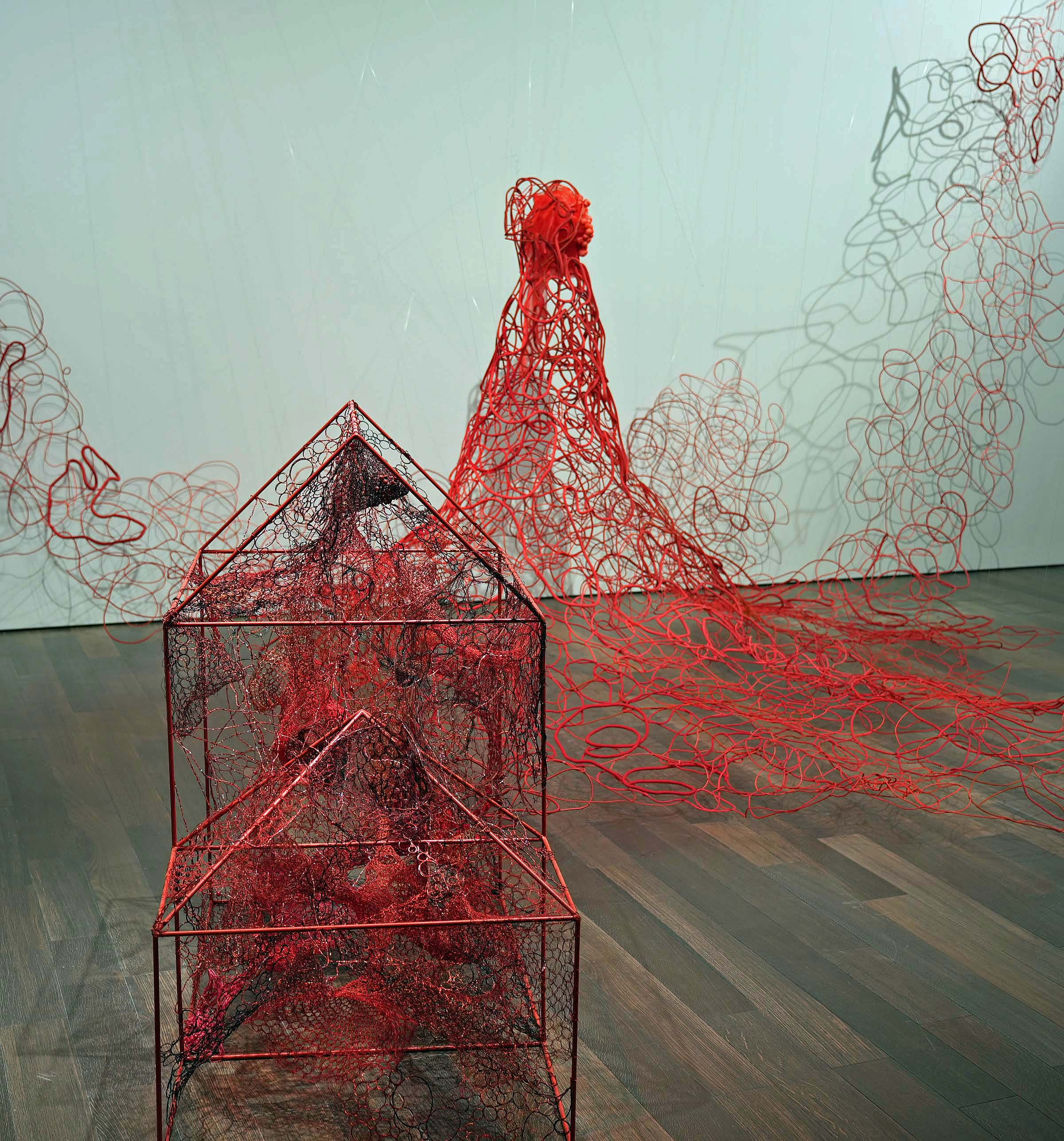
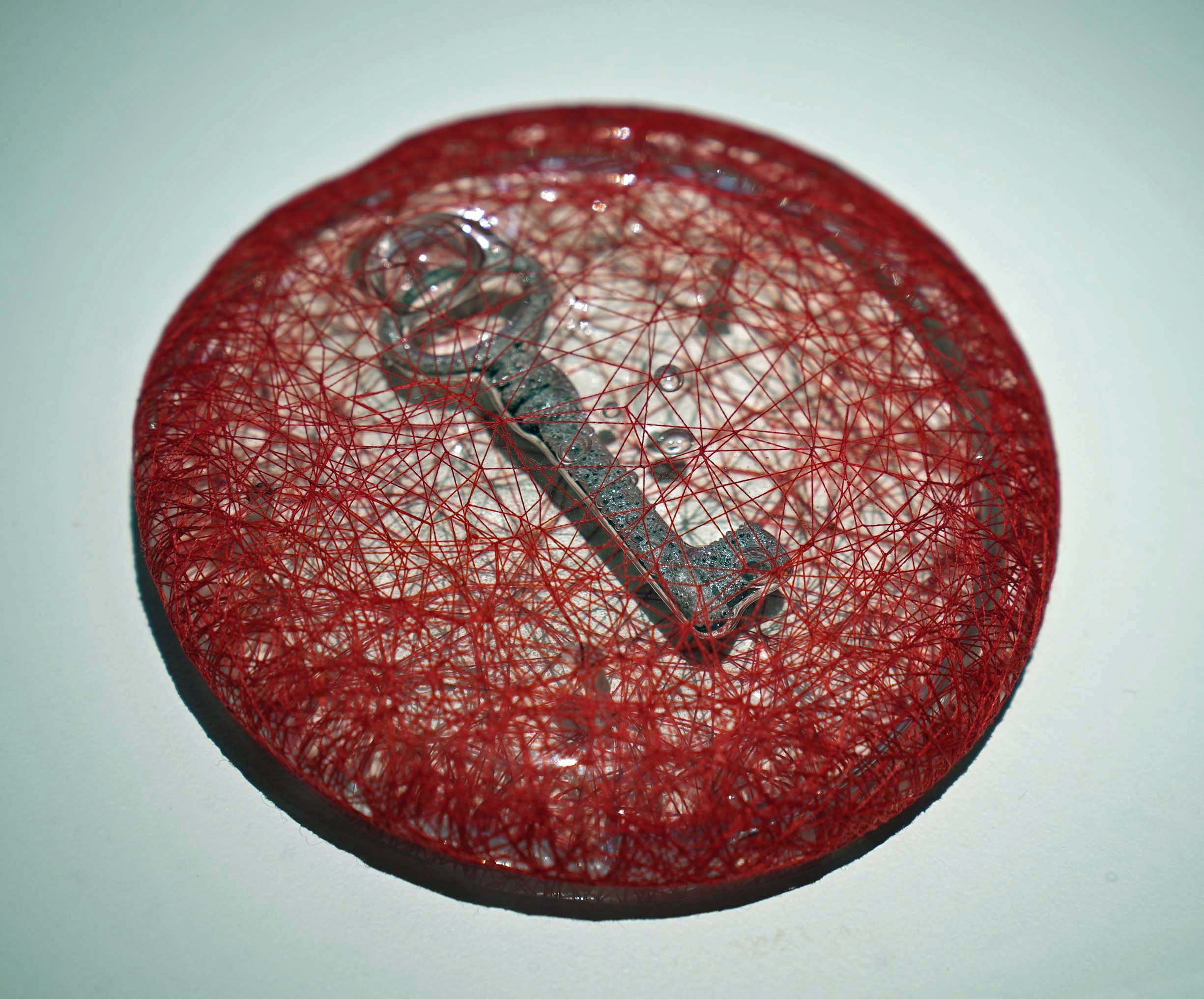
In the following galleries, the show presents installations, tied to Shiota’s bicultural identity, or what she calls the “in-between sensation.” Her namesake artwork, “Two Home Countries,” presents an outline of a red dress, made up of tangled cords, and hung in the air in-between two silhouettes of houses, both filled with red and black wire mesh. Also on view here are her small-size sculptures, inspired by a cancer diagnosis; paper drawings, embellished by embroidered red thread patterns, a high-speed video of a performance art piece that involves a cocoon of tubes around the artist’s body, quickly filling up with dark red liquid, and behind-the-scenes look at Shiota’s work as a stage designer for KINKAKUJI (The Temple of the Golden Pavilion), a theatrical production commissioned by the Japan Society in New York.
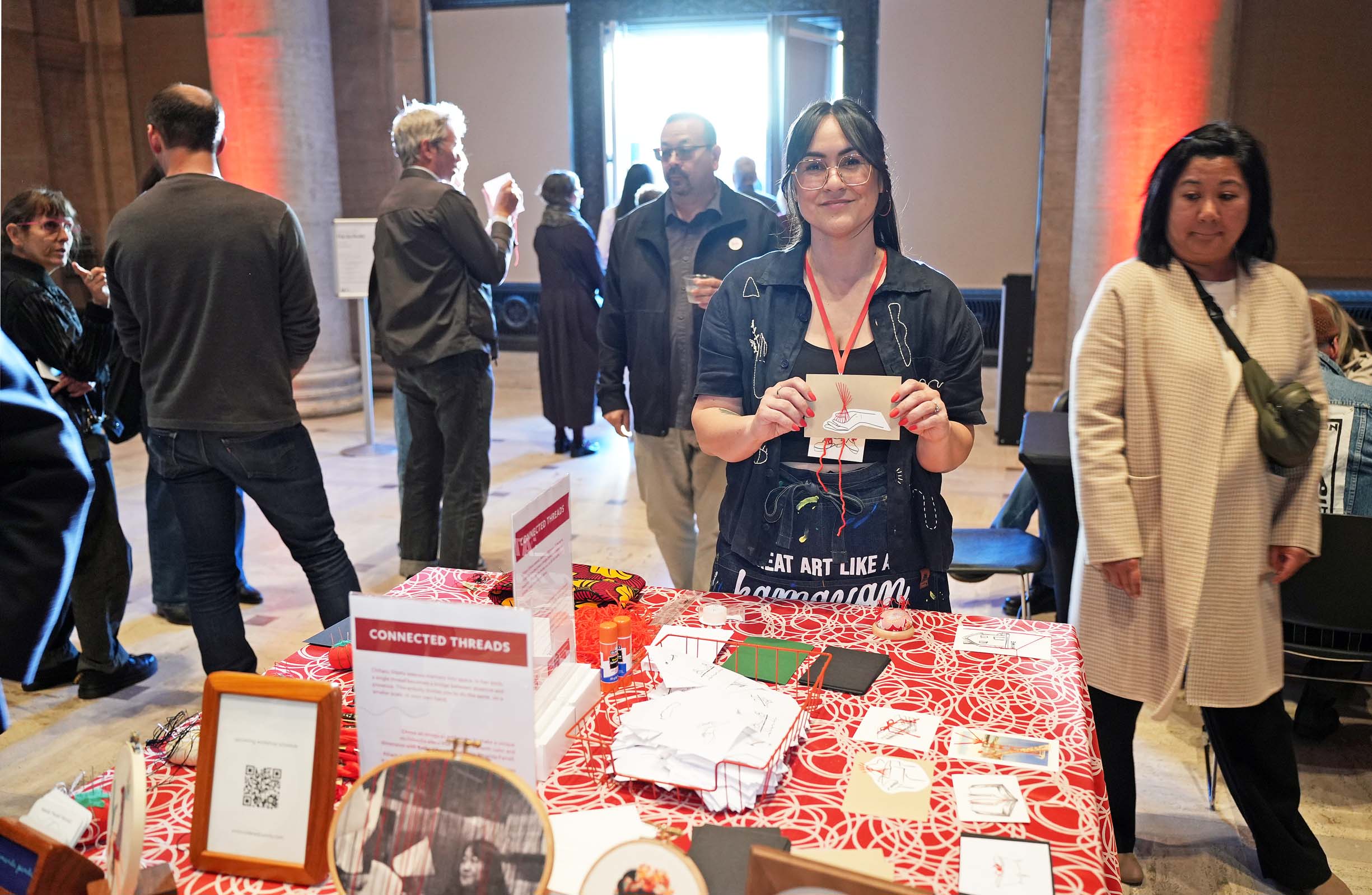

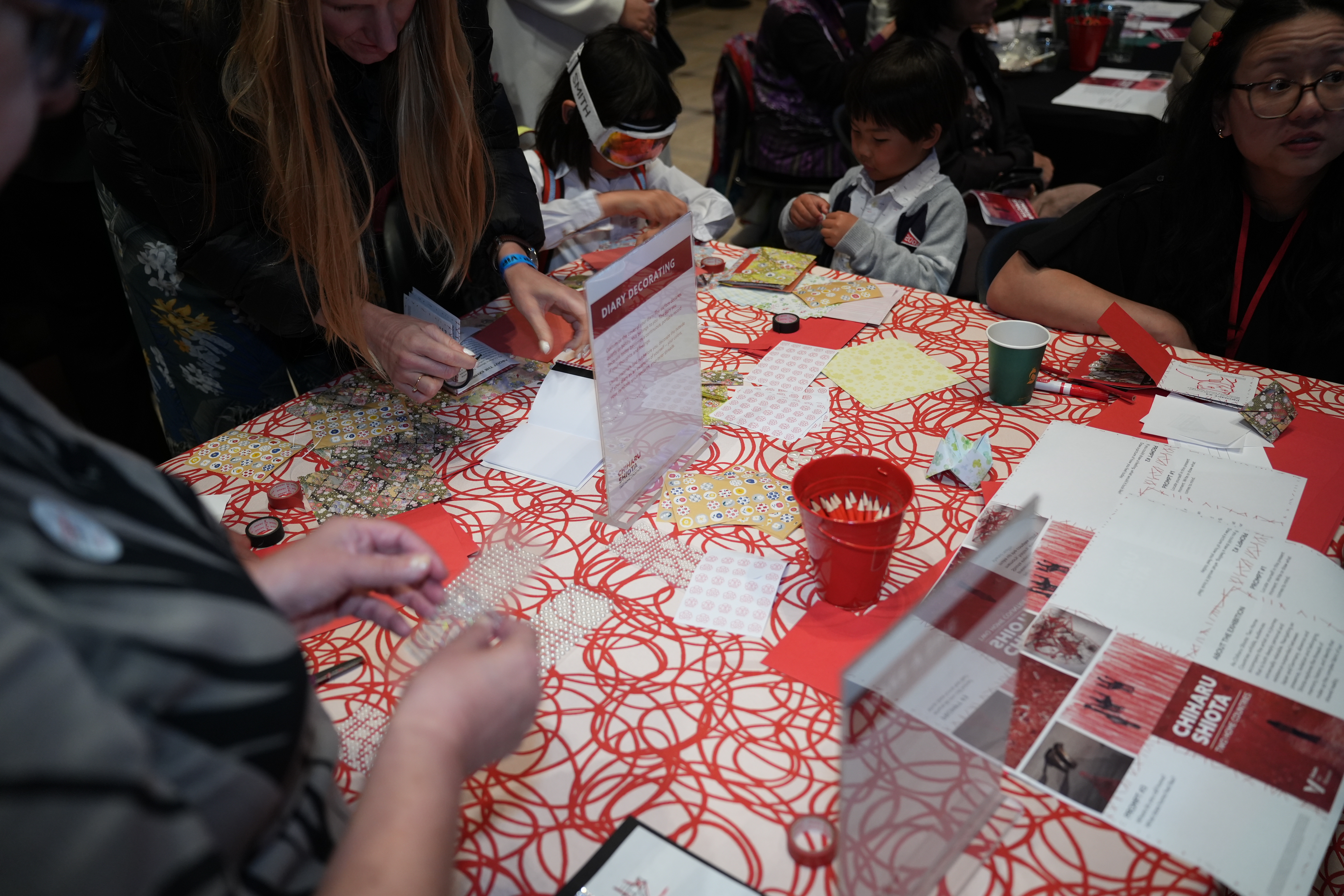
At the exhibition opening, the museum offered a variety of activities for its members to create DIY mementos from red strings and other relevant materials. Chiharu and Mintz were present.
“Chiharu Shiota’s work resonates because it makes emotional states visible,” says Soyoung Lee, the Barbara Bass Bakar Director and CEO of the Asian Art Museum. “Her installations speak to the experience of living between places, histories, and identities — an experience that feels increasingly familiar to many people today.”
Chiharu Shiota: Two Home Countries runs through July 20, 2026 at the Asian Art Museum, San Francisco. https://asianart.org/.

